
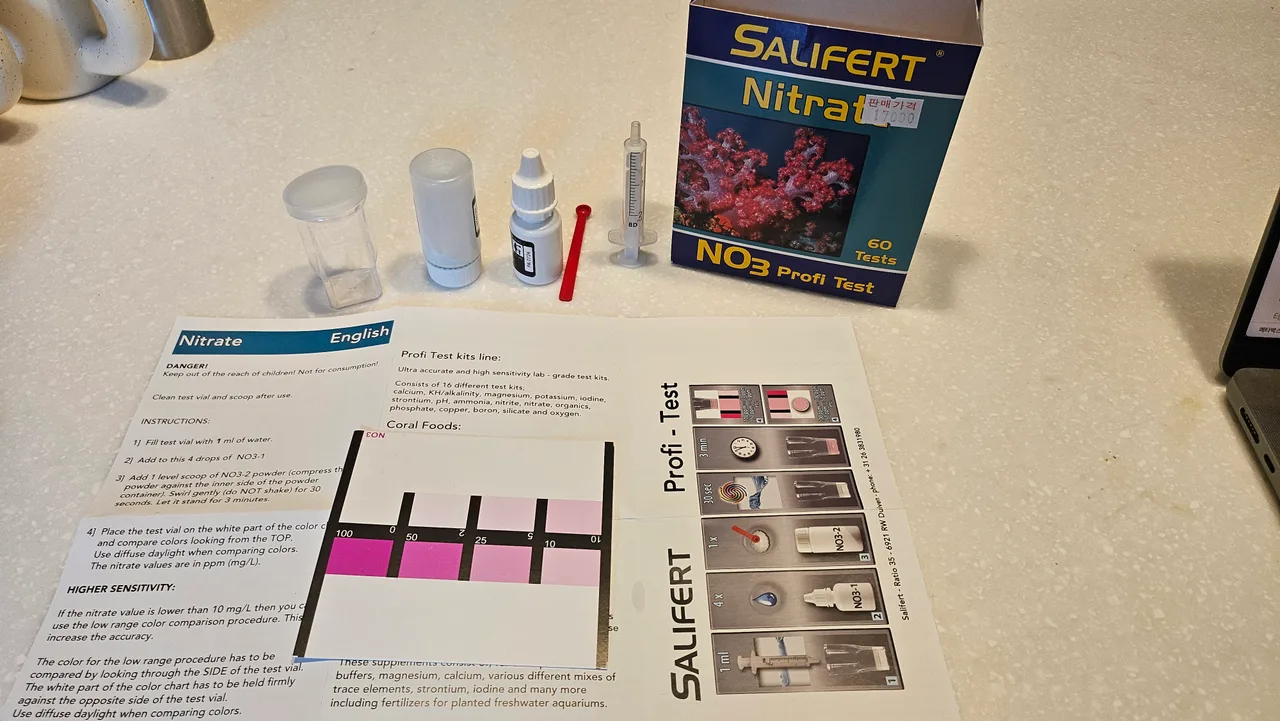
I pulled out the Salifert NO3 test kit to check nitrate in the reef tank.
The kit itself is simple: a test vial, 1 ml syringe, NO3-1 liquid reagent, NO3-2 powder reagent, the supplied spoon, color chart, and instructions.
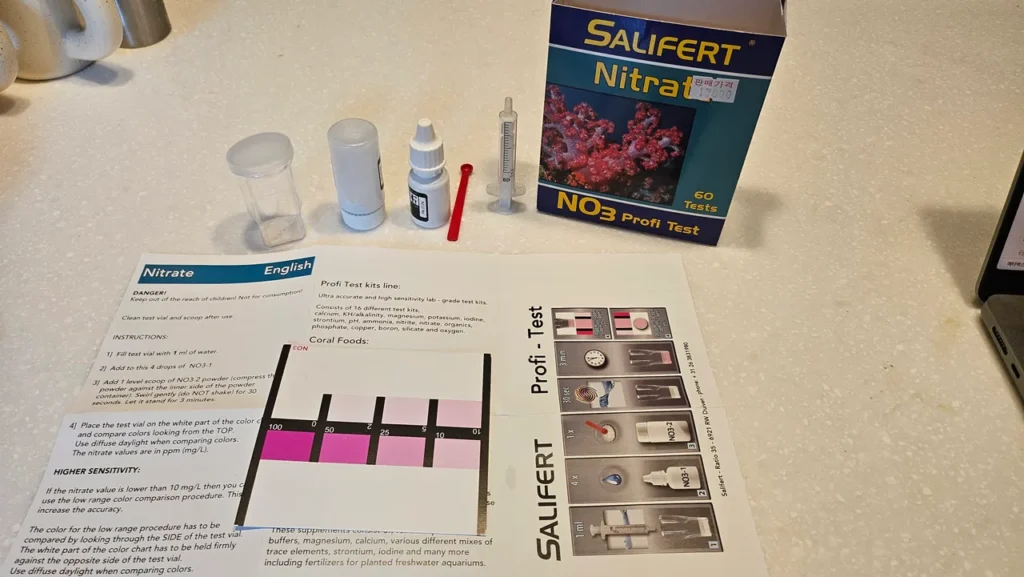
The basic test process is:
1. Add 1 ml of tank water to the test vial.
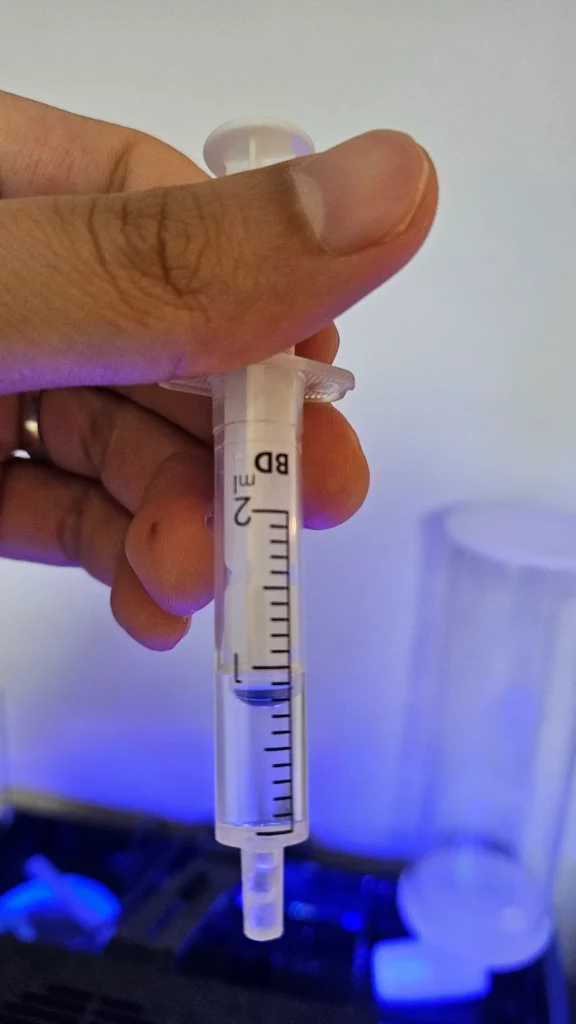
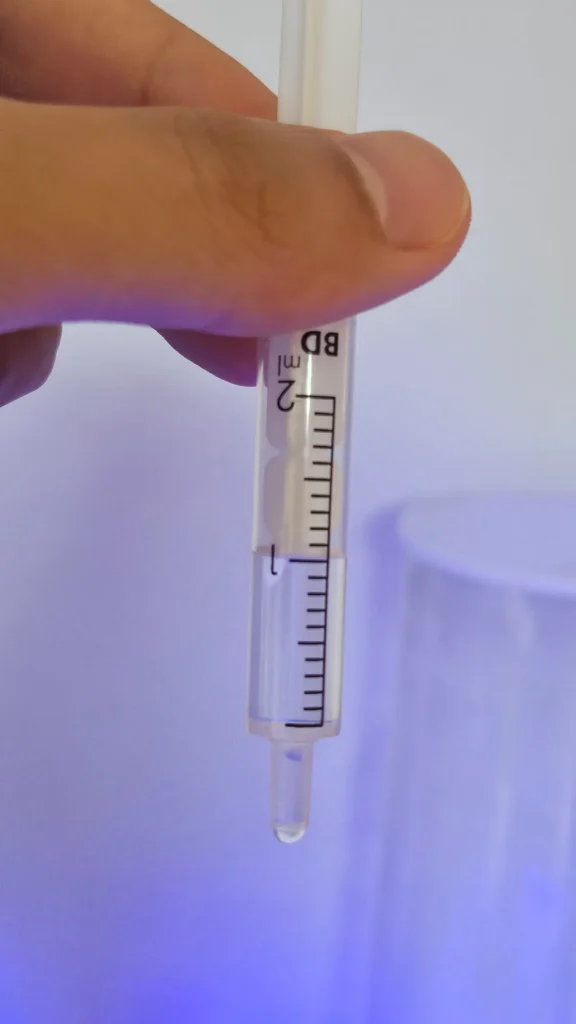
At this point, I try to draw the sample with as few bubbles as possible.
2. Add 4 drops of NO3-1 liquid reagent.
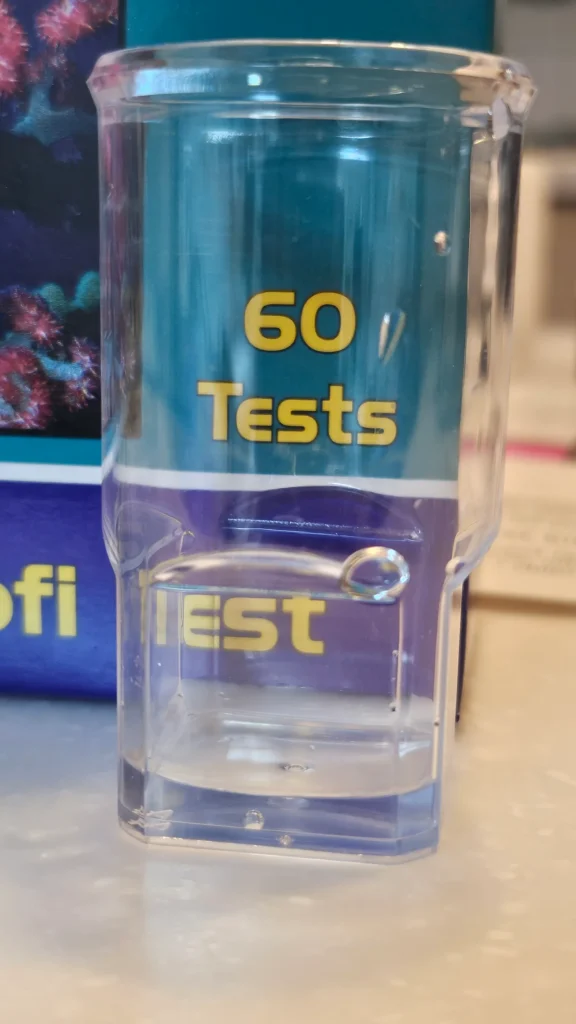
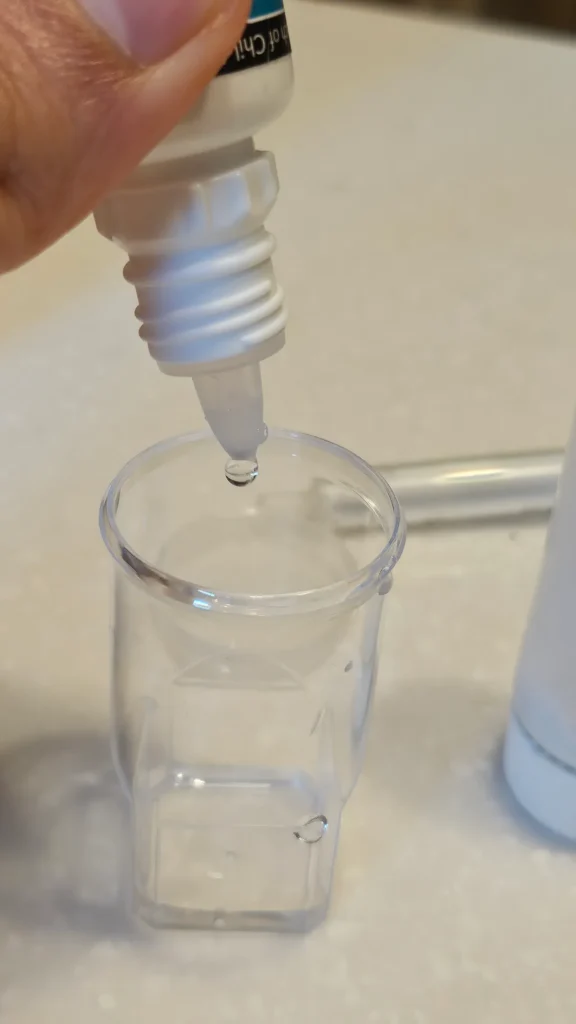
3. Add one level spoon of NO3-2 powder reagent.
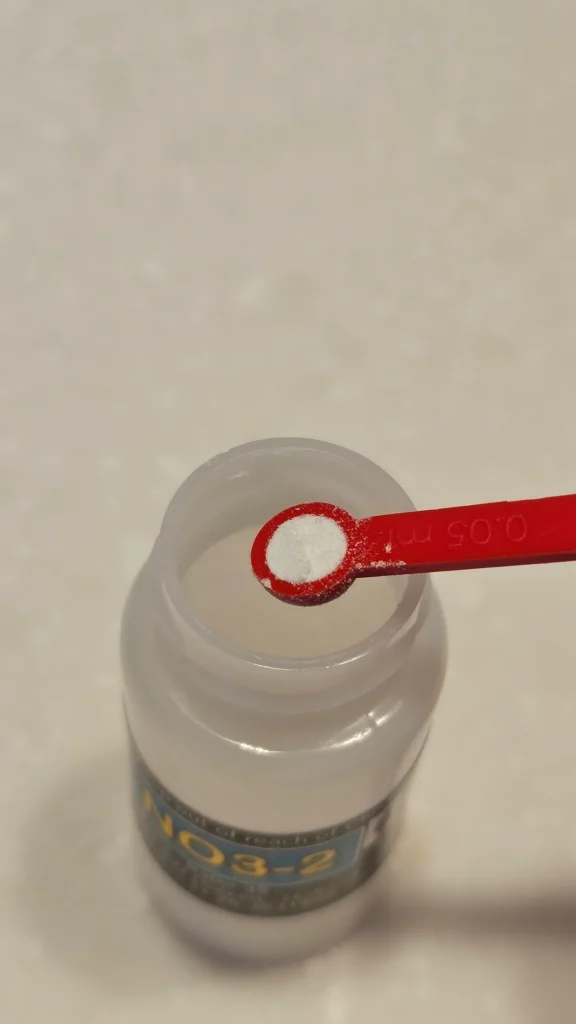
According to the instructions, the spoon should be filled and then leveled off.
When scooping the powder, it can be a little too full or a little short. I found it easiest to scoop a bit generously and gently tap off the excess so it sits level with the spoon.
4. Mix gently for 30 seconds, then wait 3 minutes.
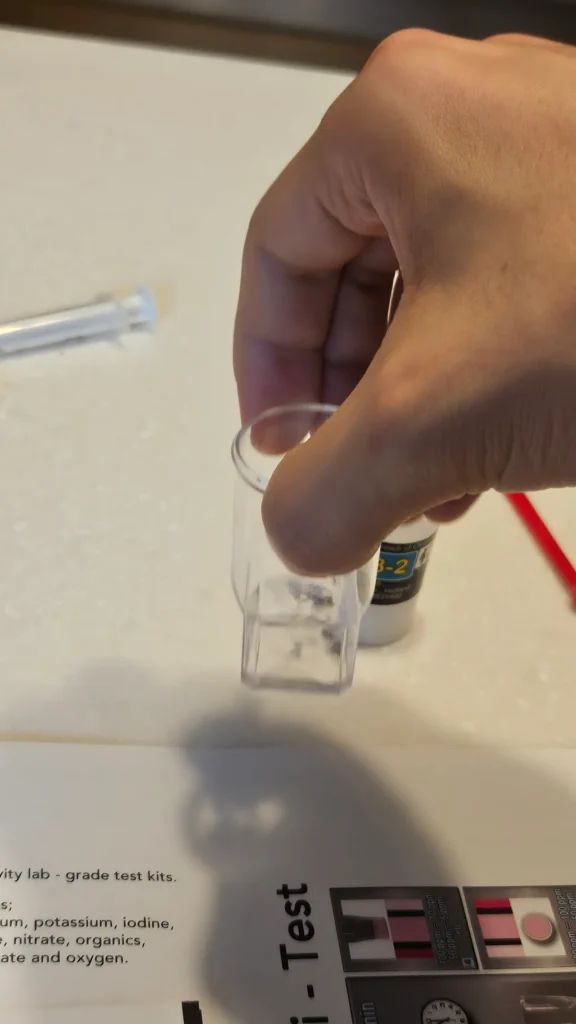
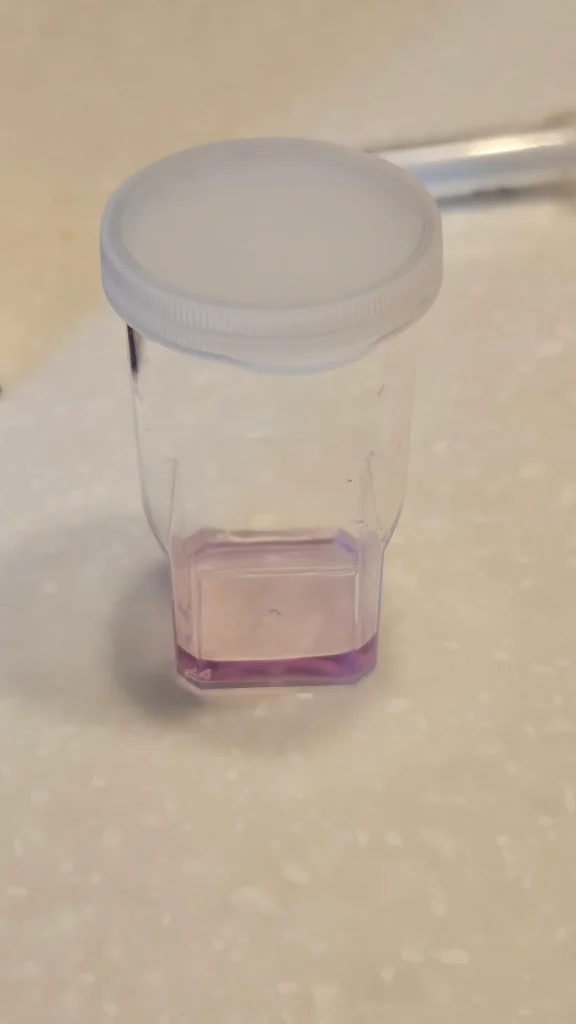
Since the test uses a powder reagent, I felt better timing the mixing instead of just giving it a quick swirl and moving on.
5. Read the Salifert NO3 test from above on the white area of the color chart.
The part I found most confusing in the Salifert NO3 test was how to read the color chart.
The basic method is to place the test vial on the white area of the color chart and compare the color while looking down from above.
The instructions also say to compare the color in diffuse natural light.
Under blue reef lighting, the color can look different.
It would be nice if the color landed on one exact block, but in practice it often looks like it sits between two colors. In that case, I record it as a middle value instead of forcing it into one number.
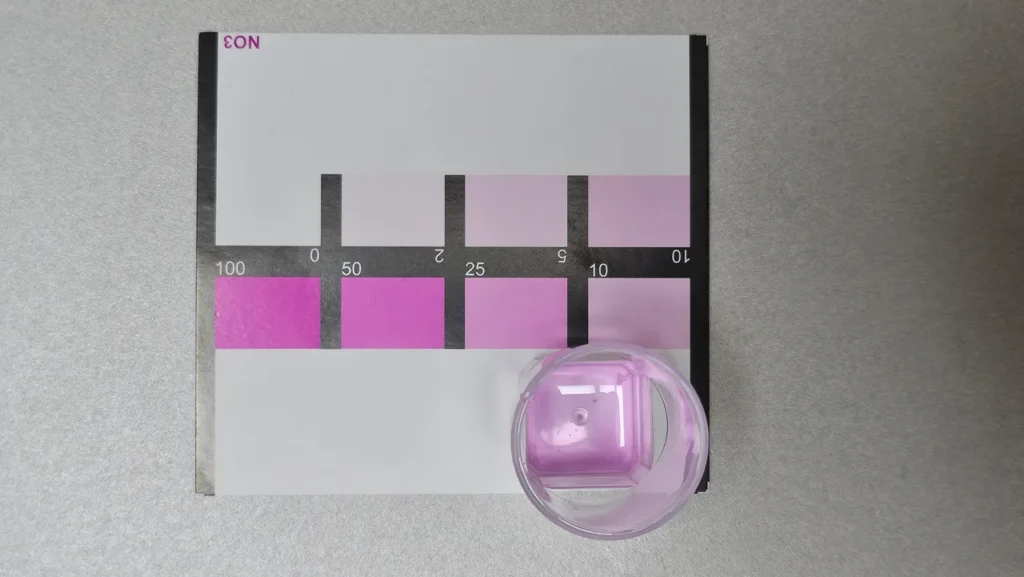
While waiting for the 3-minute mark, I wondered whether I would need to make a new sample if I missed the exact reading time.
So I compared the color at the 3-minute mark with the color after roughly 30 minutes.
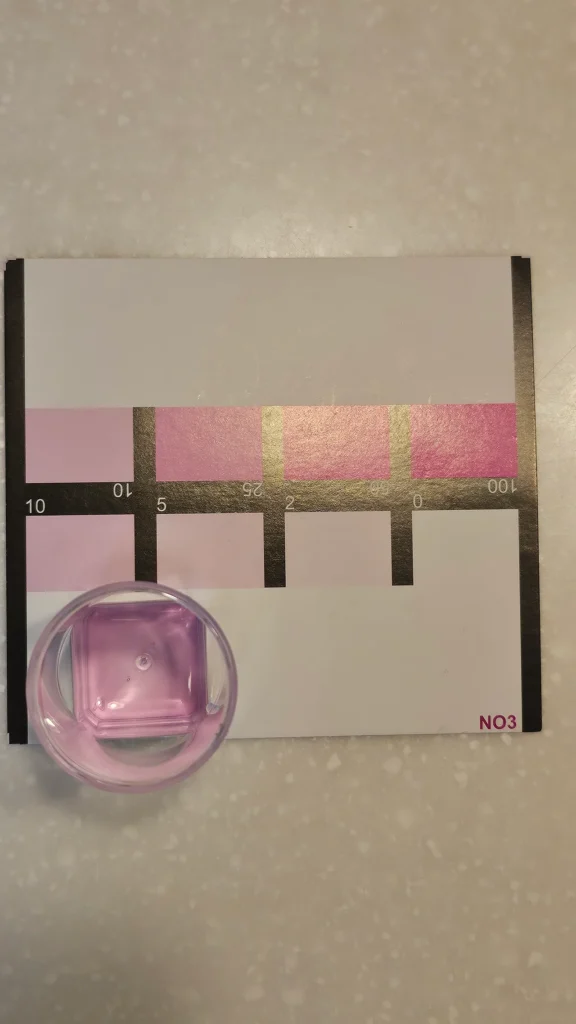
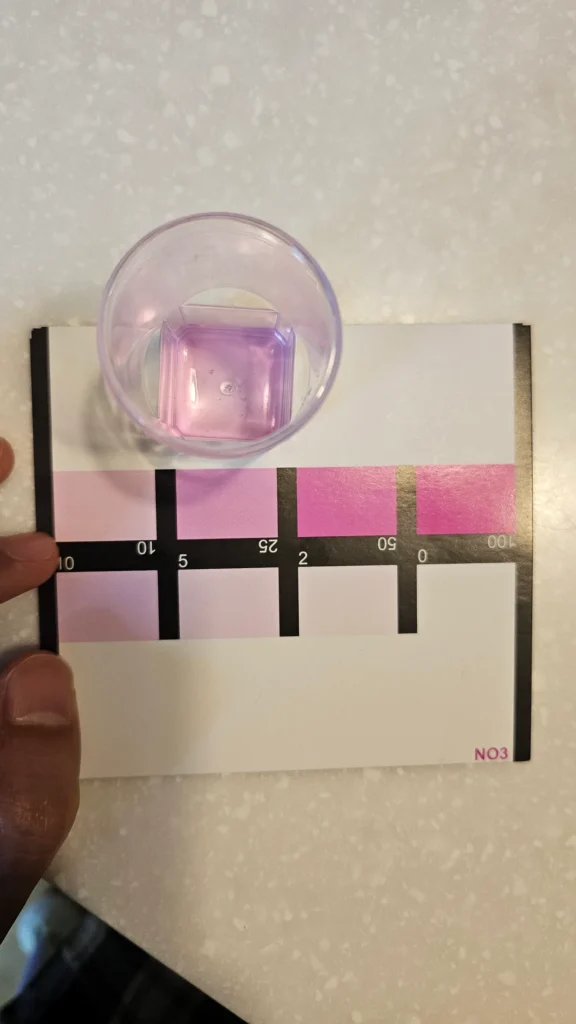
The left one is the first reading. The right one is after 30 minutes.
To my eyes, the value did not seem to change much. I did not compare it over several time intervals, but if the sample has been sitting around for a long time, I would rather test again than treat it as a clean reading.
I could not find a clear cutoff in Reef2Reef or other overseas reefing discussions either. Most of what I found came back to the same practical point: read it as close to the 3-minute instruction as possible, and do not rely too much on a sample that has been left out for a long time.
Reading the vial from the side
While checking whether the method I described was right, I also found that the kit can be read from the side.
For that method, hold the test vial upright, place the white part of the color chart behind the vial, and look through it from the side.
Because the color looks stronger from the side, the number on the chart should not be recorded as-is. It needs to be divided by 10.
For example, if the side view looks close to the 50 ppm color, I would record the result as about 5 ppm.
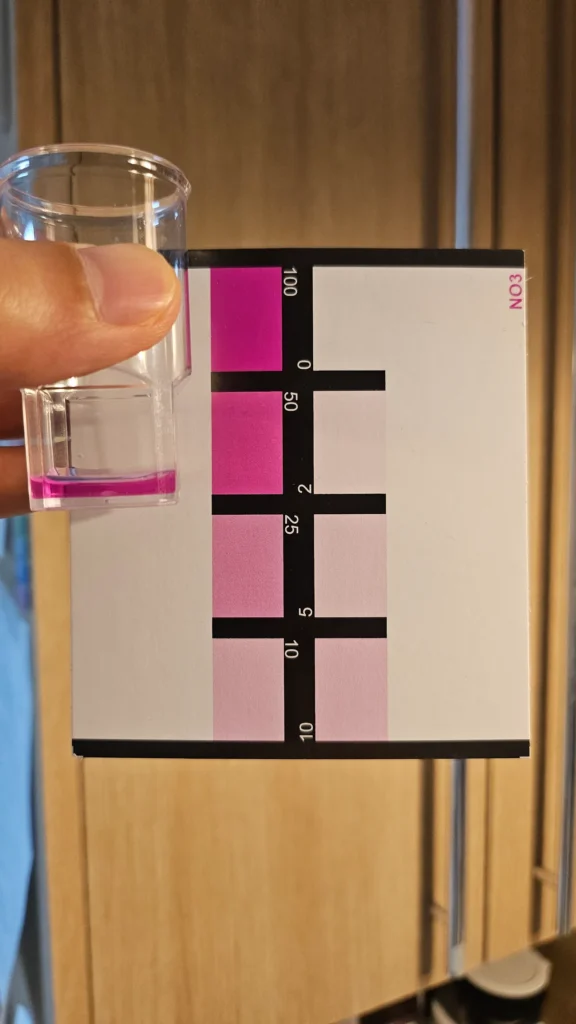
For normal use, I would use the top-down reading first, then use the side view only as a supporting method when the value is hard to judge.
This test result
This NO3 reading looks like it falls somewhere between 10 and 25 ppm, roughly 15-20 ppm by eye.