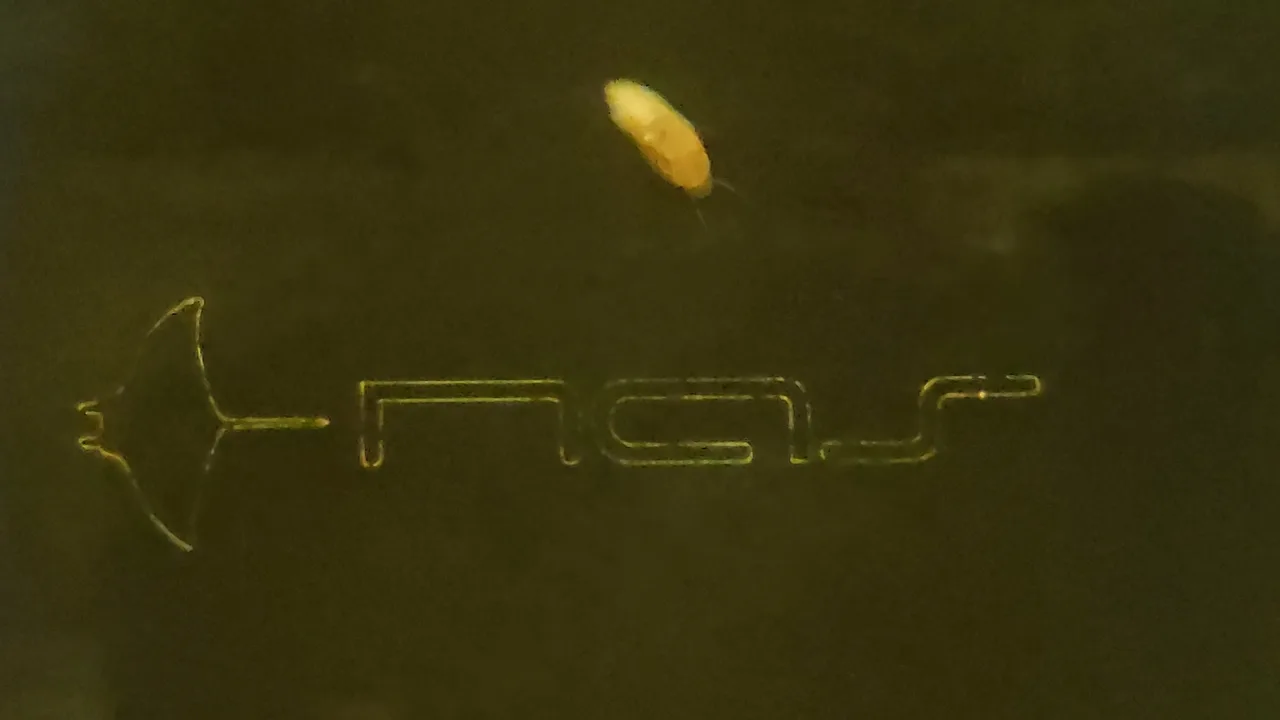
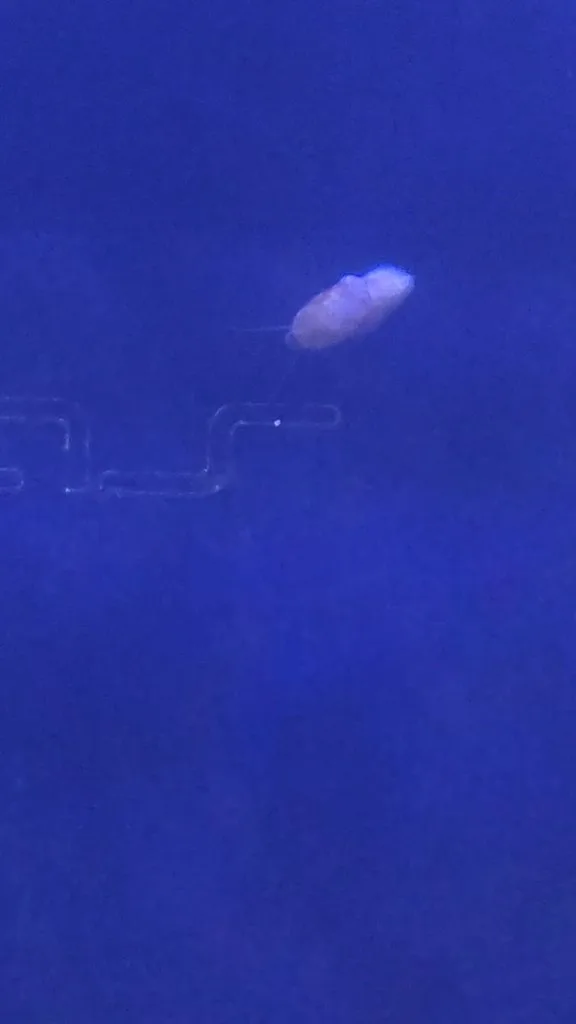
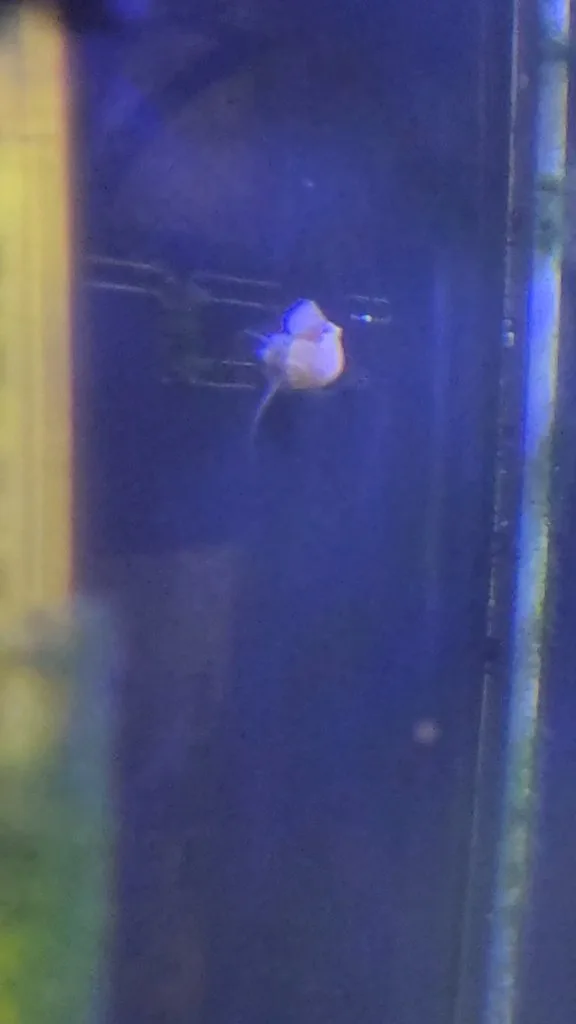
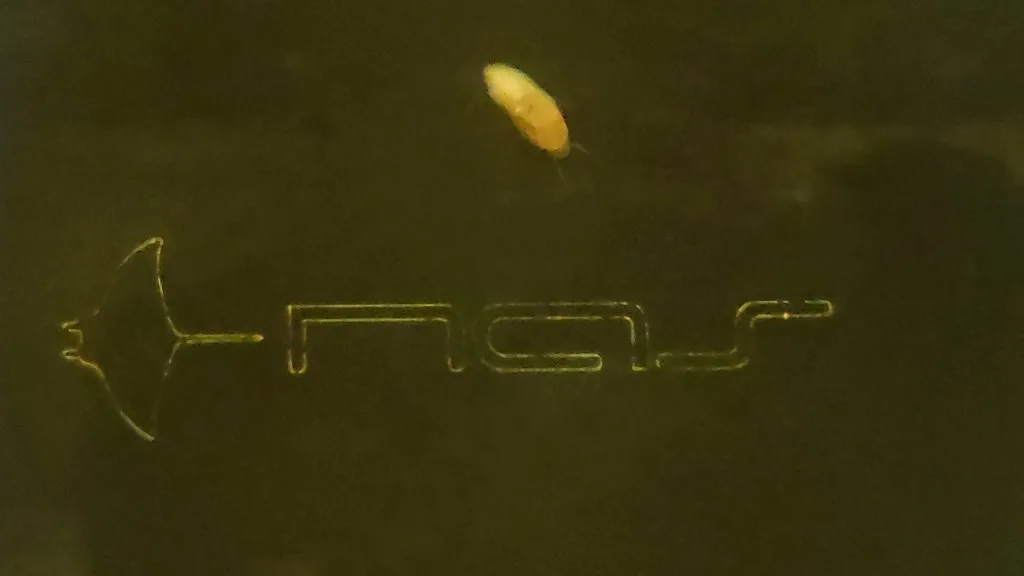
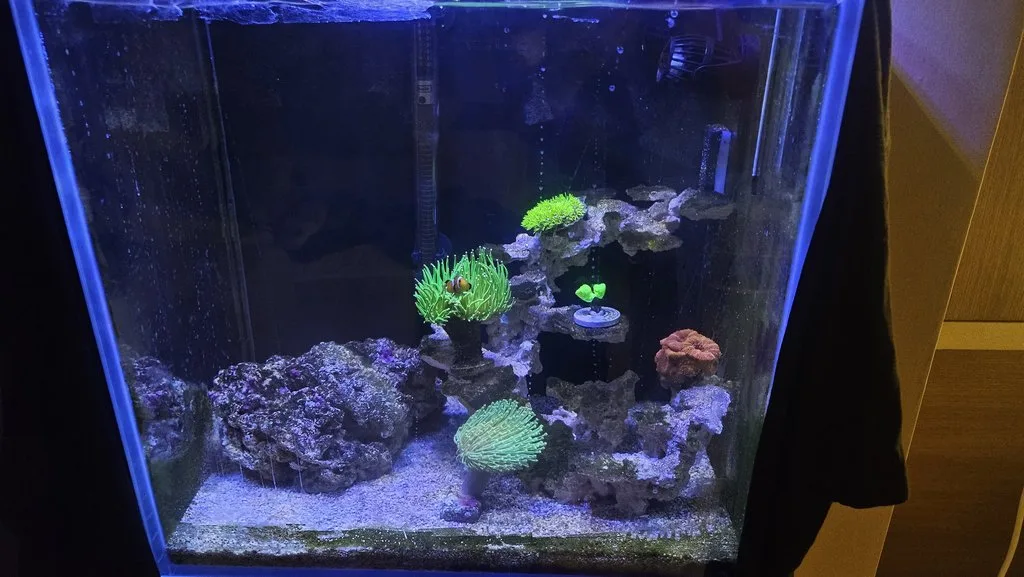
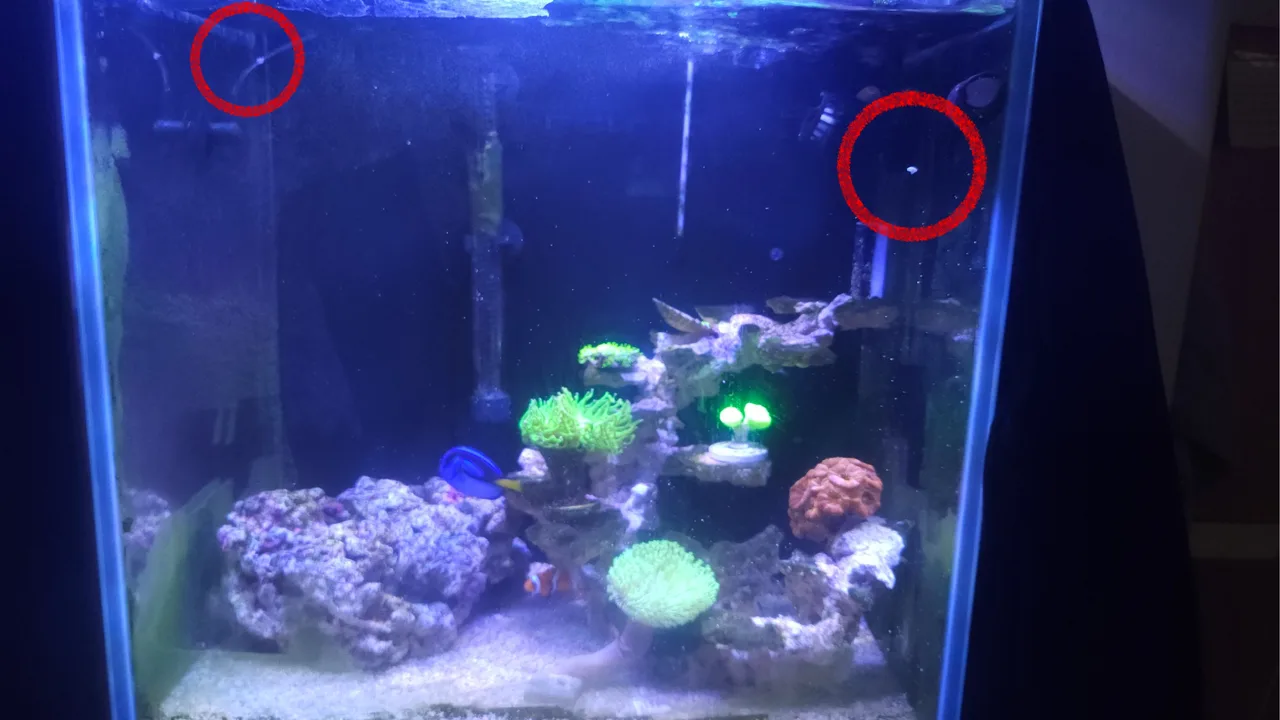
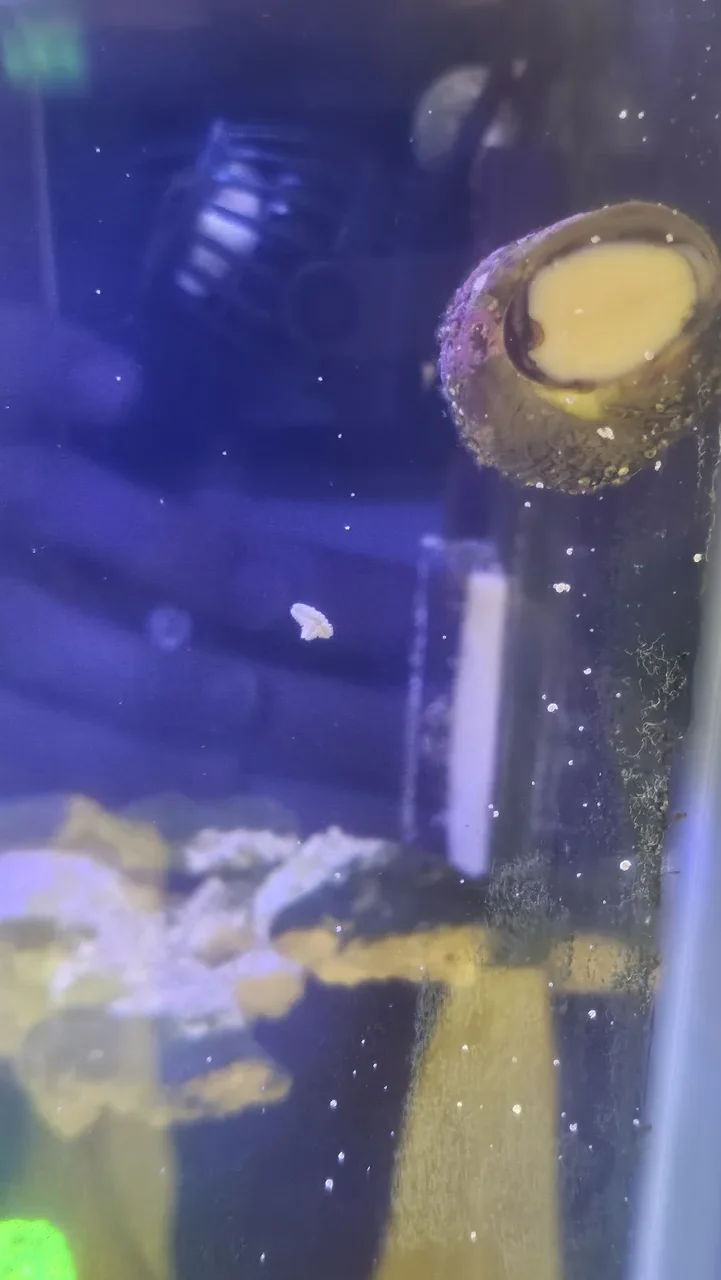
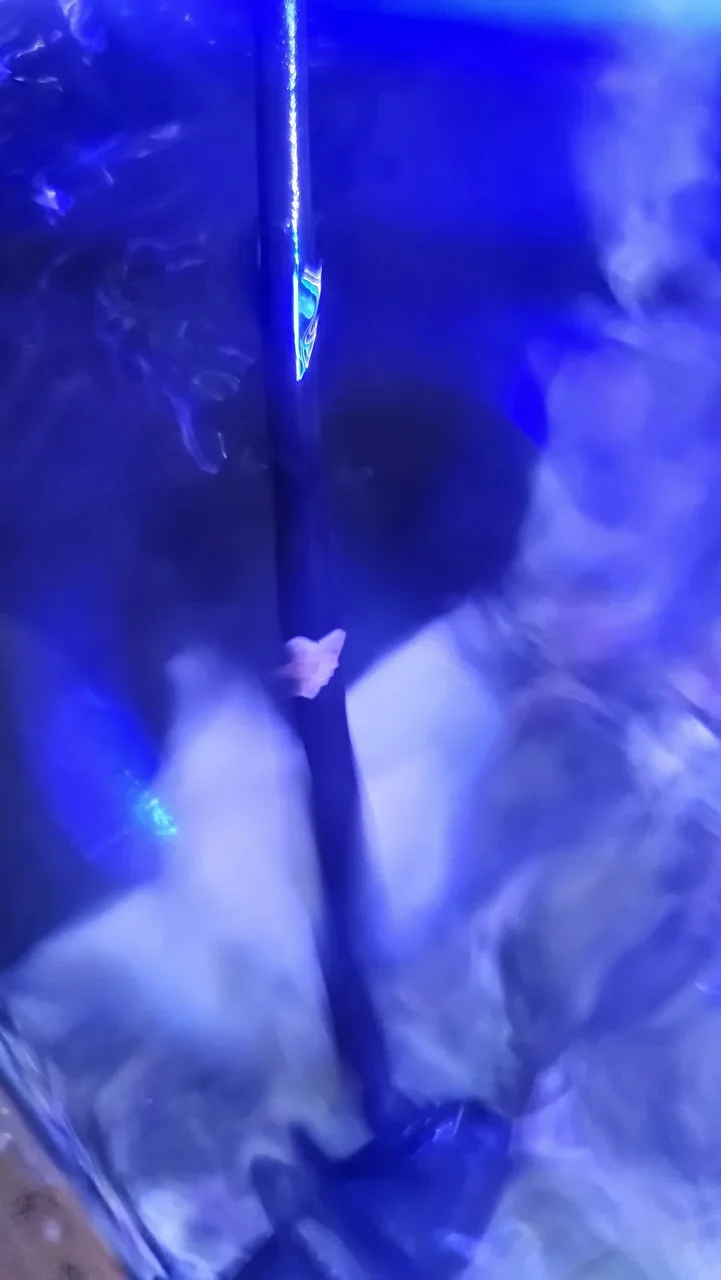
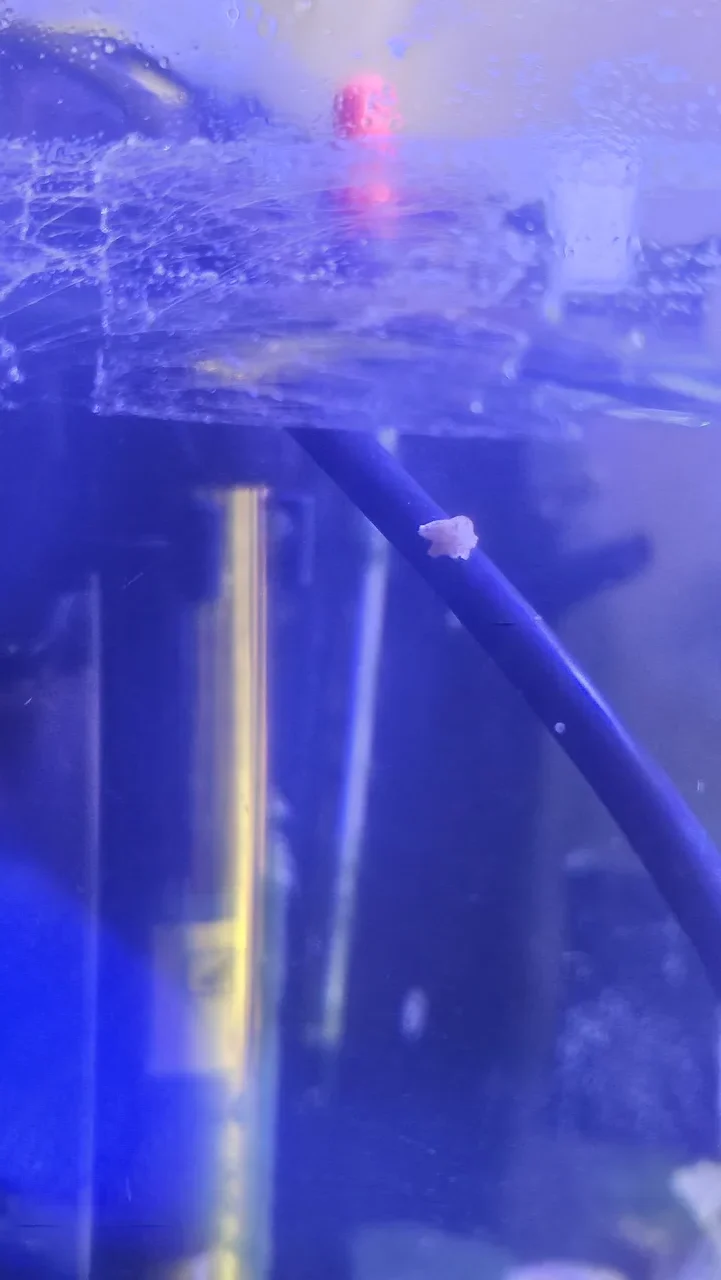
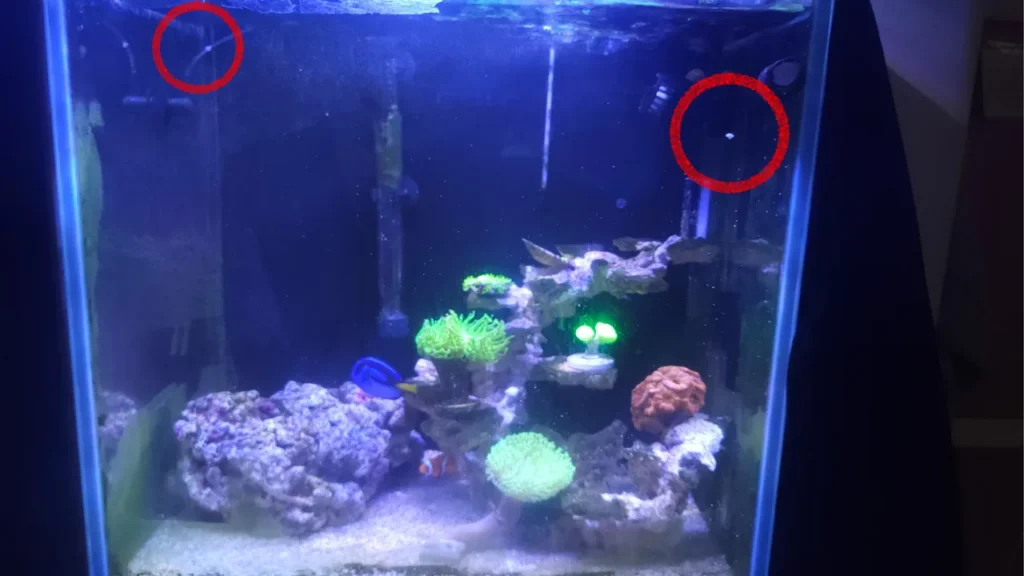
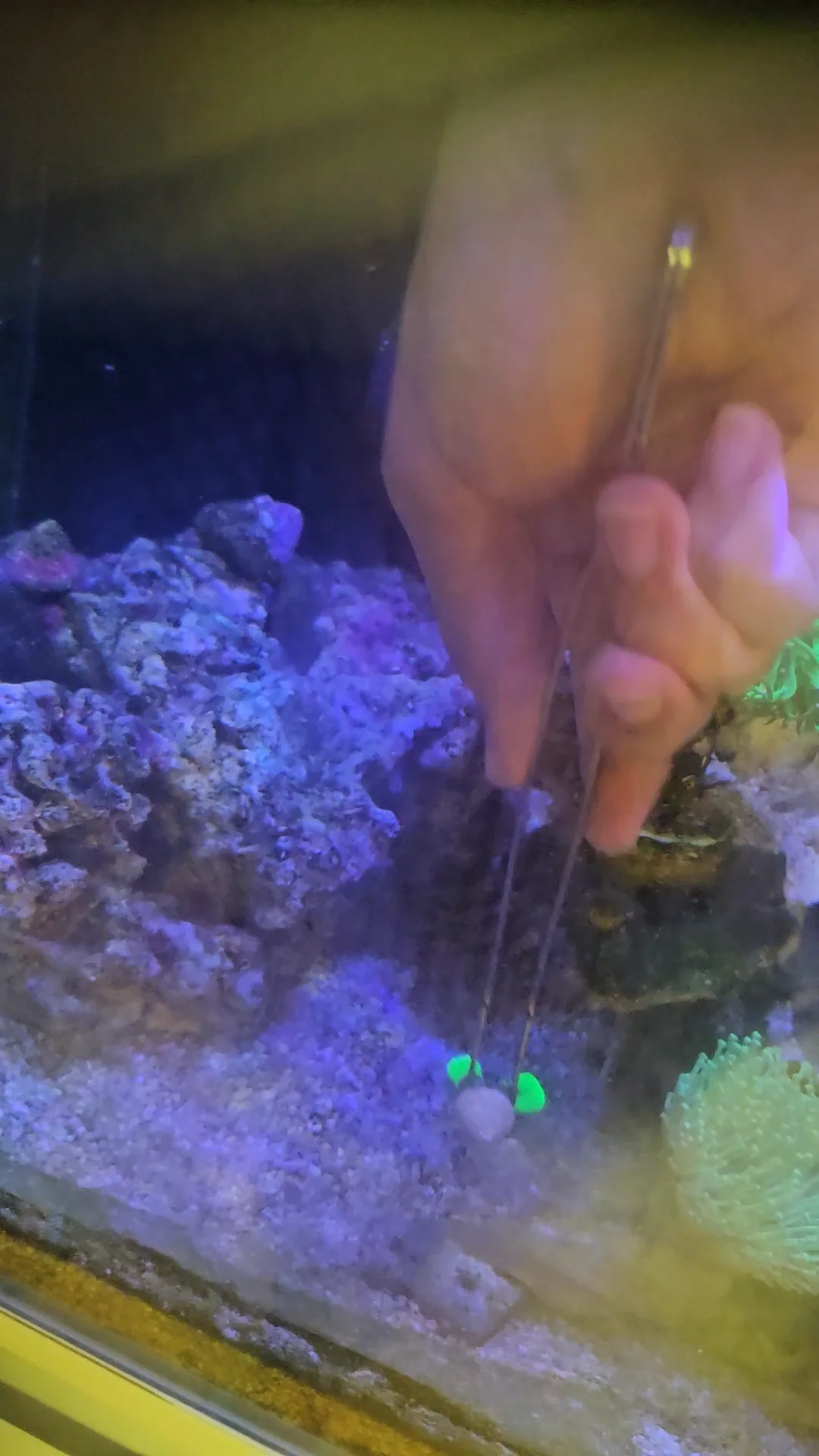
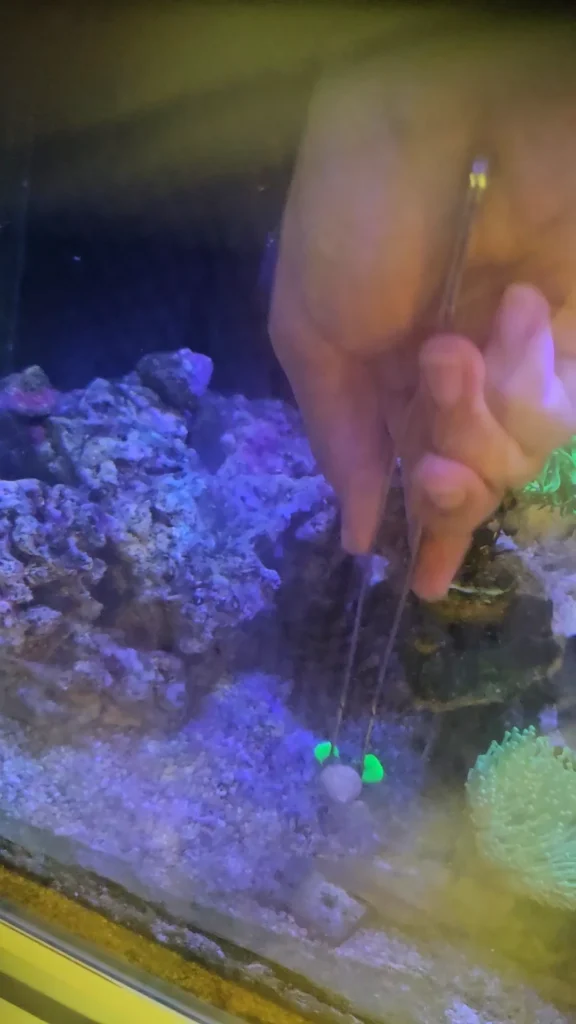
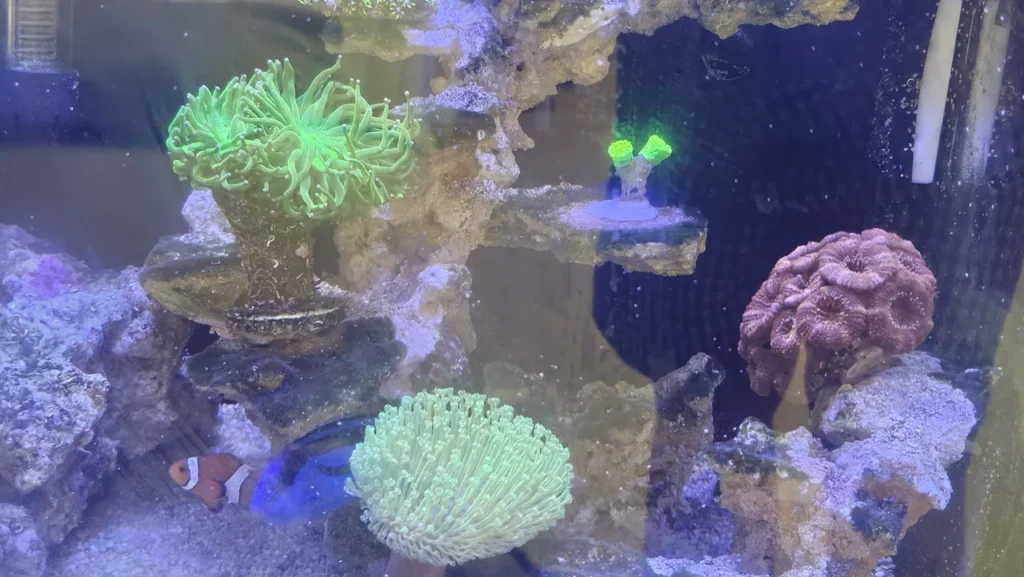
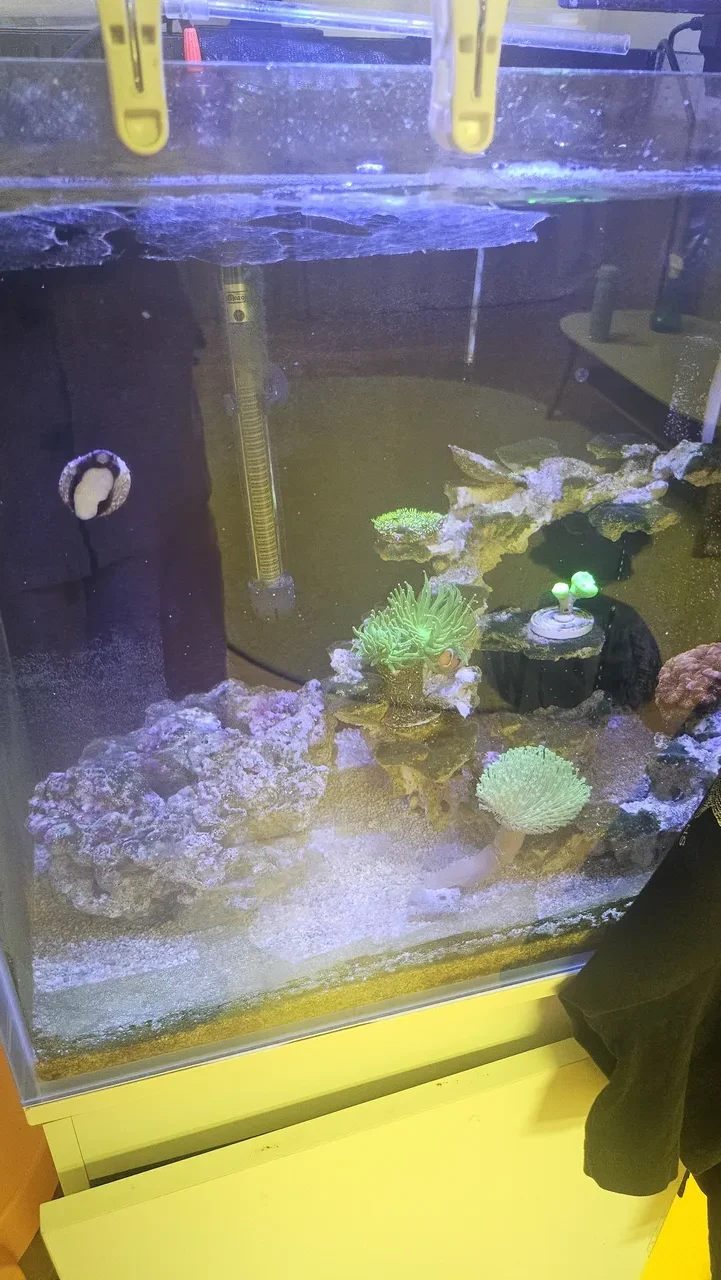
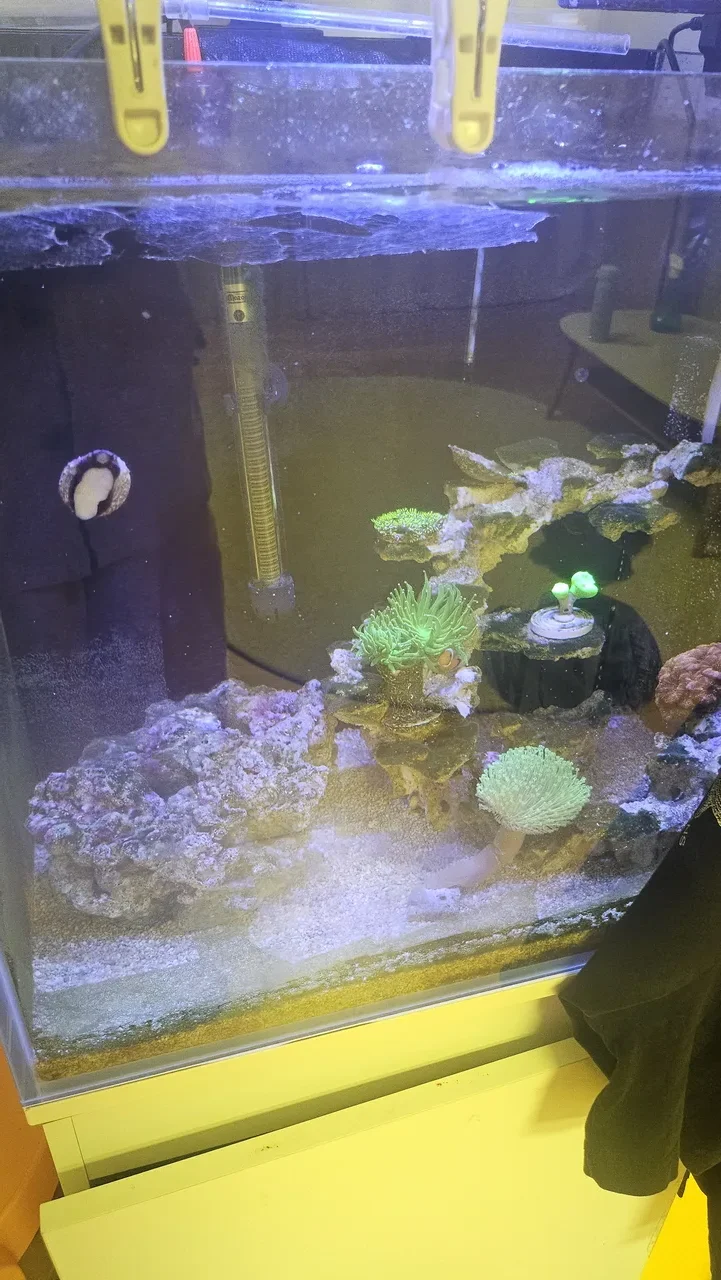
A new hitchhiker turned up while I was looking at the tank after a weekend water change!
As usual, I was just staring at the tank after the water change when I spotted something big moving near the top.
Whenever I change the water, I look for small bristle worms and brittle stars and remove them before they get too big. I'd already caught a few little ones that day.
This one looked like a worm. Had I missed one? I wasn't feeling too happy as I took a closer look, but thankfully, it wasn't a worm.
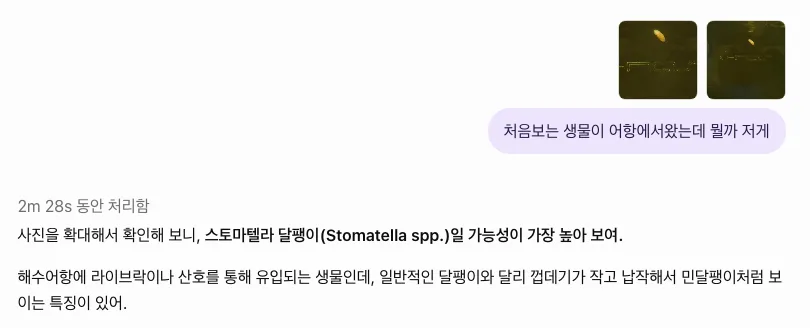
That was a relief, though I still wanted to know what it was. As soon as I spotted it, I took some photos and asked GPT, "Hey, what's this?!"
Good.
I Googled Stomatella and compared the photos. Convinced that was what I'd found, I looked back at the tank to enjoy watching it. In less than a minute, it had hidden somewhere. I couldn't find it at all.
After reading that it eats algae off the glass and live rock and leaves corals and fish alone, I wanted to watch the little guy without worrying for a bit.
It probably slipped between the rocks. It still amazes me that there could be creatures in that live rock I know nothing about.
I've come across all sorts of hitchhikers: crabs, bristle worms, Aiptasia anemones, brittle stars, sponges, and more.
I've tried hard to remove some of them and spent time looking things up. Whether I like finding them or not, these discoveries have become part of the fun.
I can't completely control everything living in the tank anyway. I've changed my approach a bit: relax, and just keep things from multiplying too much or getting too big.
When my wife and I were dating long distance, we took turns meeting in Gunsan and Seoul.
We dated for about nine years. Sometimes I wonder if we’ve ever been somewhere, only to find a photo we took there years ago.
After moving out, getting married and settling in Gyeonggi-do, we started spending much less of our free time in Seoul.
I love being at home with just the two of us. I also commute to Seoul during the week, so by the weekend I usually want to stay away from it.
I love home. So much. Home is the best.
Lately, though, I’ve wanted to revisit the places we used to go and do some of the things we did when we were dating.
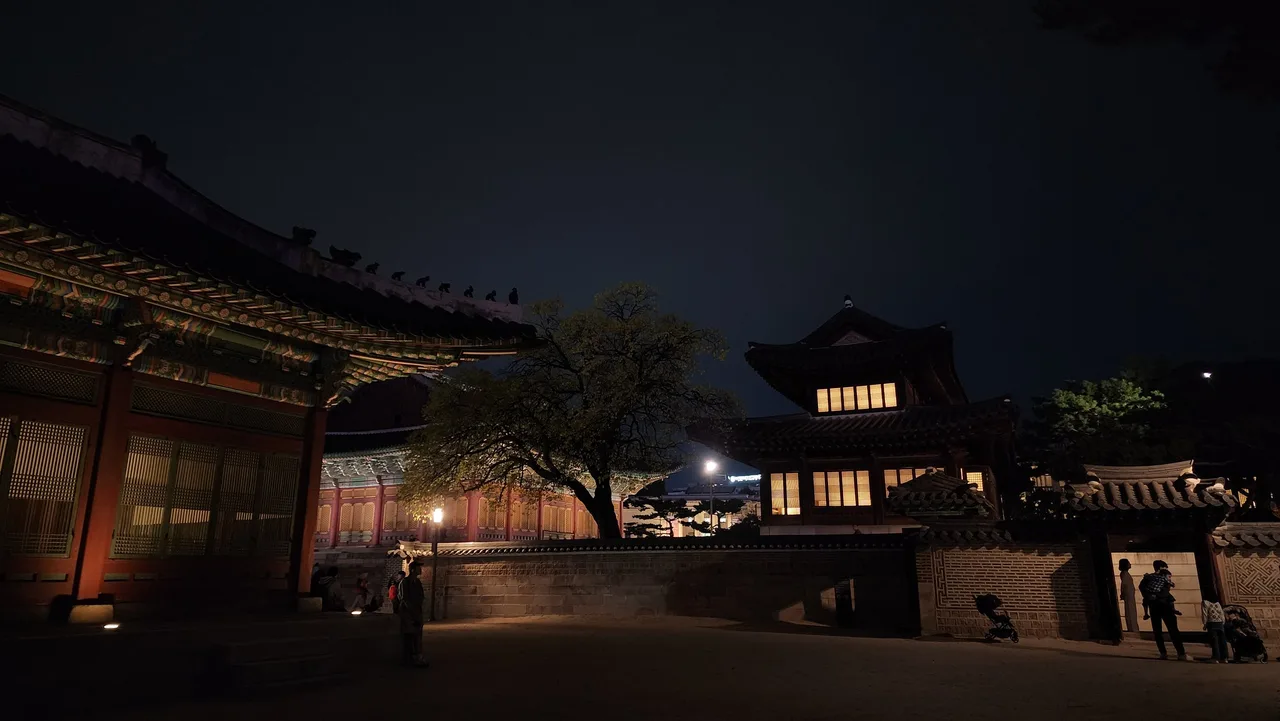
We always liked seeing plays in Hyehwa, so we decided to catch a play there and visit Deoksugung afterward.
When we arrived at Hyehwa Station, familiar sights caught my eye: the red brick building whose name I still don’t know, street food stalls and people out on the street promoting plays.
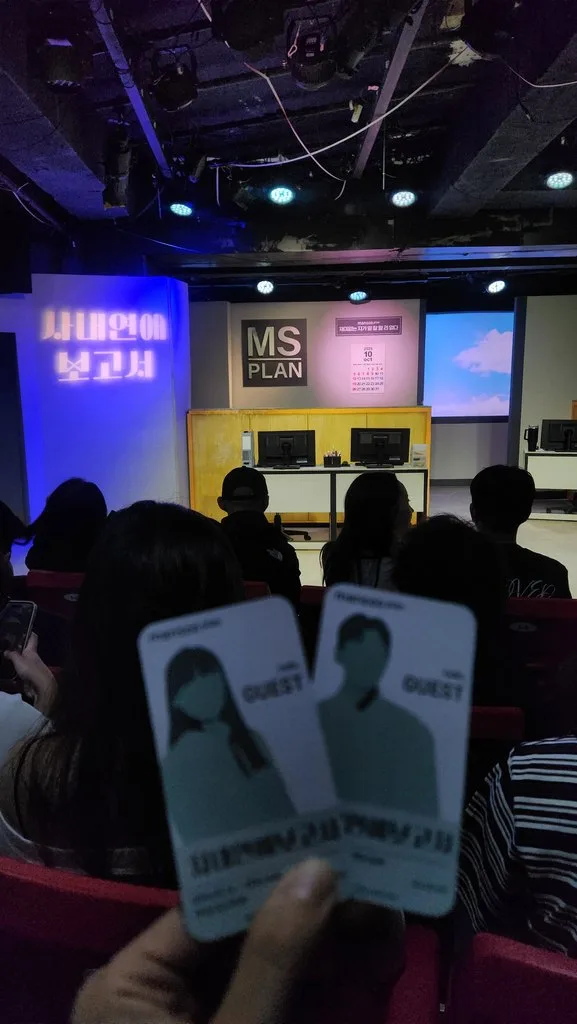
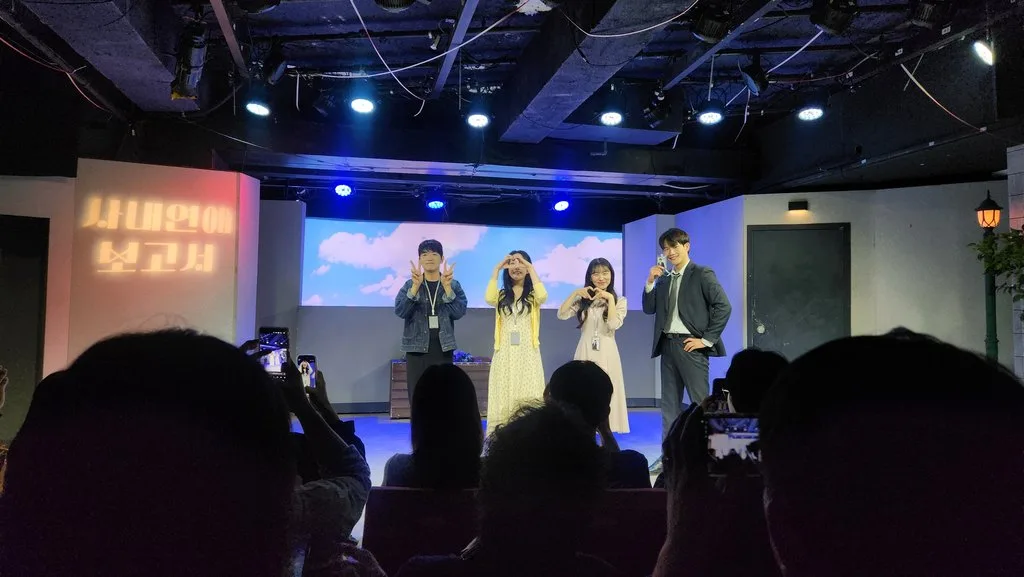
We saw a play called Sanae Yeonae Bogoseo. Before the show, one of the actors who plays several roles picked a few people from the audience and asked why they deserved a gift.
One person said they’d come from Busan, another from Seattle. Someone else said they had a disability and had come to see the play in a wheelchair. Then, suddenly, it was my wife’s turn.
Caught off guard, she blurted out, “We’ve been living together for two years.”
When I asked her later, she said the words had come out before she could think. I hadn’t thought of an answer either. I’d been sitting there thinking, “Please don’t pick me.” I probably wouldn’t have done much better.
She’d never been put on the spot like that at a play before and said she’d panicked and said whatever came to mind. I think I’d do the same if someone suddenly asked me a question.
The actors really gave their voices a workout. We enjoyed the play, then got on a bus toward our next stop, Deoksugung.
The actors really gave their voices a workout.
Had it been so long since I’d traveled around Jongno on a weekend that I’d forgotten what it was like? The bus barely moved. I wondered what was going on, then realized there was a protest.
Aaaaaargh!!!
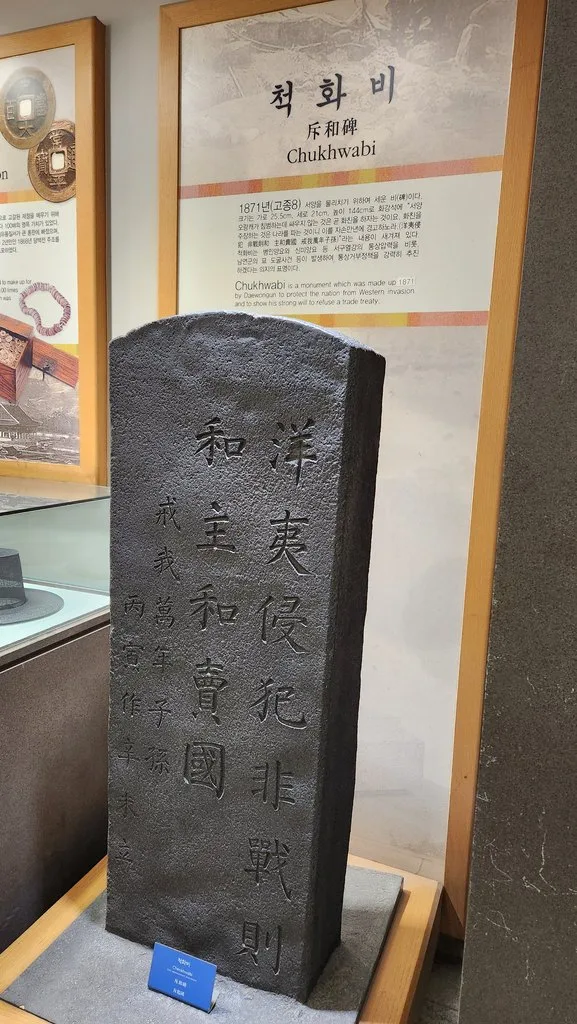
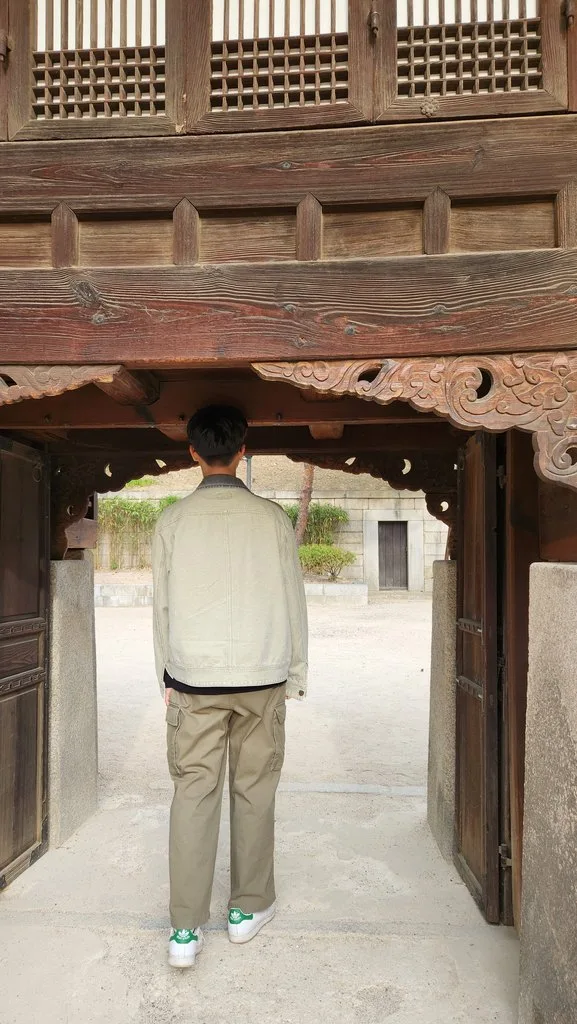
We got off the bus and started walking. A large hanok, a traditional Korean house, appeared beside the road. We both like finding things we hadn’t planned for, so we went straight in.
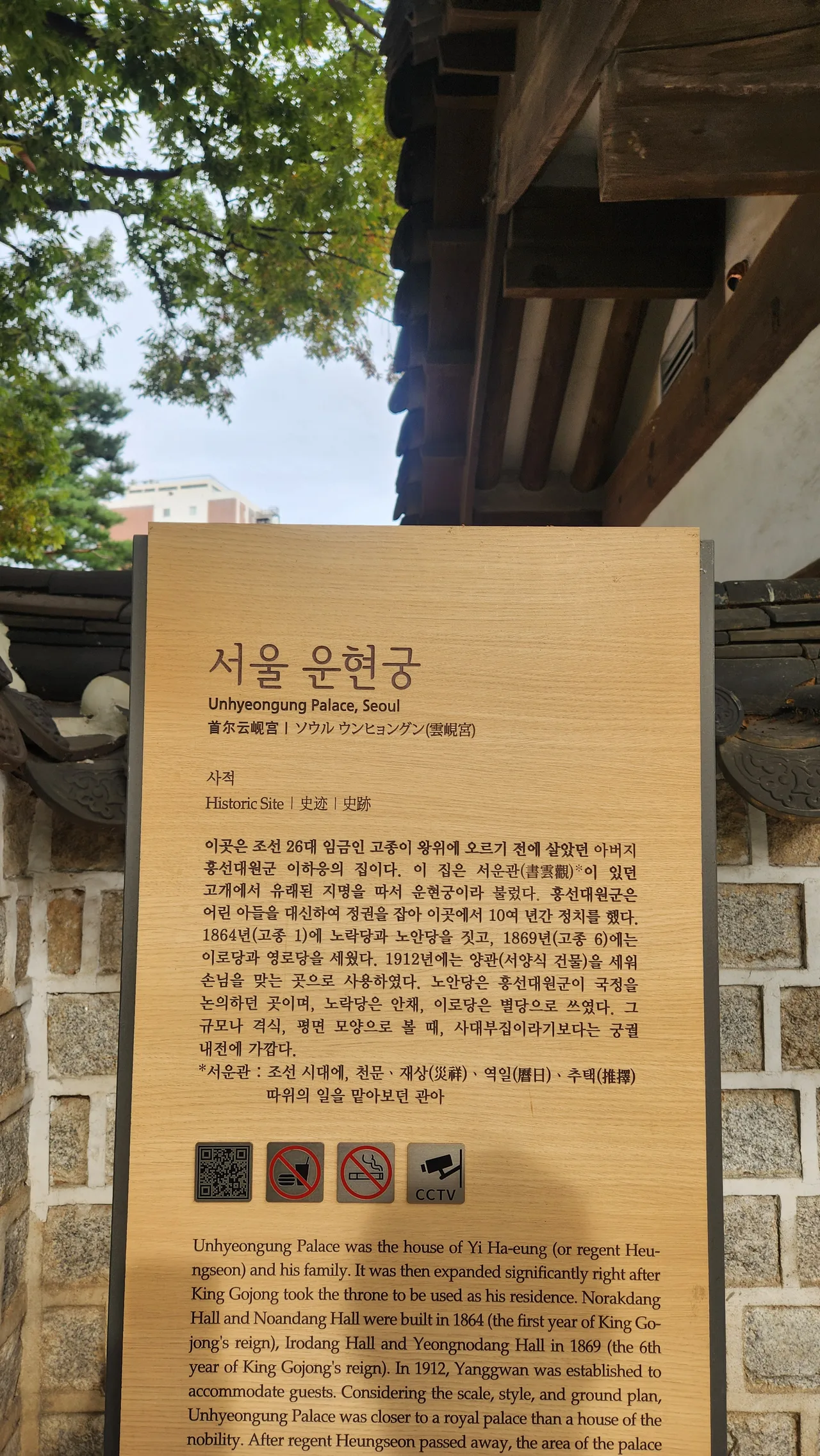
It turned out to be Unhyeongung, where Heungseon Daewongun had lived.
Thinking about it, I studied Korean history in middle school, took the science track in high school and studied engineering at university. I’ve never really studied it properly. So finding Heungseon Daewongun’s house out of nowhere was a surprise.
My wife heard the name Unhyeongung and knew it was his house. I was impressed by that, too.
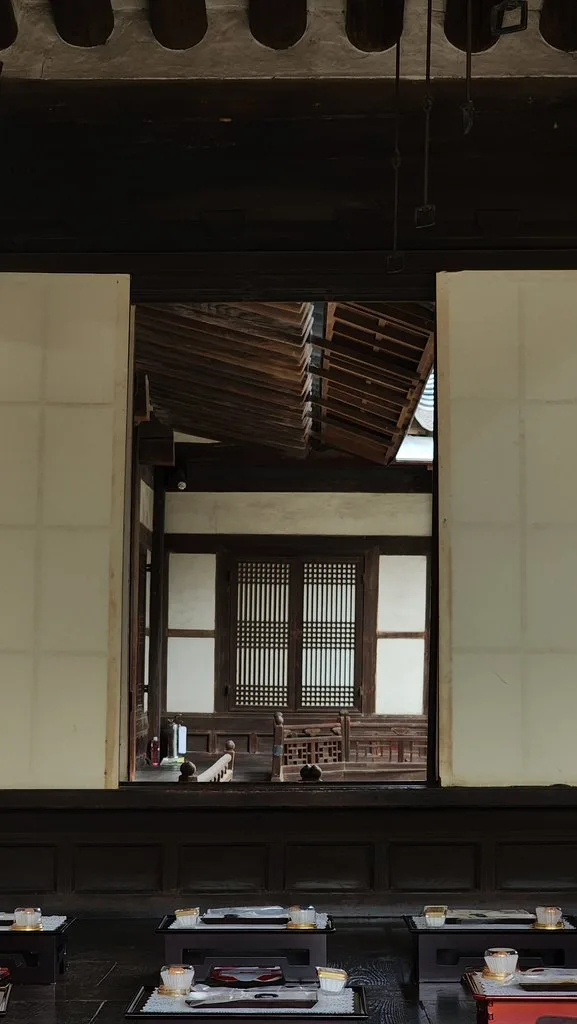
Whenever I visit a palace or a hanok within the old city walls, I imagine looking out through one of these windows in the Joseon era, before tall buildings were everywhere. That must have had a lovely atmosphere of its own.
It looks like you can also reserve a tea experience here.
Then I remember the bloody parts of Joseon history and think life in a palace probably wasn’t easy either. I don’t know enough about it, so I’ll just enjoy the atmosphere.
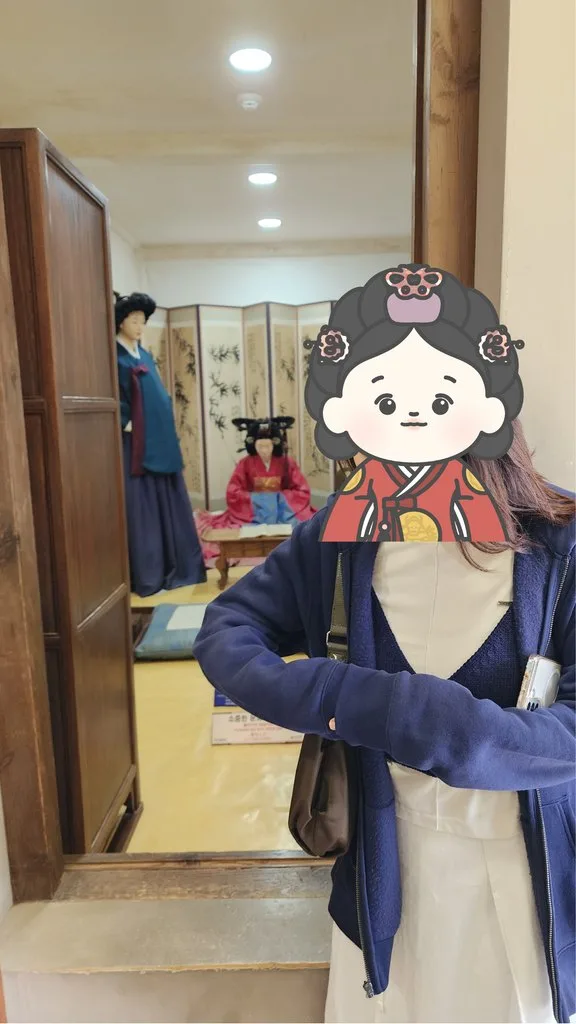
How did women living in Joseon palaces not break their necks?Glad my head reaches it.
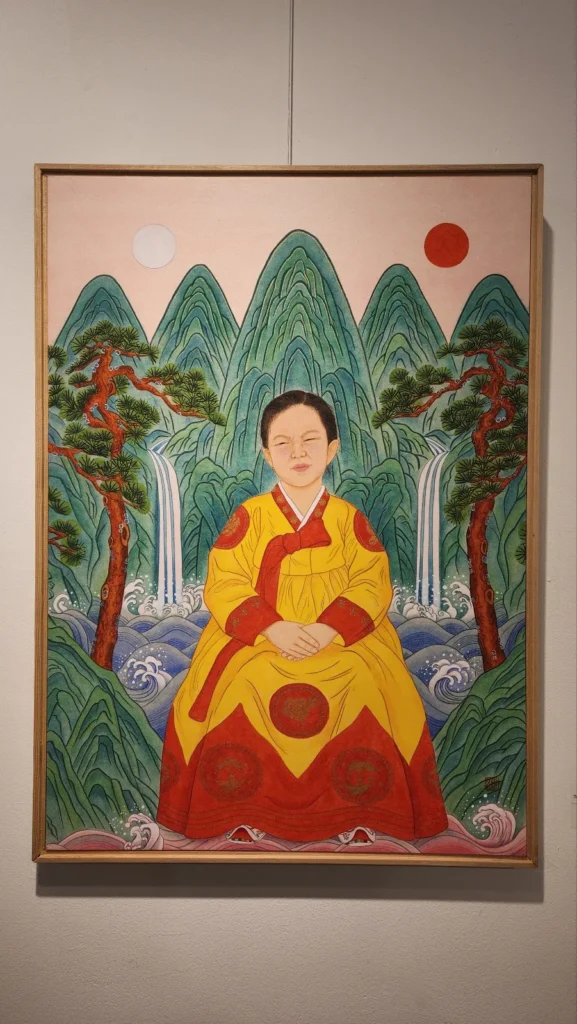
There was also a small art exhibition at Unhyeongung. The exhibitors were people with day jobs who had learned minhwa, traditional Korean folk painting.
Learning to paint these themselves takes dedication. Their paintings were impressive, too.
After taking photos and spending some time at Unhyeongung, we started walking toward Deoksugung again.
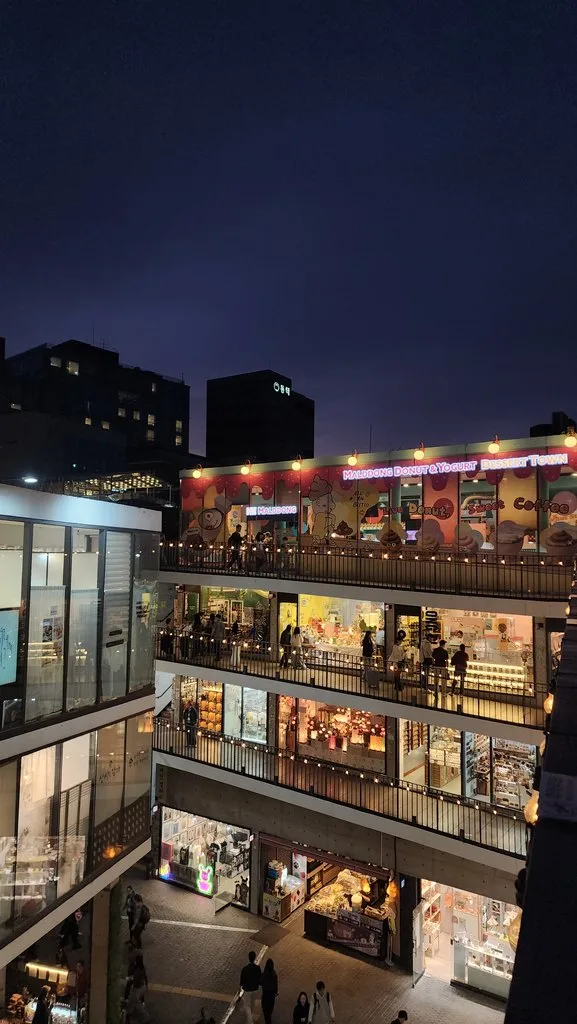
Maybe ten minutes later, we came to an alley with upscale galleries, traditional craft shops and displays of casual hanbok clothing.
“Is this Insadong?” we wondered as we walked. Sure enough, we came out of the alley onto Insadong’s main street.
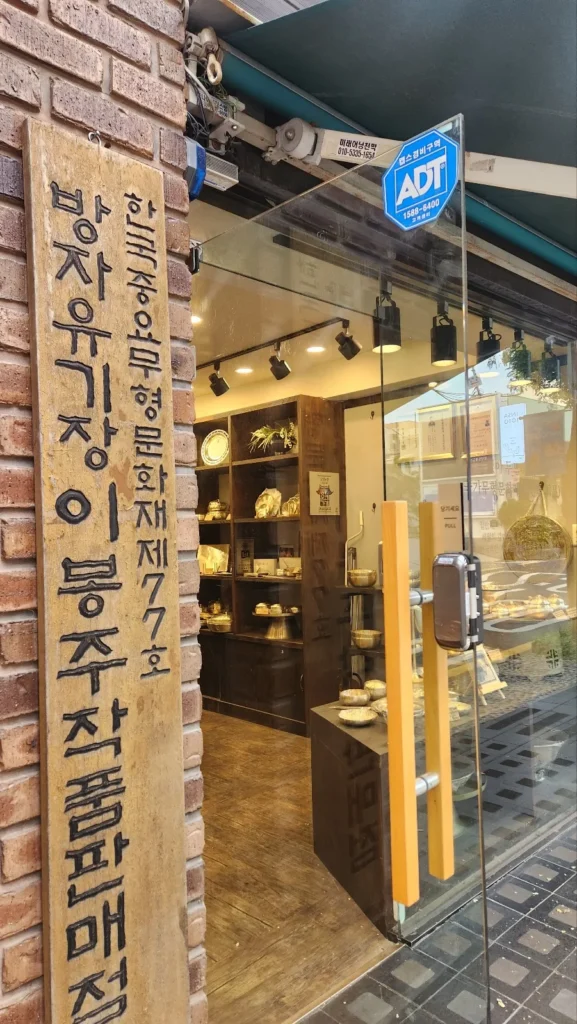
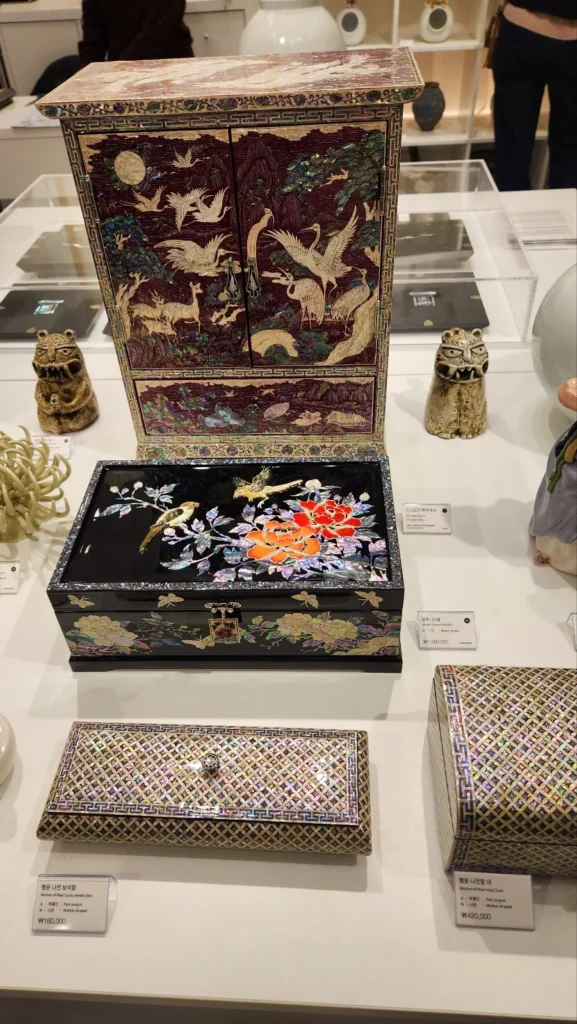
The last time we’d been here was for a tea fair. My wife loves tea. This time she was excited to look around the shops, especially at ilwol obongdo paintings of the sun, moon and five peaks, and mother-of-pearl lacquerware.
A little old-fashioned, but pretty, too.
When I was little, my grandmother’s house had plenty of black wardrobes and boxes decorated with mother-of-pearl. I didn’t think much of them then. These days, I find those decorations beautiful.
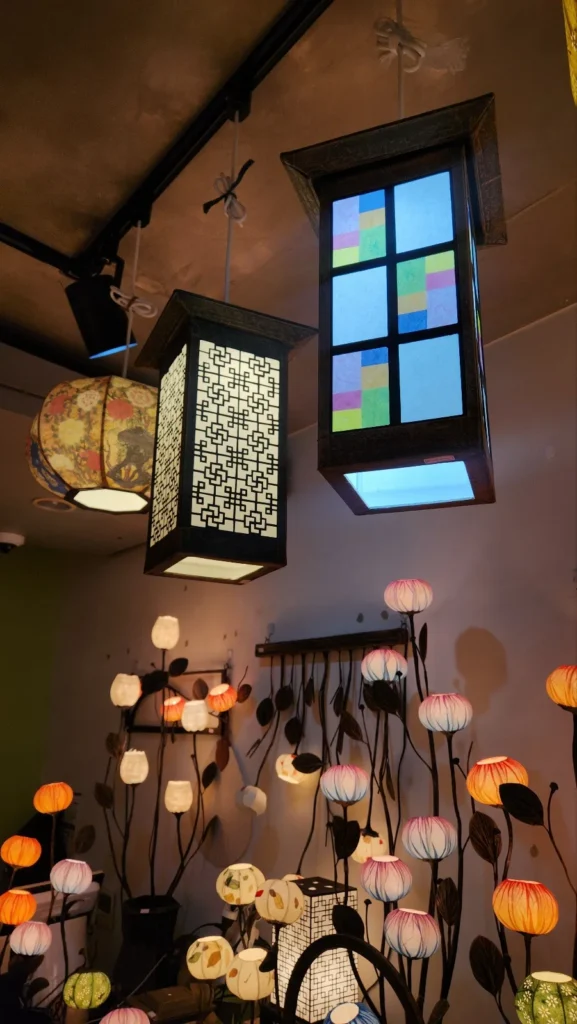
We looked around a few shops and visited Ssamzigil again. Some of the lamps there combined hanji paper craft with lighting.
I want to take one home.The lighting shop in the middle of the second floor. The photo doesn’t really capture the atmosphere.
There were floor lamps, wall lamps and table lamps in different sizes. I wanted to bring one home for our bedroom, something with the soft glow I imagine from candlelight in the Joseon era.
I also noticed lots of one-day workshops where you could make something using mother-of-pearl or hanji paper. I’d like to try making my own mother-of-pearl piece sometime.
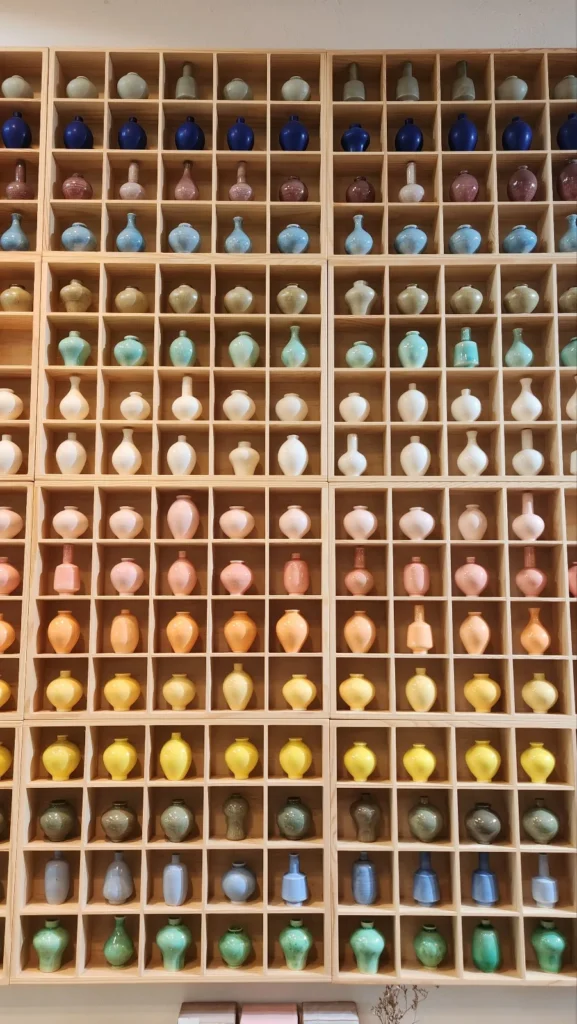
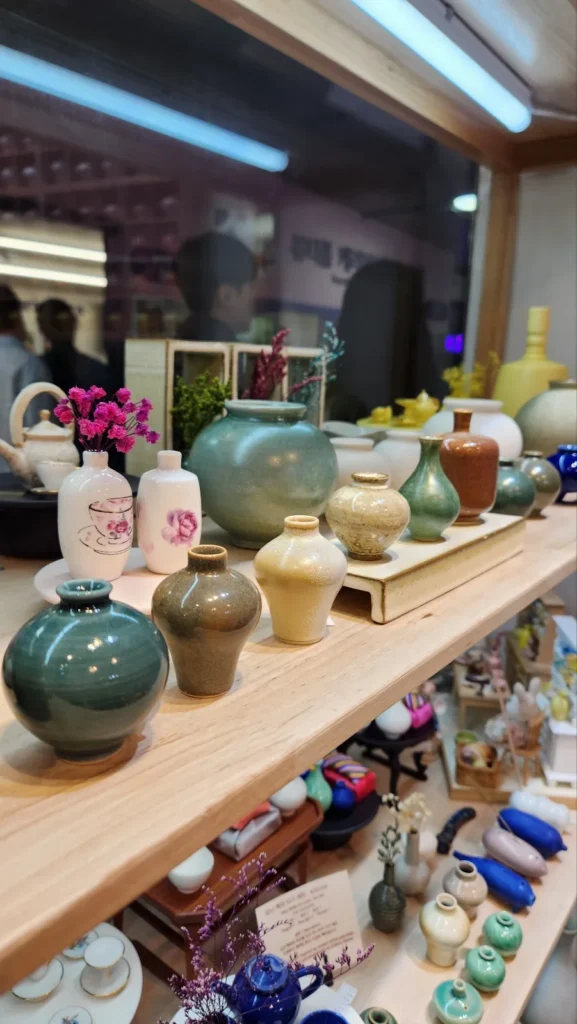
Artifacts from the royal tomb of Princess Hyejin of Gunsan (She was next to me telling me to write this.)Cute white porcelain.
After some deliberation, my wife bought a mother-of-pearl ring. Funnily enough, they were selling abalone shells next to the rings for 6,000 won each.
We had so many shells left over after eating abalone over the holidays. Should I start selling them as a side job?
After dinner, we headed toward Deoksugung again.
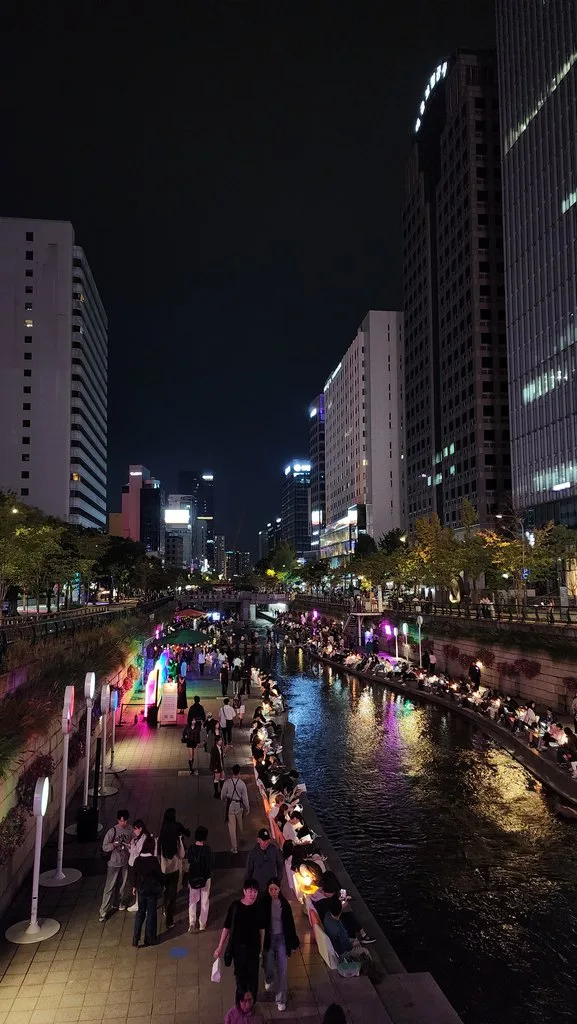
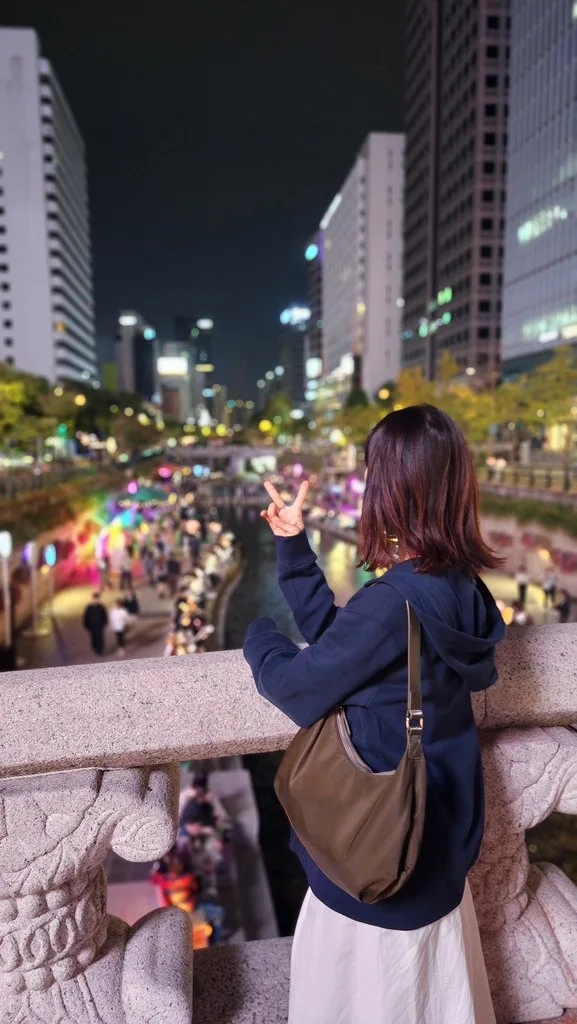
Then Cheonggyecheon appeared. I hadn’t expected to fit that in, too. This day was like an onion: peel back one layer and there’s something else to do.
It had been a while since I’d visited Cheonggyecheon, and now there were comfortable, beanbag-like seats beside the water. I used to spend ages there staring at the stream. A bird, maybe a heron, would turn up and catch fish, and I’d sit and watch. It brought back a lot of memories.
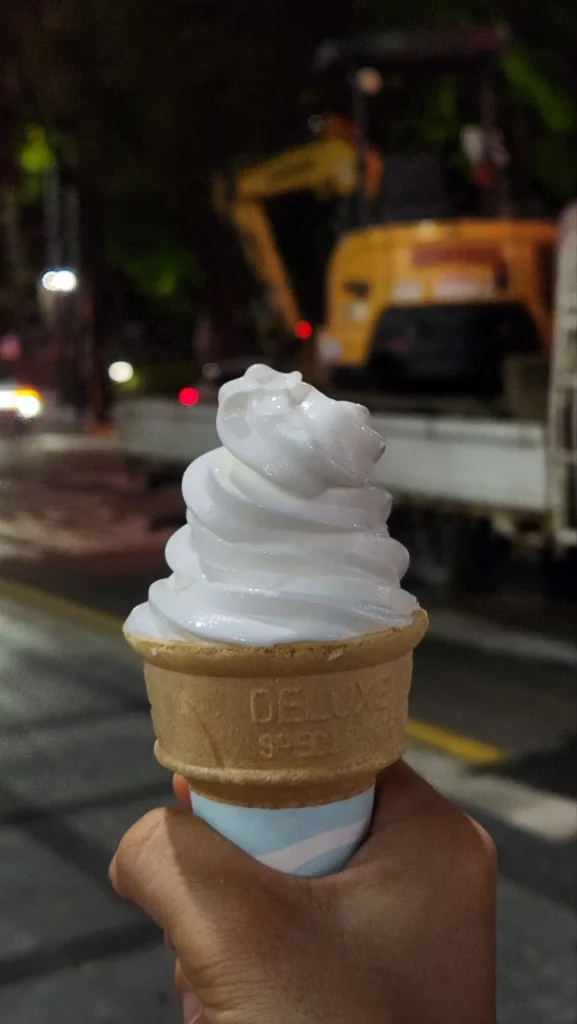
On the way, I had a soft-serve cone from McDonald’s. I hardly ever snack, and I couldn’t remember the last time I’d had one.
I remembered them costing 500 won. This one was 1,500 won. Of course the price had gone up, but it still surprised me.
The shocking soft-serve cone.
My parents used to tell me about jajangmyeon costing 100 won and ramyeon costing 50 won. I couldn’t imagine it.
If I tell my kids one day that a small cup of tteokbokki was 300 won, a bigger one 500 won and a serving in a foam container 1,000 won, they’ll probably have the same reaction.
Will a soft-serve cone really cost 3,000 won by then?
The plan had been to go straight from the play in Hyehwa to Deoksugung. We’d found so much to do along the way that it already felt like a full day.
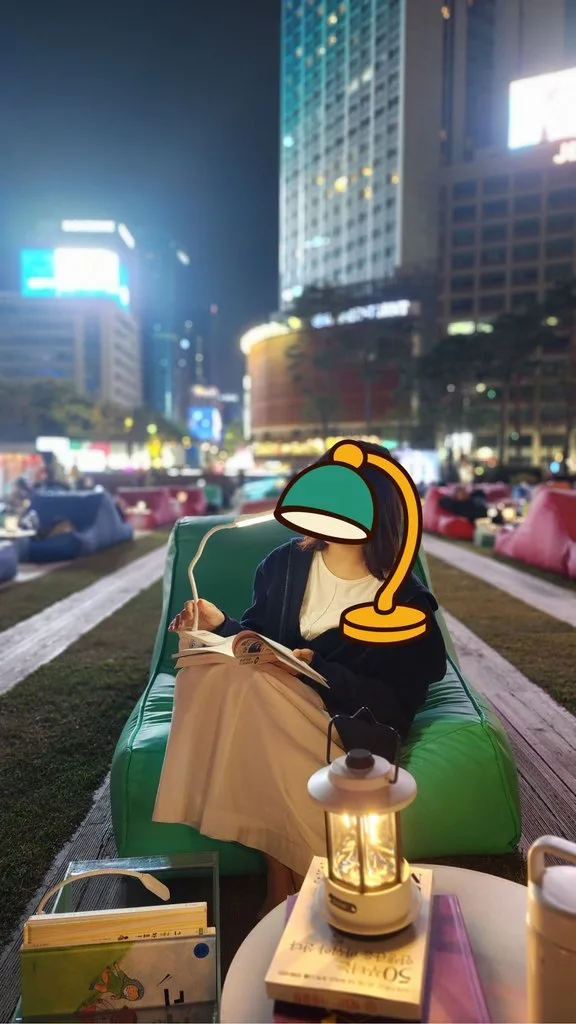
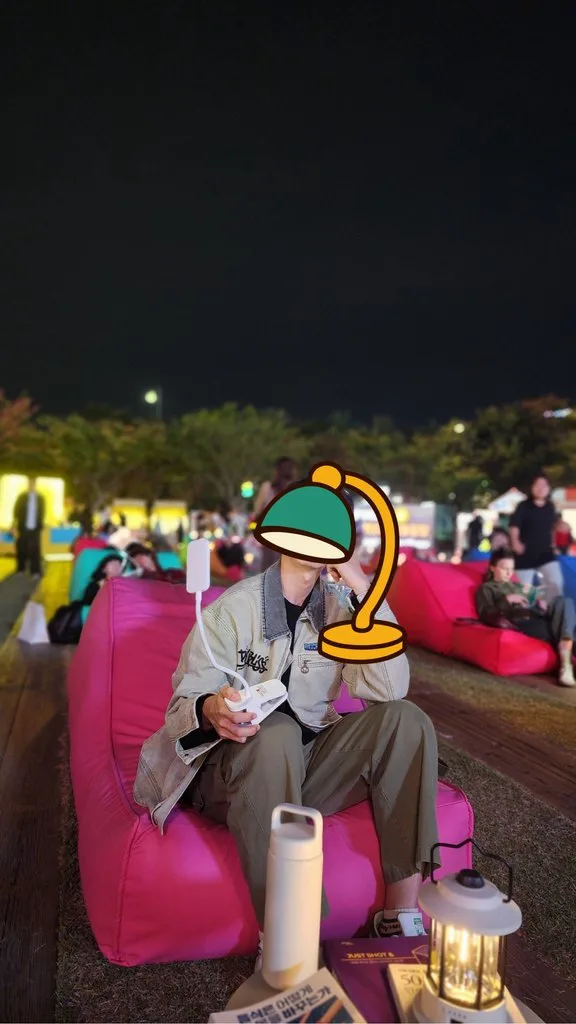
Just as we were getting close to Deoksugung, we saw lots of beanbags spread across the plaza at Seoul City Hall. Soft music was playing. People were lying down for a nap, reading books or looking at their phones.
I wondered what this was. It turned out to be Seoul’s outdoor library.
Who comes up with these clever ideas?
We were tired after dinner, and the air was cool. This is one of those short, precious stretches of the year in Korea when just being outside feels good. We settled in and listened to the music. I took a short nap while my wife read.
Sometimes I go to a cafe on the weekend intending to read, but it’s too noisy. The book often comes home with me, and I read it there instead.
Here, the open space, background music and everyday sounds felt just right together. I wanted to come back with a book.
We left ten minutes before the 8 p.m. admission cutoff at Deoksugung, only to find a fairly long line.
We hurried over before it got any longer. Luckily, we made it inside at exactly 7:59 p.m.!
Made it!
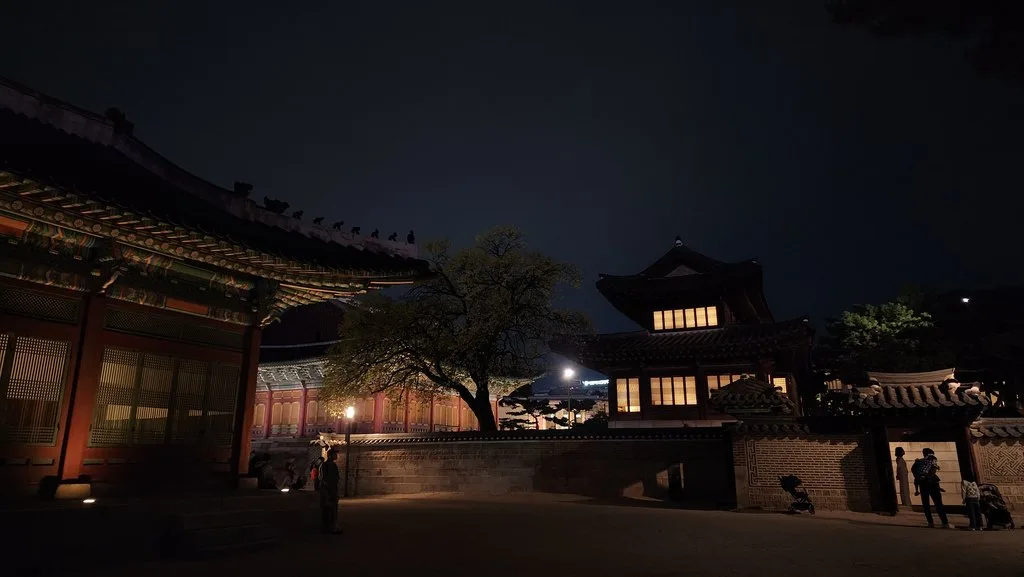
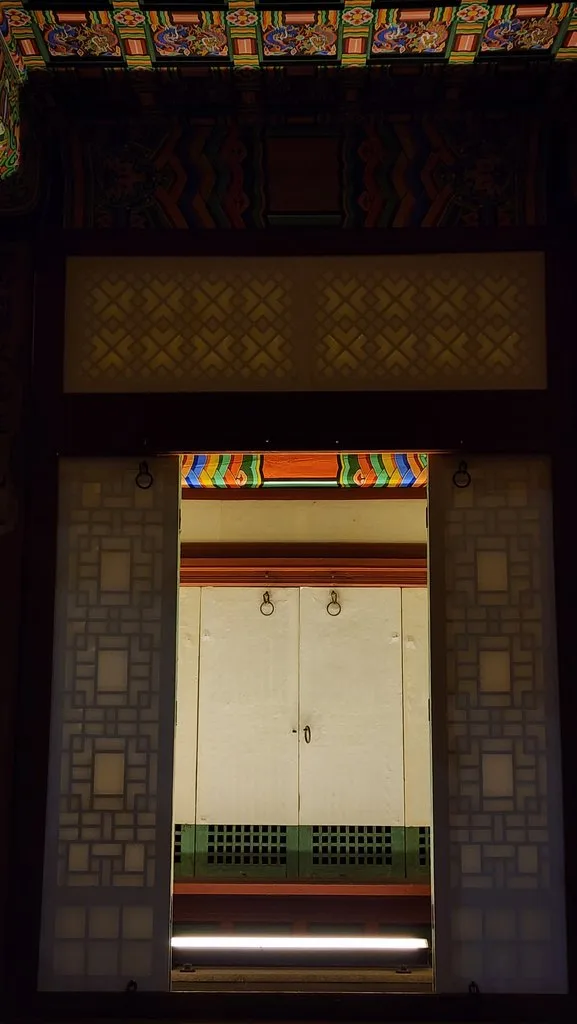
The grounds closed at 9 p.m., so we walked around while we could. Some buildings had the lower sections of their paper-covered window panels raised, which let us see inside.
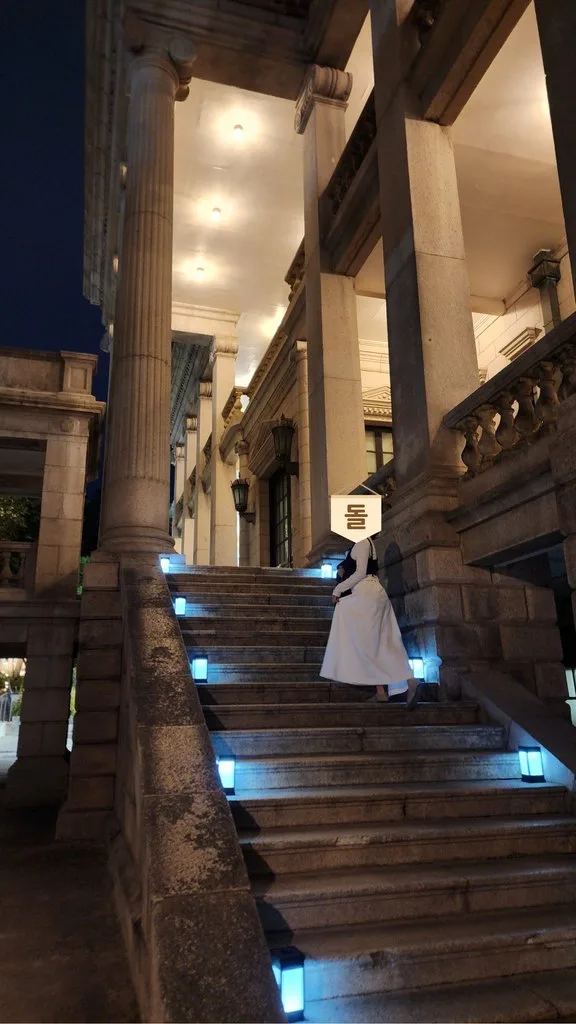
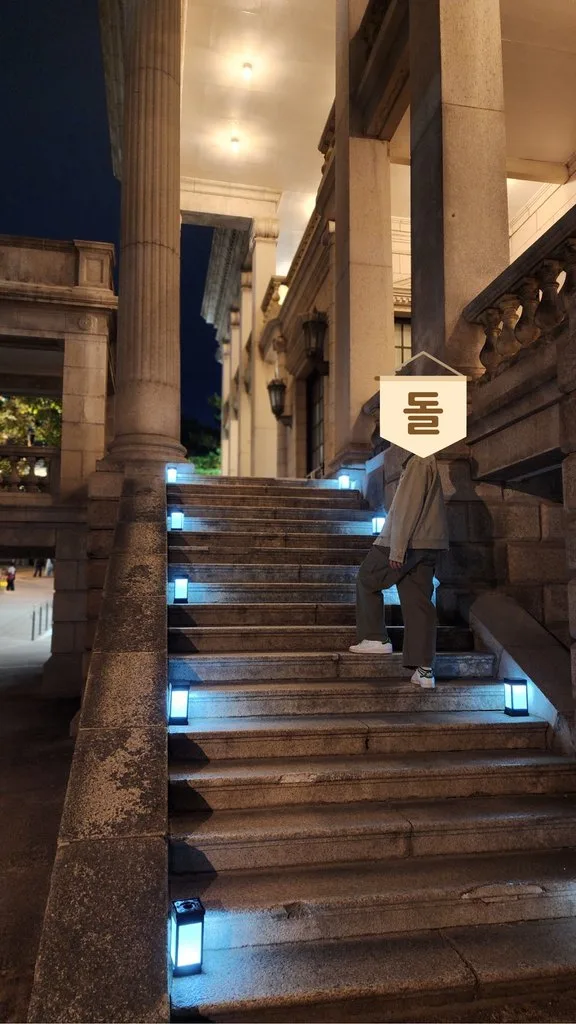
We took photos and chatted about what we were seeing. Then we came to Seokjojeon, a stone building that looks different from the buildings at the other palaces.
Every time I visit Deoksugung, I think I’ll come back for the tour inside Seokjojeon. I’ve never managed to get a reservation. I want to see what’s in there!
I’ll make it inside someday, Seokjojeon.
We stayed until 9 p.m., enjoying Deoksugung in the cool autumn air, then headed straight home.
We got on the subway at Seoul Station. Luckily, it wasn’t crowded, so the ride home was comfortable. Even the end of the day worked out perfectly!
We’d only planned two stops: Hyehwa and Deoksugung. So much else turned up along the way. I was annoyed when the protest held up our bus, but without it we might never have visited Unhyeongung or walked through Insadong. Then there was my first McDonald’s cone in ages, the outdoor library…
I really treasure these little gifts life hands us.
Just last week, the mornings were chilly and the afternoons were still hot.
Now there are ginkgo fruits on the pavement (maybe it’s a good thing I can’t smell anything right now?), a few leaves seem to be falling, and even the afternoons feel quite cool. Autumn is here.
I always feel this way when I look back, but I still can’t believe spring and summer have already gone by.
Still, I don’t think I’ve ever enjoyed each season as much as I have this year.
A few things that come to mind:
A winter trip to Hadong and Namwon early in the year, going around drinking tea. It was so quiet we barely saw anyone.
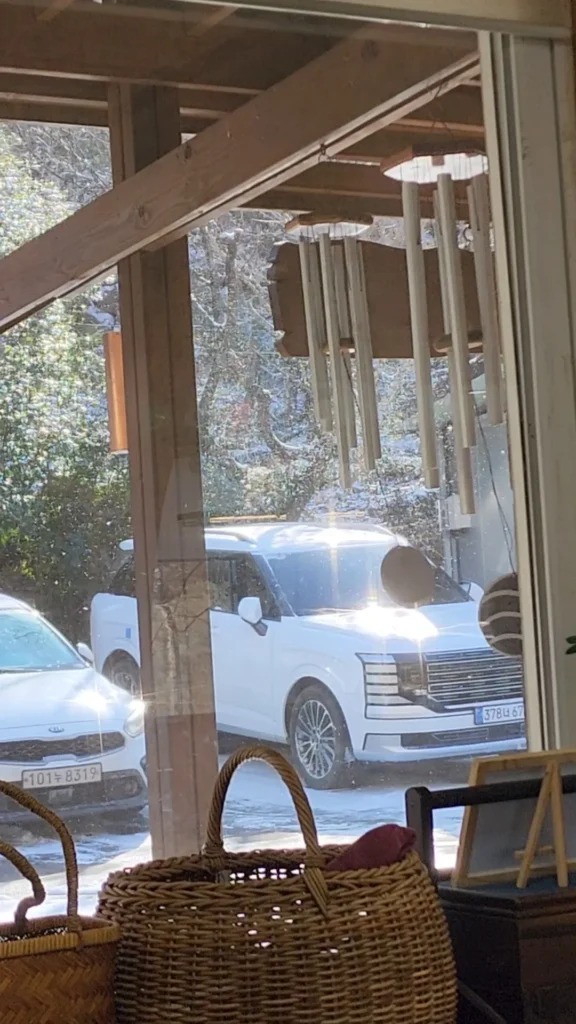
We got lucky with the tea experience in Hadong: it was just my wife and me, and I really enjoyed it. She still wants to hear the wind chimes we heard at the tea shop again.
The wind chimes at Gwana Sujecha. I really want to hear that sound again.
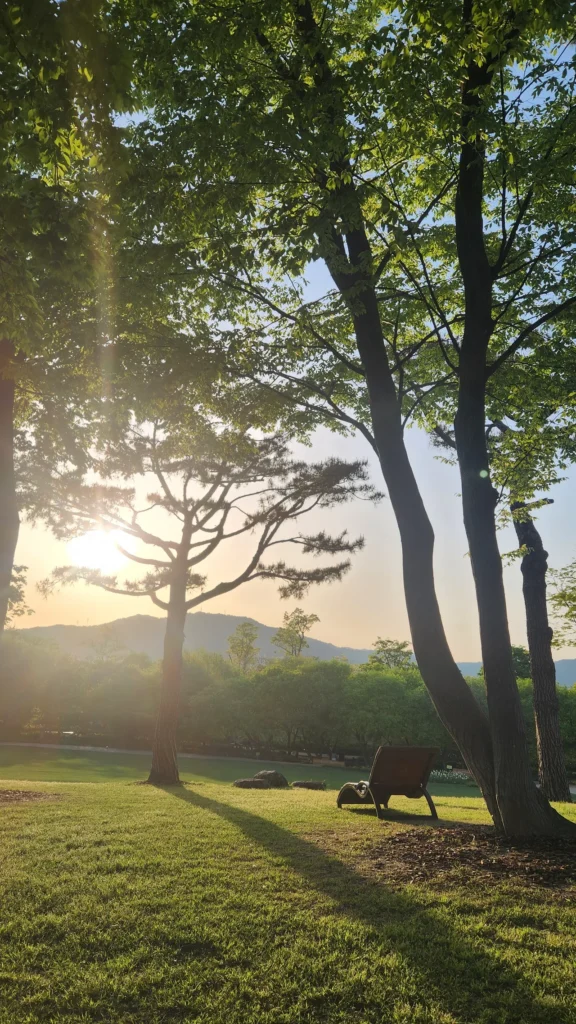
Suncheon Bay National Garden in spring. Even with a relaxed three-day, two-night visit, it was too big to see every corner. There were so many flowers.
The sunshine was lovely.
Haenggung-dong, which I’d never visited in my three years living in Hwaseong. As expected, it was crowded.
A trip to Jeonju and Gunsan with my wife’s family. The food was delicious.
The garden show at Seoul Forest, where the fresh potted basil and the plants from Africa caught my eye.
Starting this blog, which I’m putting all my energy into keeping up (I’d like to write about everyday life and development too, but I barely have time for the aquarium posts as it is… ㅠㅠ).
Malaysia in summer. The snorkeling really stayed with me.
An aquarium with corals I couldn’t stop staring at.
Having all four wisdom teeth removed, which I didn’t know was happening until the day before.
Trouble in my 45 cm cube tank, and so on…
So much has happened that it all feels like ages ago already.
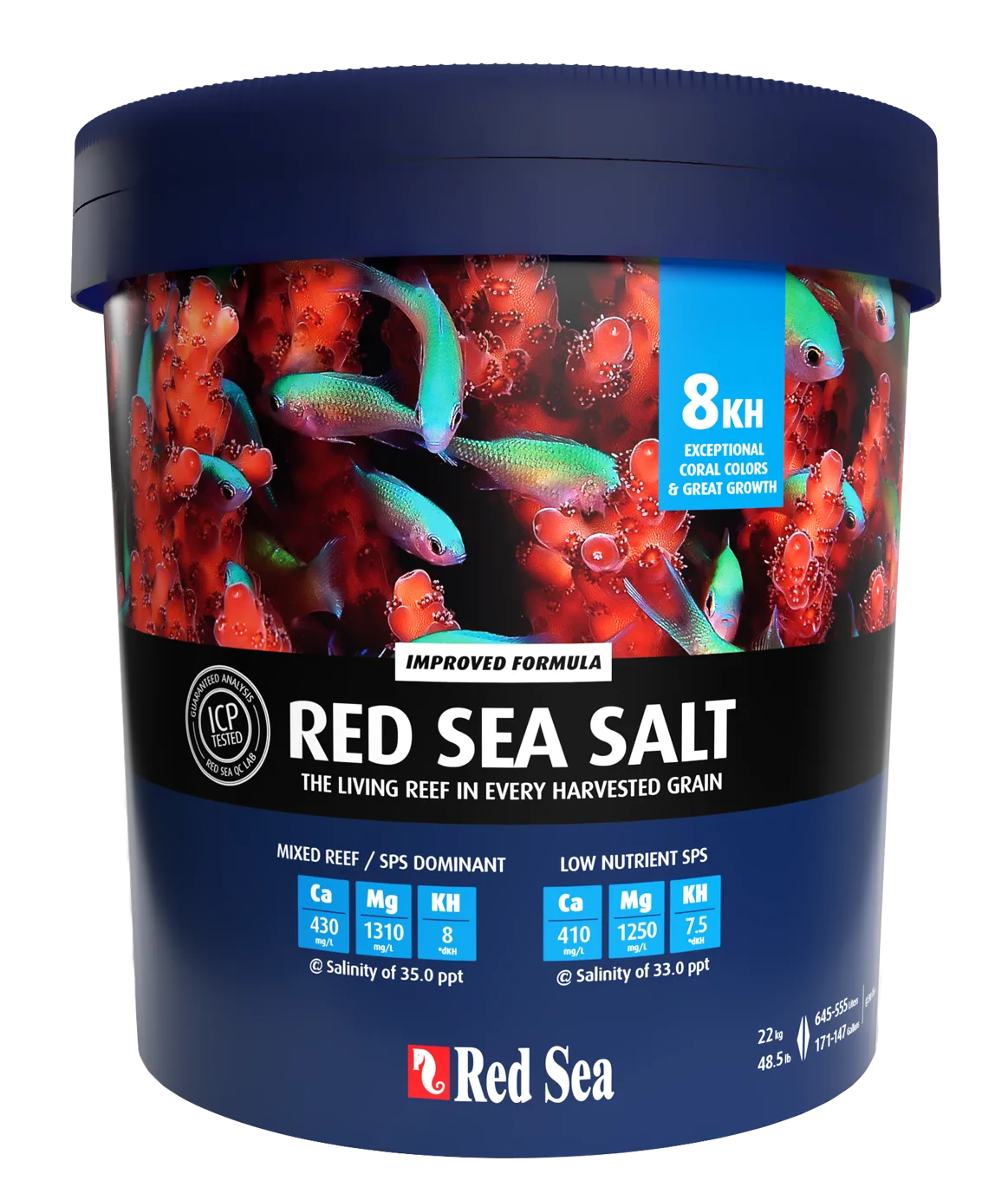
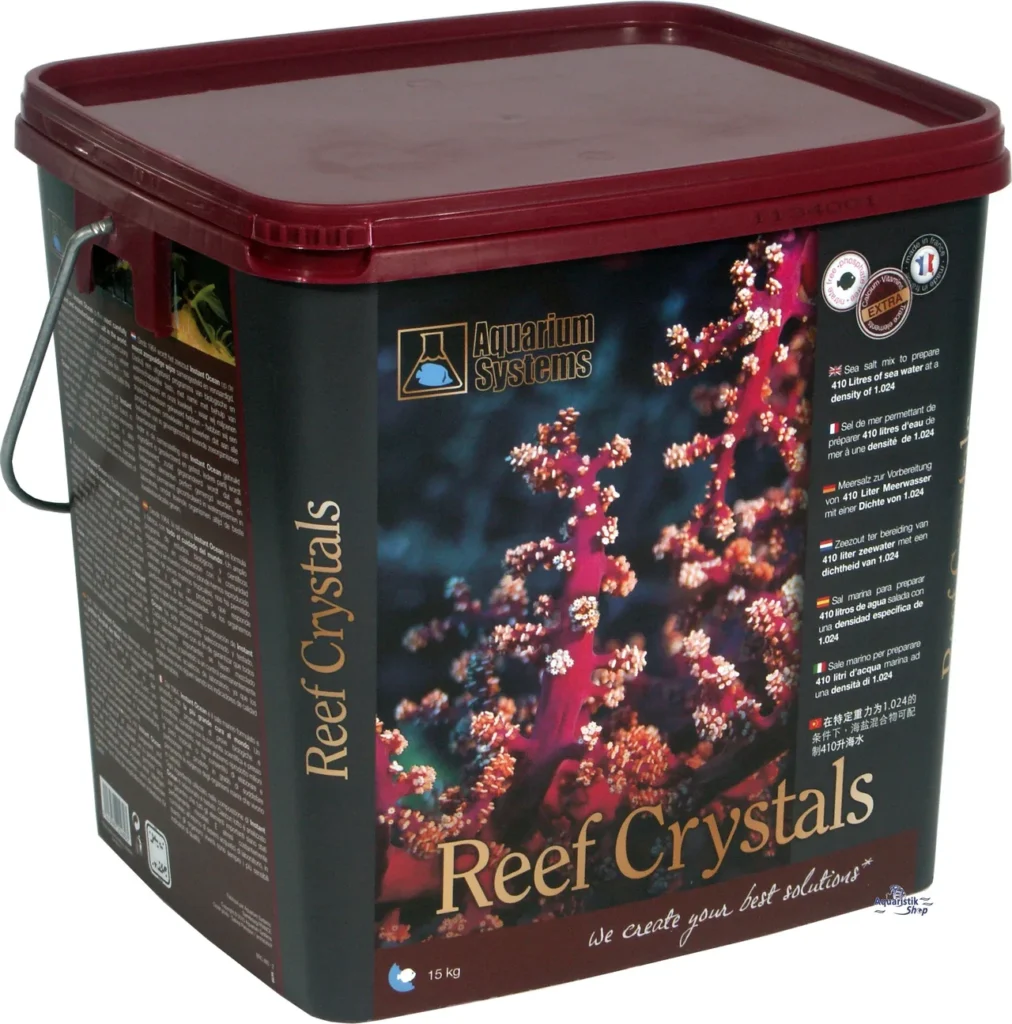
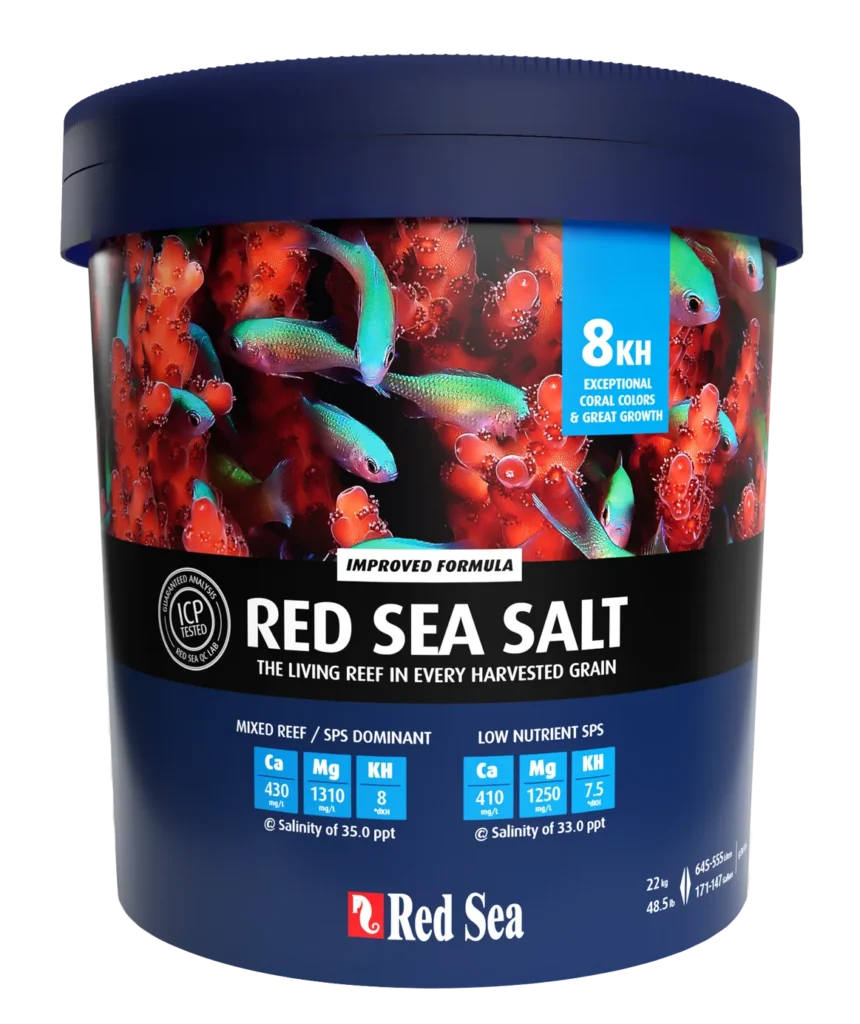
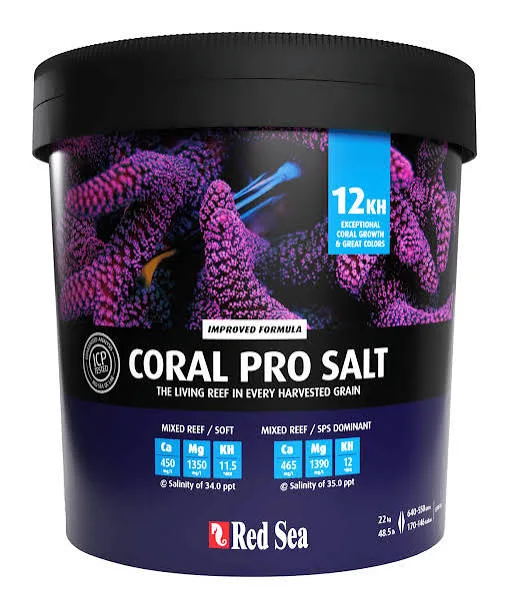
I had been using Reef Crystals, which is relatively nutrient rich. To keep my KH/Alk where I wanted it, I switched to Red Sea Salt rather than Red Sea Coral Pro Salt and was happy with it. Then I could no longer find a seller for the 7 kg bag.
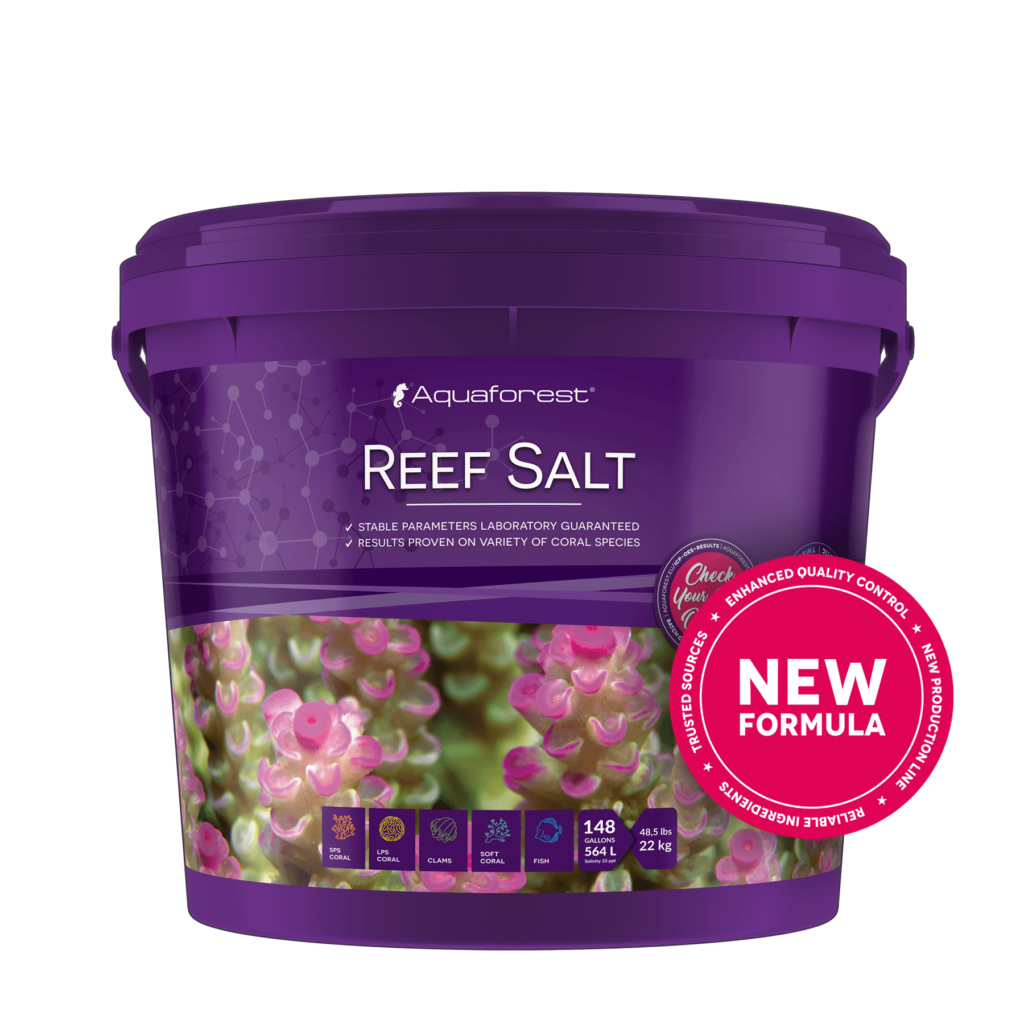
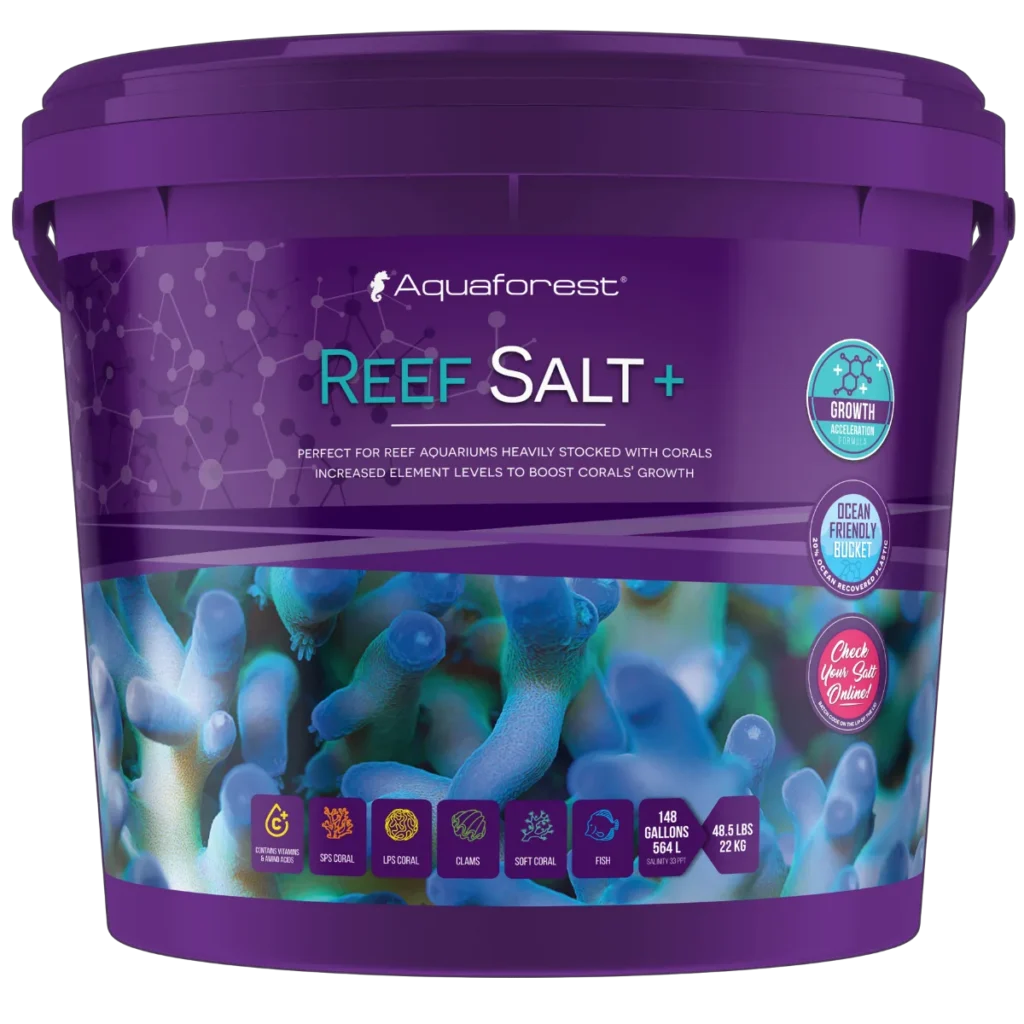
The 22 kg bag is more salt than I want to keep around, so I bought Aquaforest Reef Salt as an alternative and have now done two water changes with it.
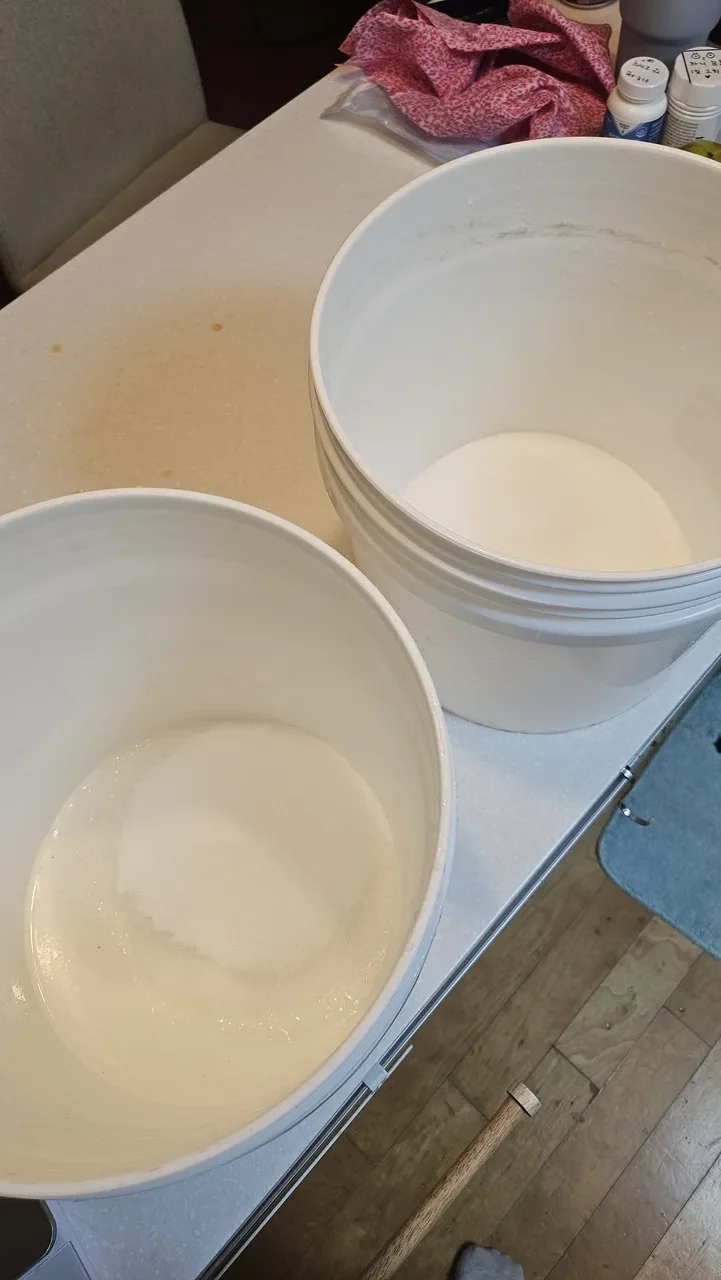
My 45 cm cube holds roughly 80 L. I change 20 L once a week, mixing 900 g of salt to aim for a specific gravity of about 1.025.
I did not record the first water change, so unfortunately I have no data from it.
I thought I had recorded it. When I realized I had not, I made sure to take better notes during this water change.
These were the parameters after my last water change with Red Sea Salt:
NO3: 5–10 ppm
PO4: 0 ppm
KH/Alk: 8.8 dKH
Ca: 410 ppm
Two weeks later, after two weekly water changes with Aquaforest Reef Salt, I measured:
NO3: 5–10 ppm
PO4: 0 ppm
KH/Alk: 9.6 dKH
Ca: 420 ppm
The other values were about the same. KH/Alk rose from 8.8 to 9.6 dKH, and I measured 10.9 dKH in the freshly mixed water before adding it to the tank.
I did not have time to test the other values in the freshly mixed water. If I were not writing this blog, I probably would not have measured even this much.
It came out lower than Reef Crystals and Red Sea Coral Pro Salt, but higher than regular Red Sea Salt.
I aim for 8–10 dKH, but I ran this tank above 13 dKH for more than a year and a half without problems that I could trace to that number. I have 6 kg left, so I will use it all before deciding anything.
In an earlier post, I compared the listed specs and expected a lower number than 10.9 dKH. Water-change volume, temperature, and other target conditions vary a little from tank to tank, so measuring it in my own tank was still the useful part.
A machine that made water-change water for me would be nice, though.
At least having a blog means even a water change can become something to post about. Maybe that is a good thing? Haha.
I have been running this 45 cm cube for about a year and nine months. For roughly the first year and seven months, I used Reef Crystals. For the last two months, I have been using Red Sea Salt.
I used to think a salt mix was mostly there to get the salinity right. I still think that is its main job. This summer, though, some of the corals in the tank were not looking their best, so I started checking the parameters with a Salifert test kit.
I now think the biggest part of that summer problem was water temperature getting too high. Before I fixed the temperature issue, though, I was also looking hard at an alkalinity reading of about 13 dKH.
The right KH range depends on the corals you keep and the kind of tank you want. For this tank, I felt that 8 to 9 dKH made more sense than 13. Since I had used the same salt from the start, I began to wonder how much the salt mix was helping hold that number up.
These are the Reef Crystals numbers. I kept the table in the specific gravity (SG) and temperature rows I use when mixing water instead of converting it into a ppt-only comparison.
I usually make water for a water change at a specific gravity of about 1.024 to 1.025. That made it easy to see why the fresh mix was above the KH range I wanted. I looked for a mix aimed closer to 8 to 9 dKH and landed on Red Sea Salt.
After two months with Red Sea Salt, I wrote down the test results below.
Date
KH/Alk
Ca
NO3
PO4
7/7
12.8
–
5–10
0–0.03
7/9
12.1
–
–
0–0.03
7/11
11.5
–
5–10
0–0.03
7/12
11.5
–
–
0
7/19
10.5
–
–
0
7/26
10.5
–
–
0
8/2
10.0
–
–
0
9/13 before water change
9.3
415
25
0
9/13 after water change
8.8
400
5–10
0
The alkalinity did come down. After using Red Sea Salt for about two months, it felt like the better fit for this tank, so I was ready to buy it again.
By then, I could no longer find the 7 kg size except for Red Sea Coral Pro, which is a different mix with higher targets.
I cancelled a few orders after ordering by size and realizing they were the Pro version.
While looking for an alternative, I ordered Aquaforest Reef Salt because its target range looked similar.
I had never seen a baby starfish. Until this happened, I had not given much thought to how starfish reproduce either.
One day, just before feeding my clownfish, I spotted a white speck on the front glass of my reef tank.
There are random white bits on the glass and in the sump that I still cannot identify. They sometimes look a little like scale, so I assumed this was one of those and left it alone.
I figured I would clean it off at the next water change. A few hours after feeding, though, it was gone.
A few days later, I saw a similar speck in nearly the same spot. I looked closer this time and realized it was a tiny starfish.
There is one sand-sifting starfish in the tank now, although I originally brought home two. One did not settle in, gradually got smaller, and died. The other has been living in the tank for several months.
Part of me assumed I would need a pair if there were ever going to be babies, so it never occurred to me that I might see one. When I did, I mostly just stared at it. It was tiny, strange, and very cute.
They are easy to miss and only show up when they happen to be out in the open. That makes it more fun when I do spot one.
Later, while taking pictures of one, I spotted a second.
One was on the front glass, and the other was near the temperature-controller sensor.
My wife and I stood there looking at them for a while. They barely move, but that somehow makes them even cuter in person.
Before this, the starfish mostly gave me small moments of entertainment by climbing the glass and occasionally falling off. I did not expect a much bigger surprise from it.
A 45 cm cube is a small tank, but unexpected things still turn up. I have had a crab come out from between the rocks, a huge worm appear, and an anemone suddenly show itself.
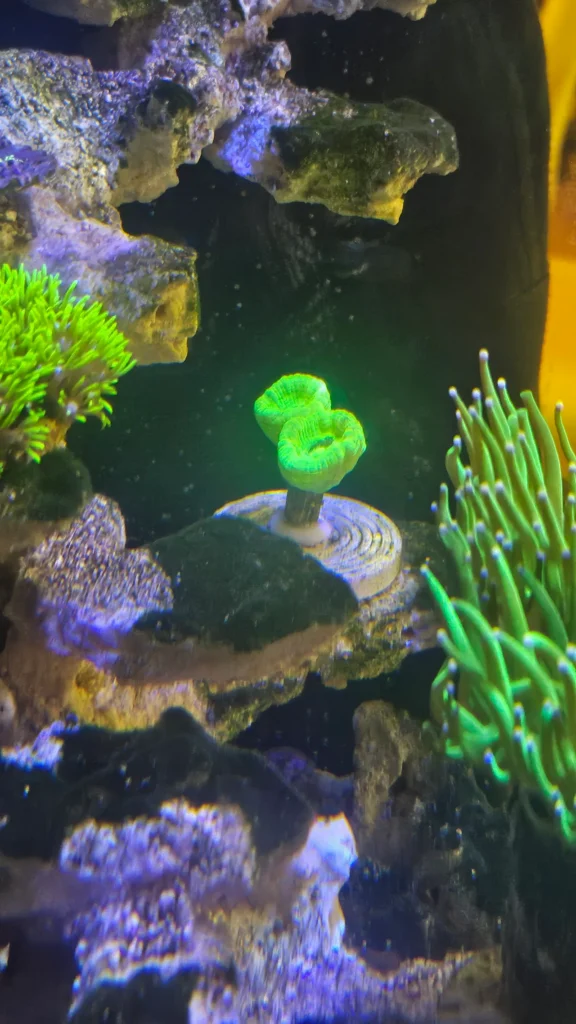
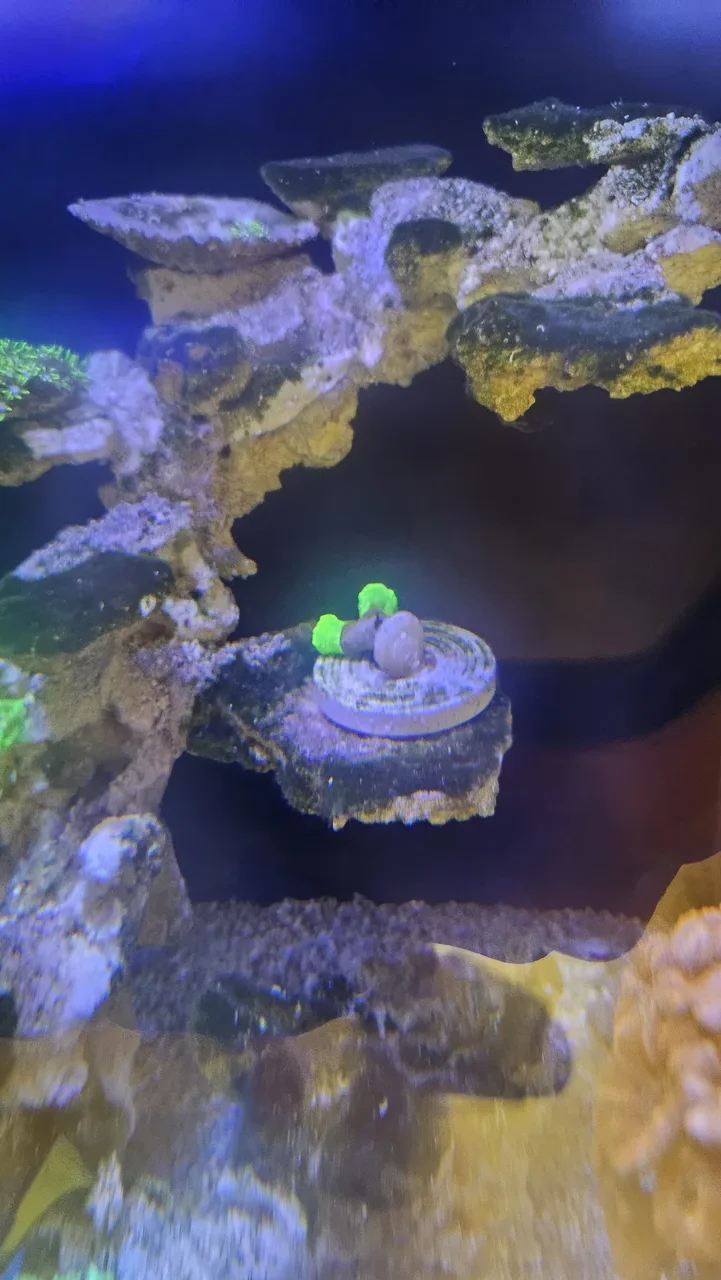
Like any other weekend, I had just finished a water change and was checking the parameters when my wife asked, “Where’s the candy cane coral?”
Sometimes I find the candy cane coral on the bottom of the tank after waking up or coming home from work. I assumed the snail had pushed it over again, so I said, “If it’s not where it was, isn’t it on the bottom?”
“No, its body came off.”
“What?”
I had never seen its body come off before…. What happened? The candy cane coral had been fine right up until the water change.
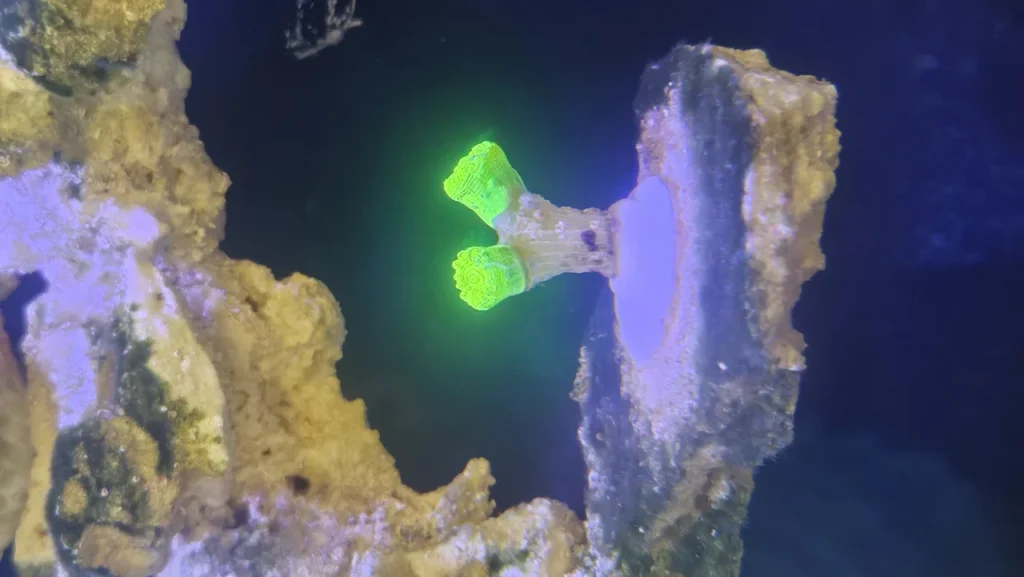
The candy cane coral was the last living thing added to the tank.
It has already been three months since I wrote that post. Unlike the other corals that had issues along the way—the leather and torch not extending their polyps, the acan losing color—it had never looked bad even once.
I keep thinking it looks exactly the same as when it first arrived, but when I look back at photos, it has grown little by little. It is fun noticing that, and despite looking still, it has been a dependable, reassuring coral.
A coral that had never caused a problem, and did not seem like it ever would, had come apart. I was completely taken aback.
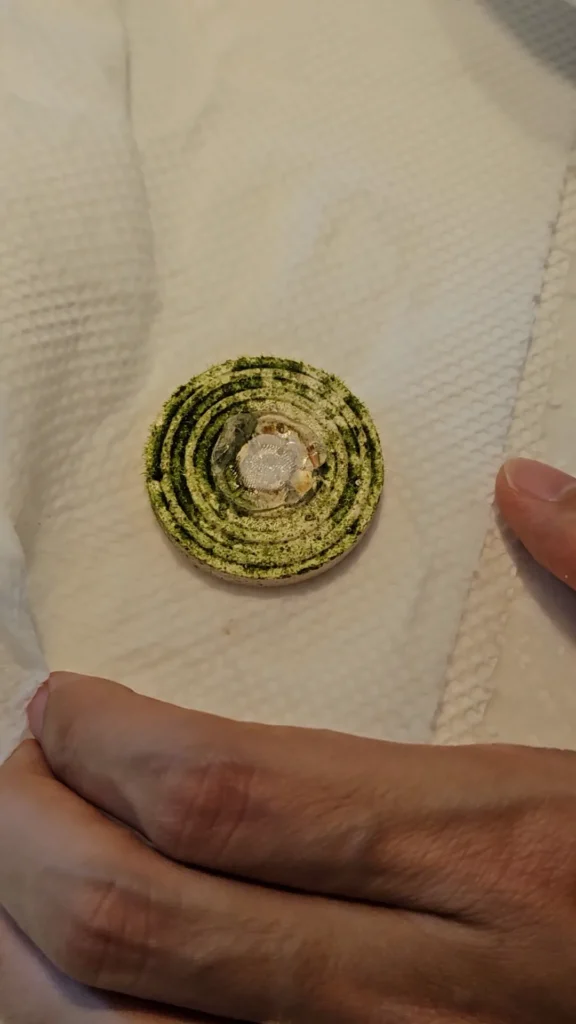
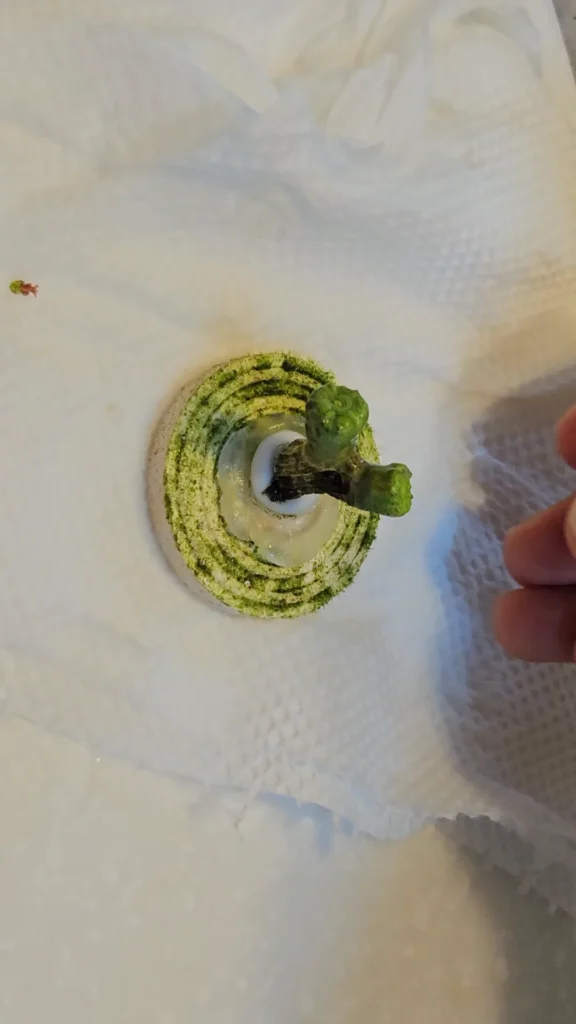
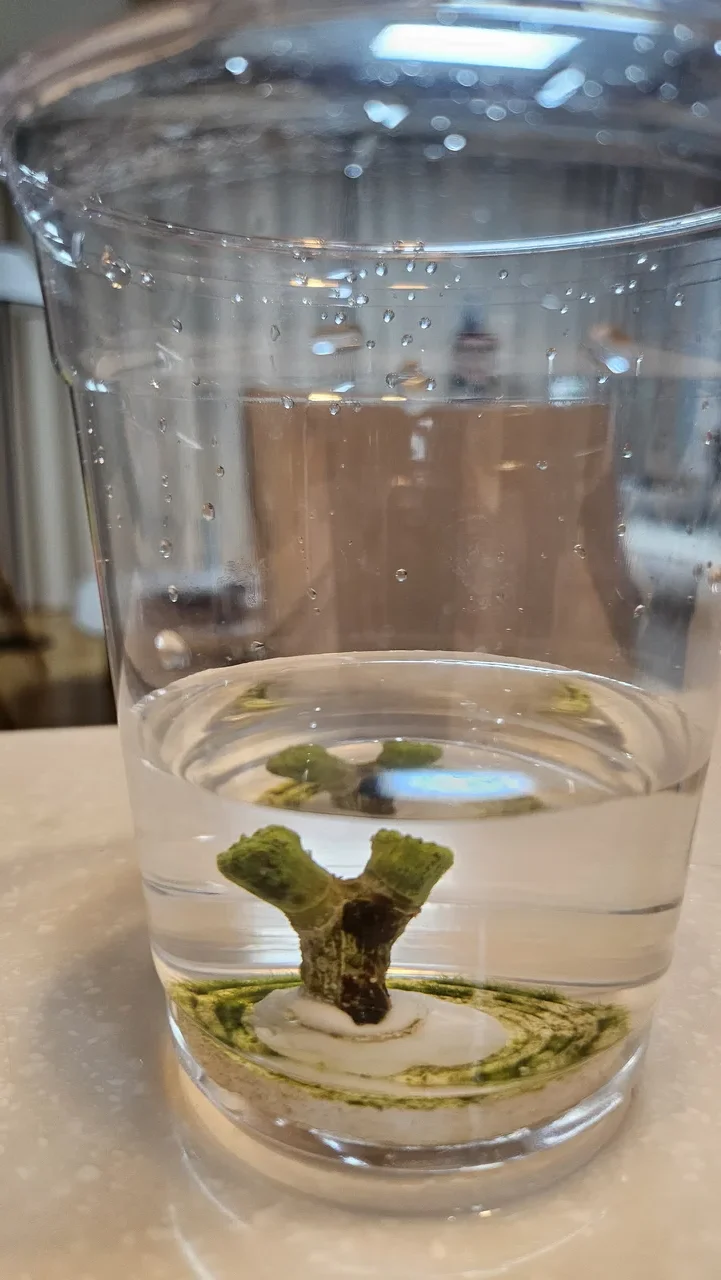
When I checked, the connection between the frag base and the candy cane coral had snapped.
Luckily, the coral itself had not come apart. It looked like only the part that had been glued on had come loose, so I just needed to attach it again. Really, really lucky.
It should have been as simple as gluing it back on. But I remembered being told at the aquarium store that regular super glue could be bad for the candy cane coral and the other living things in the tank.
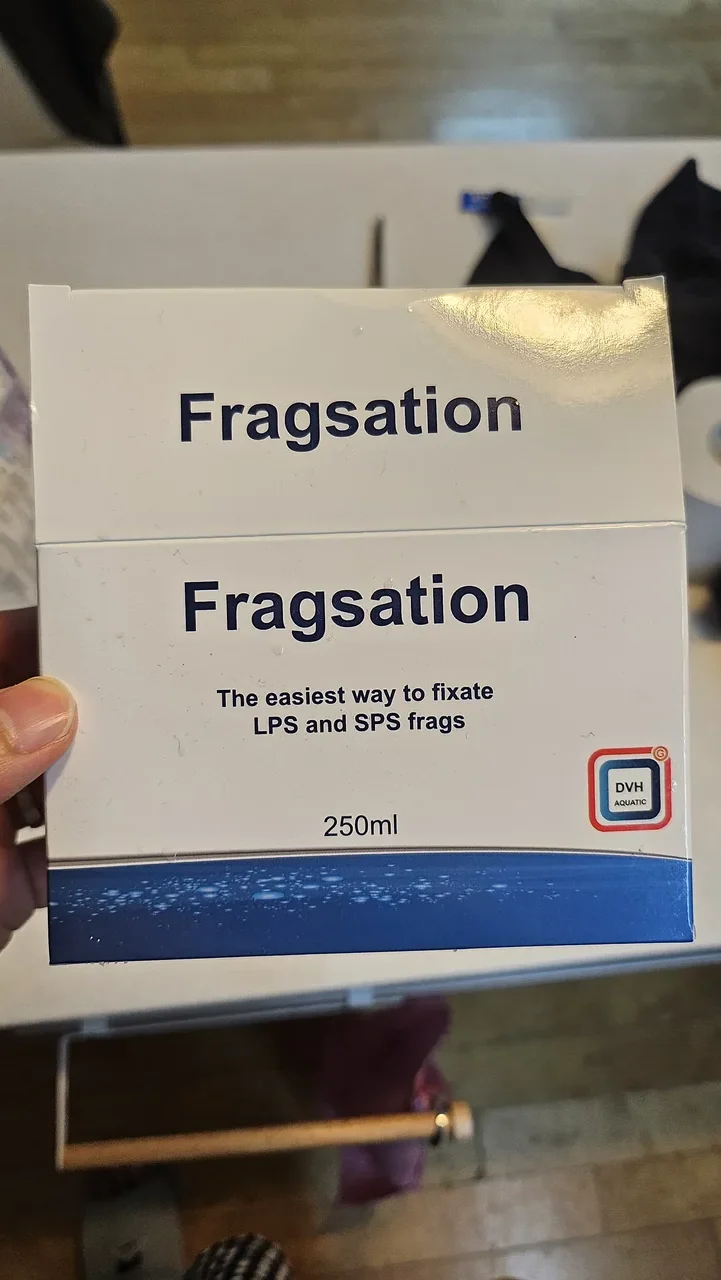
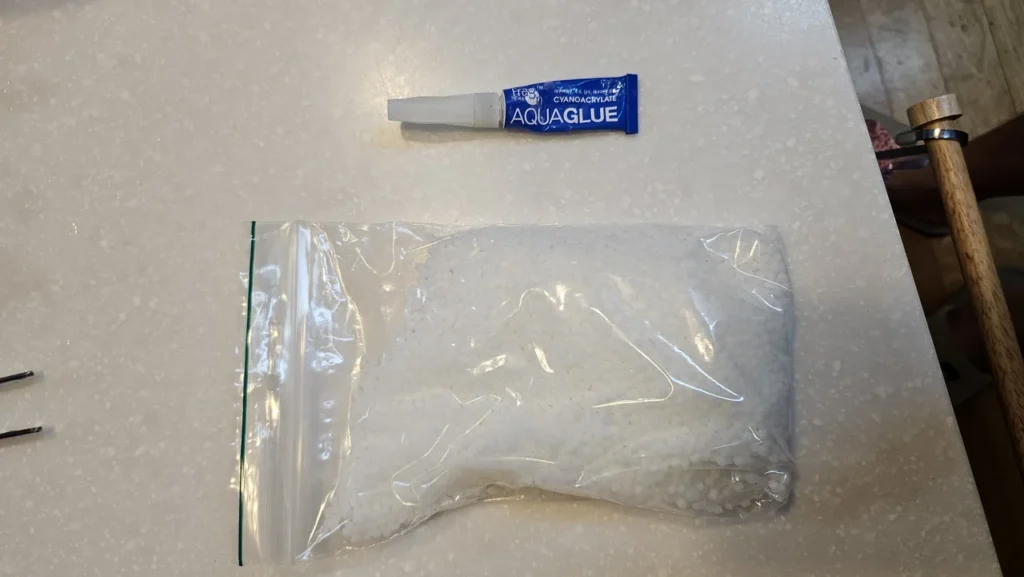
As I was wondering how to reattach it, I remembered the frag station and coral glue I had bought. I originally bought them because the frag base that came with the acan was so small and I wanted something to reinforce it with!
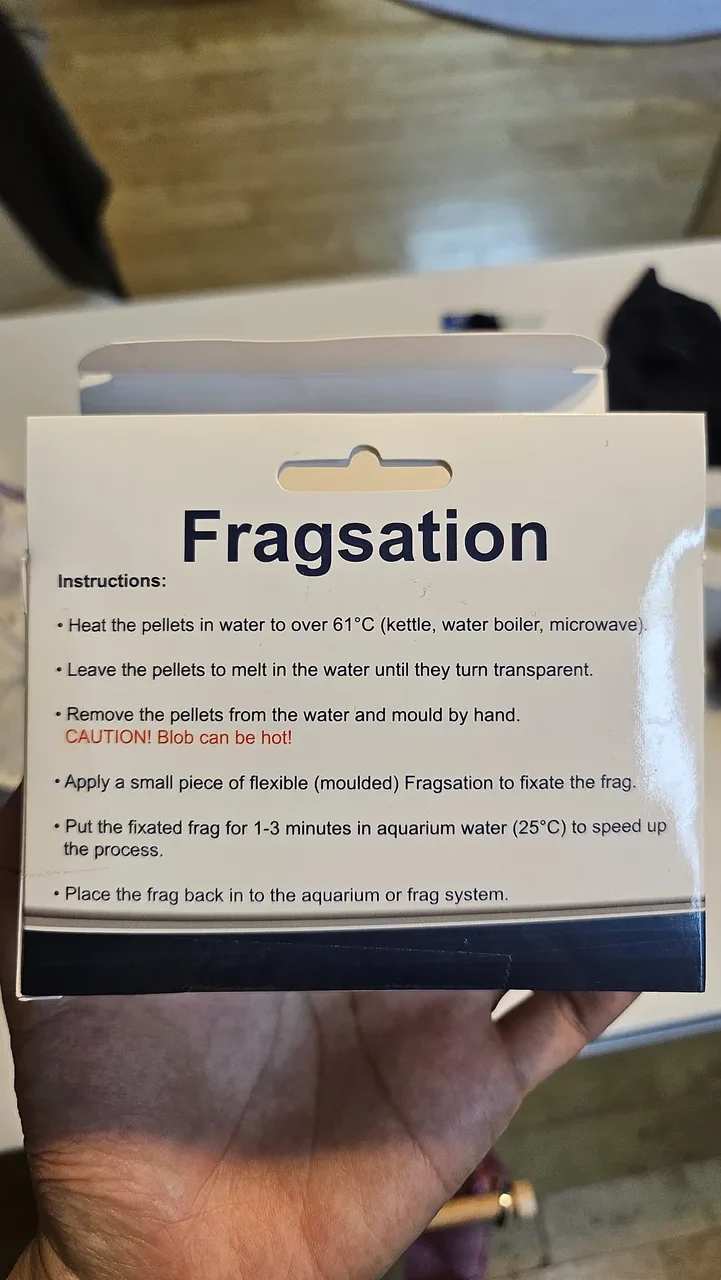
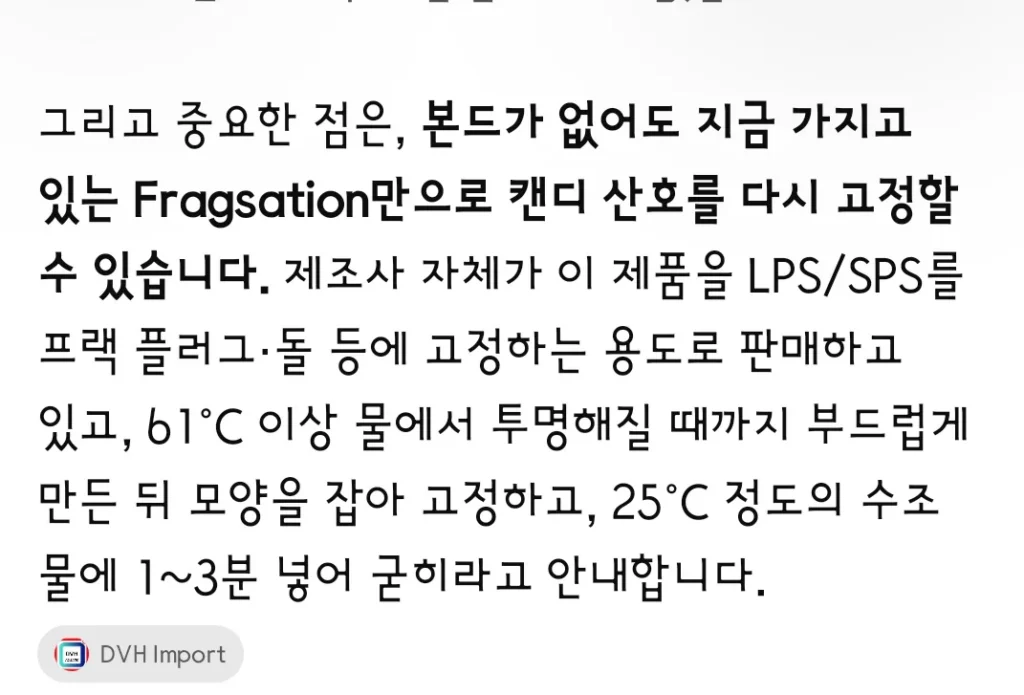
You soak those little white beads in hot water over 61°C. They soften up like clay, and once they are soft, you shape them, apply a small amount of coral glue, and attach them to whatever needs securing, like a frag base.
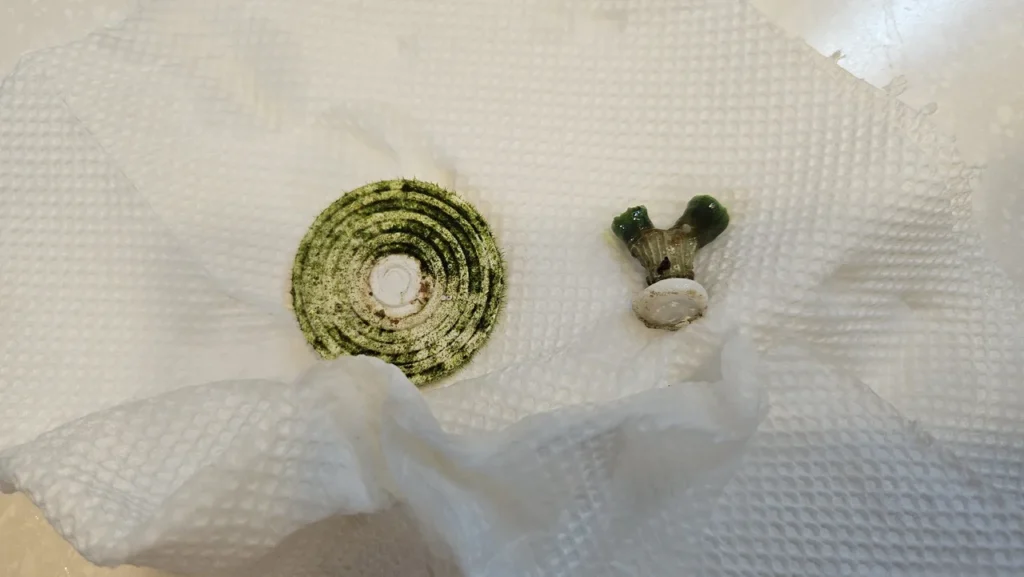
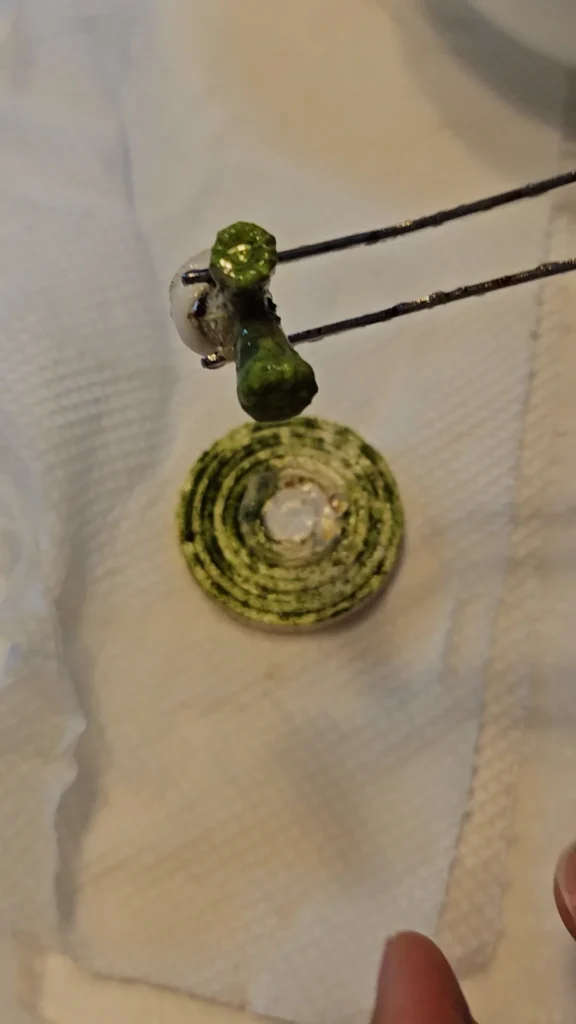
I was in such a rush getting it out that I dropped it and made a whole mess, but I got it out in one piece and prepared for surgery.
Whenever I take corals out of the tank, I think this: corals always look strange outside the lights… lol
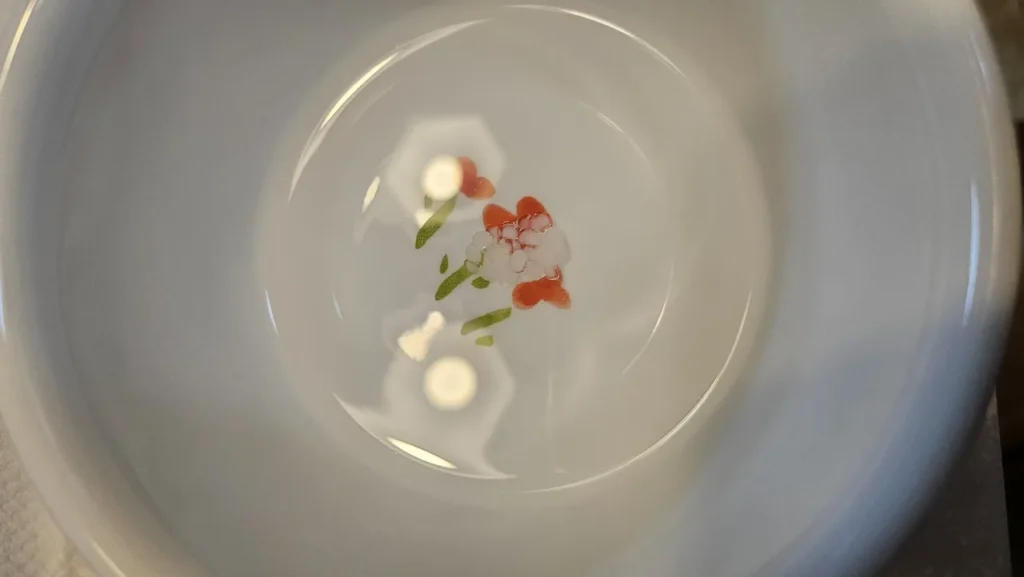
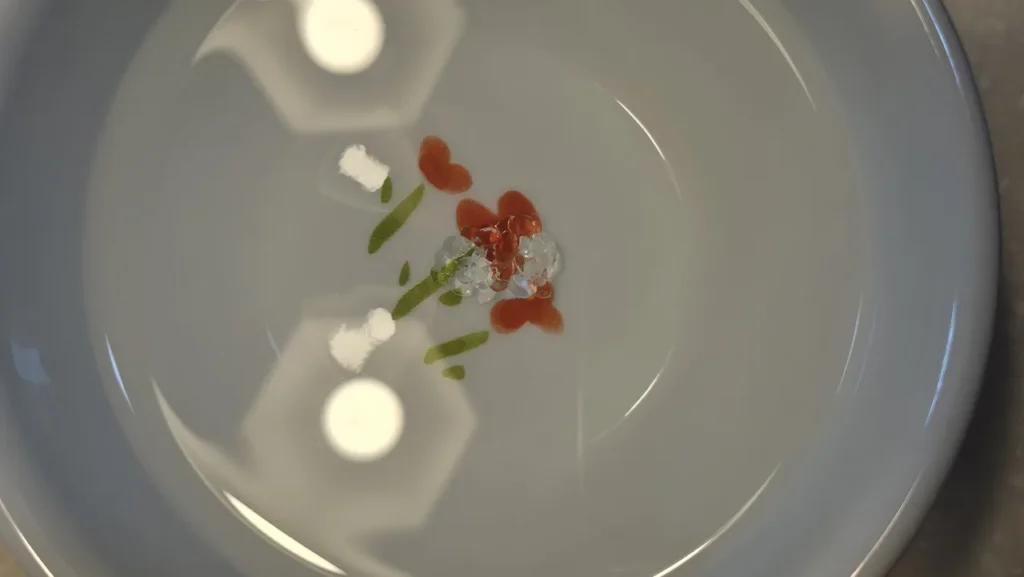
First, put a small amount of the white bead-like frag station material in a bowl and pour in hot water at about 80°C.
It changes color in this order: white -> gradually transparent -> fully transparent. Once it is fully transparent, take it out of the water and shape it.
If you do not get the shape right, it loosens again when you put it back in hot water. But once it is attached to the coral, I cannot put it in hot water, so I think it is important to wait until it is completely transparent.
The instructions say over 61°C is enough, but that felt like it took too long. Using a higher temperature did not cause any problems.
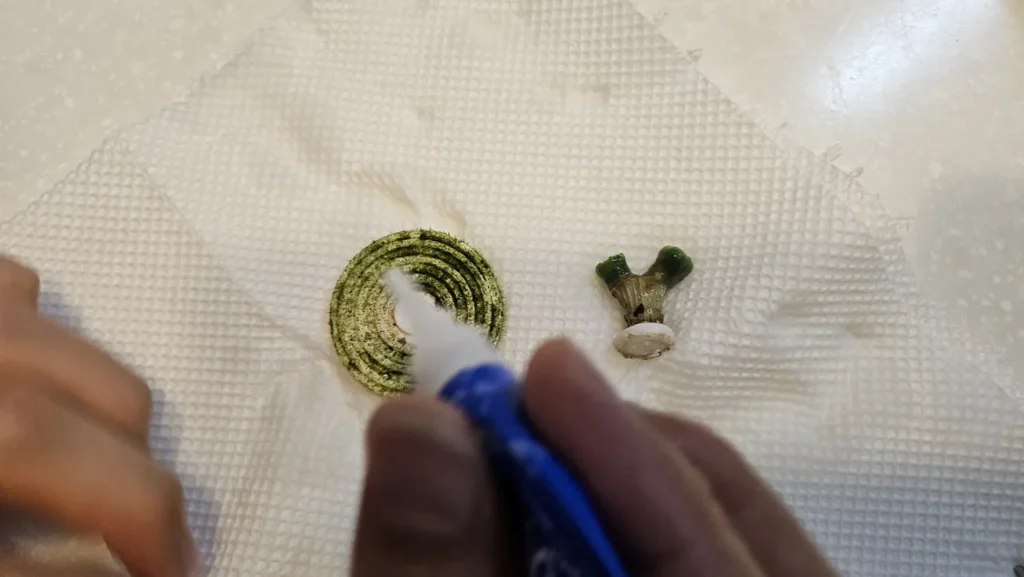
While the frag station material was soaking, I tried to put a little coral glue on the frag base in advance. Then I ran into a problem.
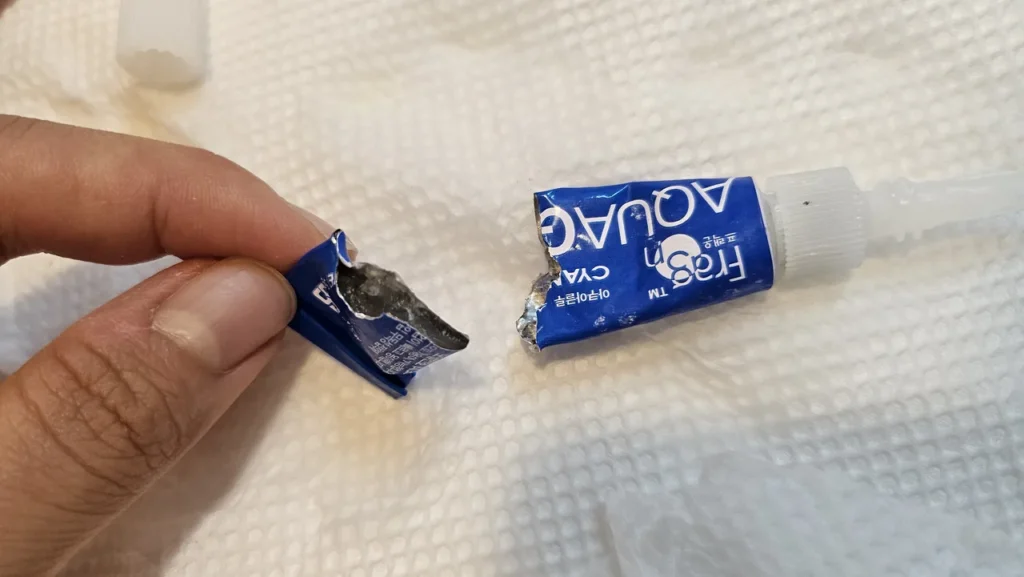
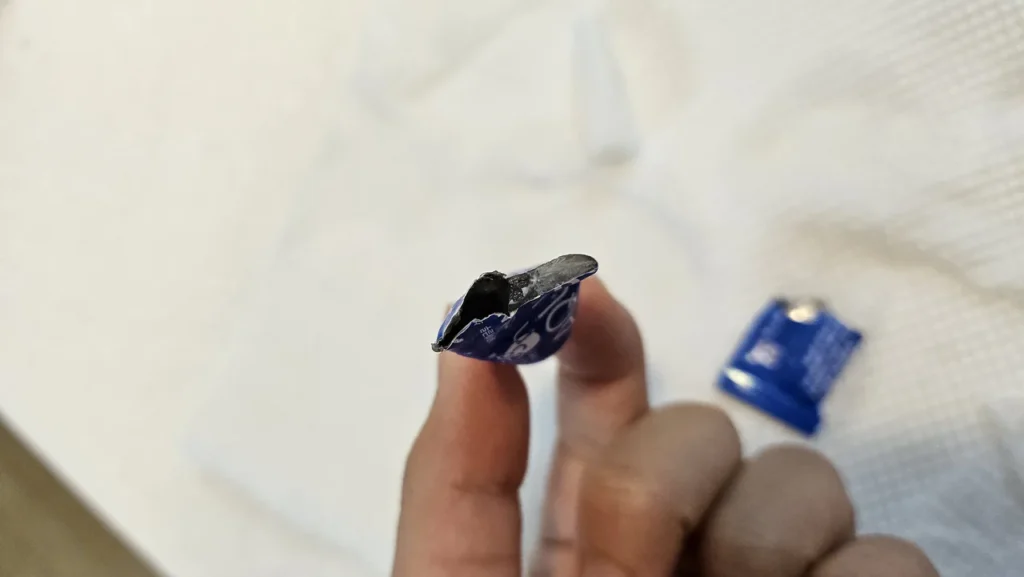
Ah… the glue had hardened and would not come out. When I squeezed it, the tube split in half.
Was there something wrong with the conditions in the tank cabinet, or is this just a product that does not last long? I needed to do something right away….
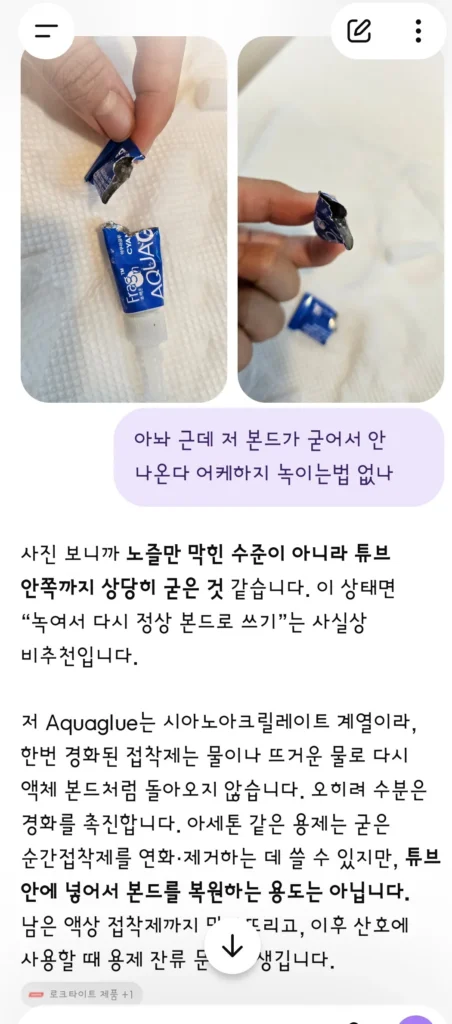
GPT has been really helpful with running the tank. It advised me to stand it up using only the frag station as a temporary fix, so I decided to leave it like that until the glue arrived.
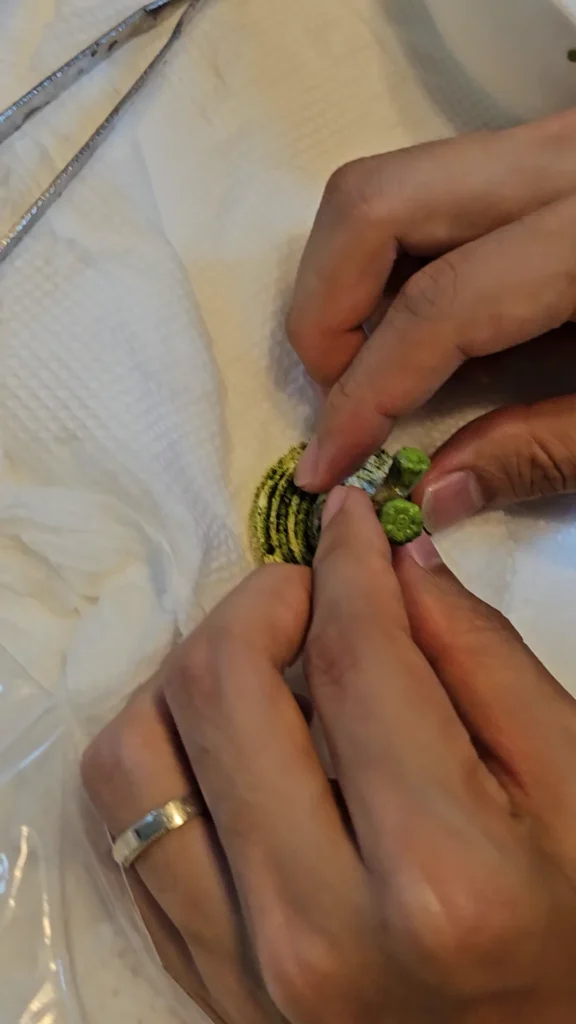
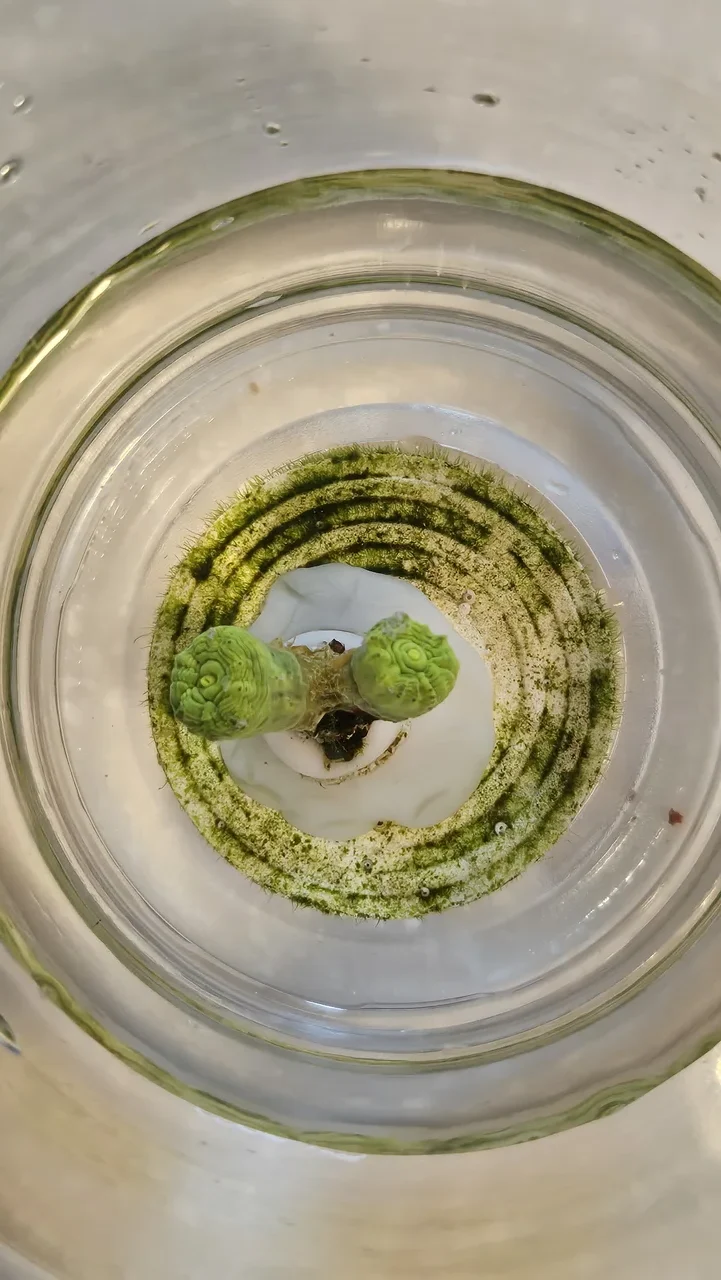
First, I spread the frag station material, softened in hot water like clay, flat over the frag base and set the coral on top.
I shaped it evenly so the frag station material could support the coral’s body well.
If it stands on the bottom without wobbling, it is done! To keep the coral’s stress as low as possible, I immediately put it in some tank water I had set aside and checked one more time that it was standing properly.
This little one has such an odd color and is standing just fine. Torch and leather corals with long polyps look pitiful when they droop out of water, but the candy cane somehow looks strong even out of the water. Very reassuring.
So that was the rushed emergency treatment, somehow finished. It is only a tiny 45 cm cube tank, but why do so many things keep happening in it? It gets pretty dramatic for such a tiny 45 cm cube tank, lol
Once the emergency was over, I did not want to go through the annoyance of dried-out glue again, so I looked into why it had dried out.
I keep the glue in the tank cabinet. Water sometimes splashes during water changes, and the cabinet itself can be humid, so I guess moisture got in after I used it before and made it harden.
I hope this little friend lasts a long, long time.
I have kept the torch coral since setting up the tank and the leather coral since its early days, so I have grown especially attached to them. Compared with my other, relatively still corals, their gently waving polyps are what make them so appealing.
It was hard to watch when their polyps pulled all the way in and they shrank. I kept coming up with theories and trying things, and it really wore me out. In the end, though, it seems the biggest problem was the temperature.
After buying an OKE-6428HC cooling/heater temperature controller and setting it to 25°C, the torch coral is definitely looking better.
The mouth is still visible in the middle, but the outer polyps are growing well and it looks fuller. The clownfish looks happy too.
It was probably a buildup of several factors: a single head splitting into two, high temperature, insufficient nutrients, and so on. But in my tank, temperature felt like the biggest factor.
I tried all sorts of things—phosphate dosing, adding activated carbon, and more—but it turned out the glass thermometer was the issue…
If your corals have been looking worse and you have only been using a glass thermometer, it might be worth checking its calibration.
At the first point, we got lucky and saw all kinds of fish I could not name, a turtle, a ray, anemones, and Nemo, so I had not even noticed how tired I was. Once we got back on the boat, I talked it over with my family.
My younger sibling, my mother, and I have always liked the water, so I was not worried about us. But my father is not that fond of it, and I had wondered whether I had booked too intense a schedule. Seeing that he was enjoying himself and getting excited too was a relief.
Straight on to the second point.
From above the water, the second point looked deeper than the first. It did turn out to be deeper, with slightly rougher waves too.
The guide said that if you are lucky, you sometimes see sharks here. We had already seen a turtle and a ray that day, so I got excited thinking, maybe a shark too? So, into the water at the second point!
They said the first point was 4 m deep and the second was 7 m, and it was deep enough that I could really feel the difference. Maybe because of that depth, the corals were a little darker too.
It had a completely different feel from the bright, cheerful first point. The fish were bigger too, and there were lots of darker fish that somehow looked tougher.
I was snorkeling along peacefully when my family and the guide were pointing somewhere and watching. I looked over and saw a huge fish moving along the bottom between the corals.
Even though the bottom was quite far below where we were snorkeling, it was so big that my first thought was, is that a shark? The guide told me from the surface that it was a grouper.
I had not caught it on video or in a photo, so I searched Google. It looks pretty wild.
A fish that eats sharks??? Maybe it was lucky that it did not notice me?
After seeing the grouper, I went back to snorkeling along peacefully until the boat came to pick us up.
The boat came much earlier than it had at the first spot, so I was disappointed, thinking the second spot was already over. But just as I was about to get on, the guide gestured for me to follow him. I did, and ended up snorkeling for another 40 to 50 minutes or so, about as long as at the first spot.
When I got back on the boat, my wife was already there. She said the long boat ride and being tossed around in the rougher waves had made her seasick.
I had even looked up and packed motion-sickness medicine in Korea, and then could not use it when it actually mattered. Of course.
The pharmacy had confidently recommended that medicine when I said I was taking a boat. I guess we will get a chance to try it someday?
After we finished snorkeling at the second spot, my wife’s seasickness settled down. While we waited on the boat for another group that was scuba diving, I suddenly got very hungry.
We had rushed out and barely eaten breakfast, and there had been so many twists and turns since the tour started. Maybe the hunger hit once the tension finally wore off.
Luckily, the rest of the plan was to get off at an island for lunch and a short break, then do the final snorkeling session.
Once the diving group of Western tourists joined us on the boat, we headed for the island. As I sat there spacing out, we arrived at a place called Padang Point beside Sapi Island.
You reach the island via a deck, and just like in the city, there are Malaysian flags everywhere.
As soon as you arrive, there is a small beach and a restaurant right there. At the restaurant, we ordered the two kinds of fried rice the guide recommended.
The yellow fried rice in the photos below was just ordinary fried rice—not especially good or bad, but good enough to enjoy after snorkeling. The fried rice with the dark sauce was delicious, though. I would like to have that one again.
Perfectly decent fried rice.
After a proper break, we got on the boat for the final, third point. On the way, something was coming toward the boat through the water.
Even from far away, I could see the dark shape getting closer. The guide said crocodiles sometimes show up, and while this black thing kept coming toward us, I was quietly hoping it might be the turtle I had missed earlier.
Up close, it turned out to be a lizard swimming along without a care. It was the first time in my life I had seen a lizard swim.
I think it was also the first time I had seen a wild lizard that big. And it could swim that well. Looking back, it may have stayed with me more than the turtle did.
The lizard made the ride to the third point even more fun. Luckily, the waves were calmer and the water was relatively shallower than at the second point. Knowing it was the last one made me even more determined. I am going to take all of this in!
There were more brightly colored corals here, like at the first point. One huge yellow coral stands out because I did not get a photo or video of it.
I found a photo that came as close as I could get. There was a yellow, mountain-shaped coral like the one in the picture, with fish of all kinds of colors moving around it. It was really beautiful.
When I looked more closely, it seemed like there were territories within the coral too. Watching larger fish boss the smaller ones around reminded me of the early days with my aquarium, when the bigger Nemo picked on the smaller one so much that I eventually had to separate them.
If I could scuba dive, I might have been able to see it from a little closer. Watching only from the surface did leave me feeling a bit regretful.
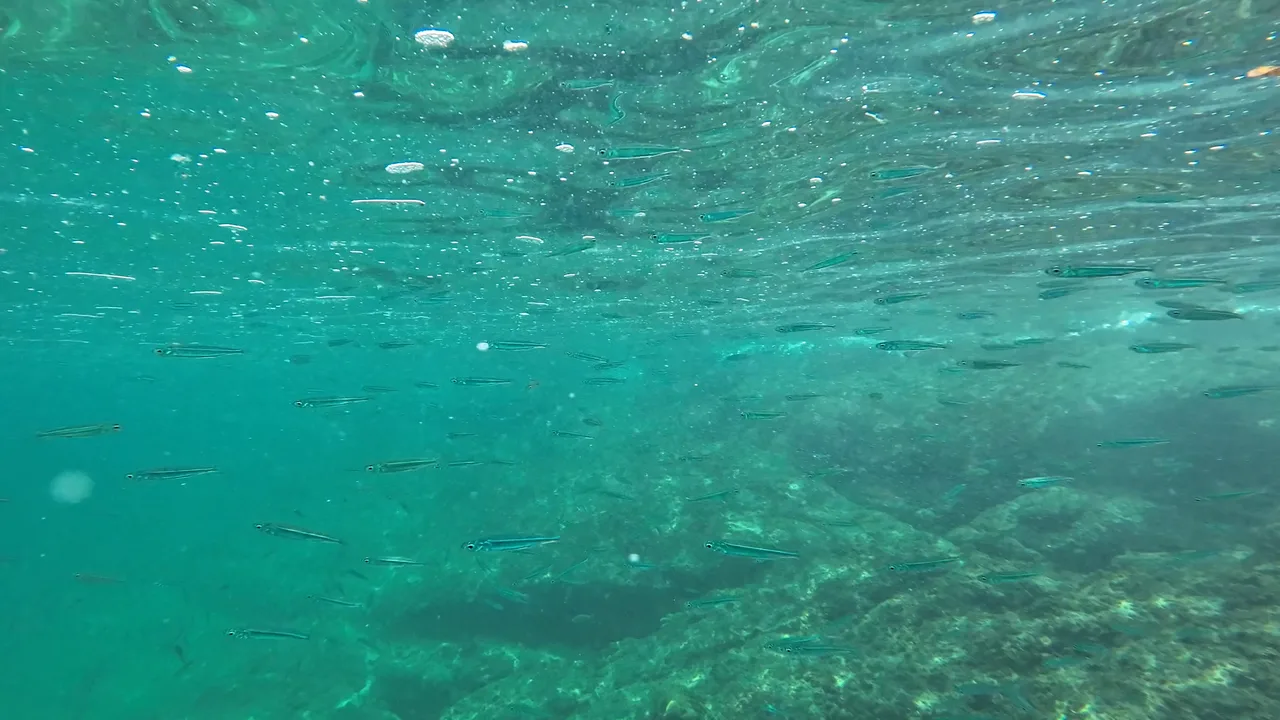
Leaving that regret behind, I kept watching other corals and fish and found a place where lots of tiny fish had gathered.
Normally, fish rush to hide among the corals or farther away if a person gets even a little close. These ones barely moved away even when I got almost right next to them.
I swam with them and looked ahead. Moving in the same direction as all those fish made me feel like I had become a whale in a documentary, with small fish swimming around it.
There were waaay more in real life
After that little whale experience, I drifted around following the fish wherever they went and somehow ended up toward the shore. Looking down, I saw something piled up all over the bottom.
They were branching coral skeletons!!! So many of those precious rocks piled up on the bottom—it was strange to think this might once have been a coral colony all the way out here.
Keeping corals has made me realize over and over how important temperature is, so seeing so many dead corals in the wild made me sad too.
I had been on my own for too long, so I went back to my family.
My wife and father, who are still not used to swimming, had been holding tightly onto that tube the whole time. My mother, my younger sibling, and I are comfortable in the water, but for the last ten minutes or so, all of us ended up clinging to the tube and floating there. I was only there to be with my wife, so I have no idea why everyone else did it too haha.
Once snorkeling was over, we arrived back at the DBKK JETTY where we had started. After getting the photos and videos the guide had taken, the snorkeling part of the day was officially over!
The guide had used a DJI camera, so we needed the DJI app to receive the photos. The app was about 1 GB, and between no signal at sea and slow internet, downloading it alone took about 20 minutes. Sending the photos took another ten or so. If you ever take a similar tour, it may help to check this before you set off so you can wrap things up more quickly.
There was unfortunately no changing room at the jetty, so we changed in the restroom using the spare clothes we had brought, then took a Grab back to the Hilton.
There were lots of people standing by the entrance to the jetty, so I thought getting a Grab might be hard. It was not, though. Just like usual, we easily got one and arrived at the hotel!
And then….
The ramen we had at the hotel was honestly one of the best things we ate on the trip haha.
There is one Nemo and one Dory in my 45 cm cube tank.
I can lose track of time watching them swim around because they are so cute. I do not know about Dory, but Nemo is wild-caught.
Sometimes I wonder how Nemo lives out in the wild. Maybe he wants to go back to the sea, like in Finding Nemo. I have wondered about that too.
With that vague thought always somewhere in the back of my mind, my family ended up taking a trip to Kota Kinabalu over the Liberation Day holiday in August.
When I think of Kota Kinabalu, I remember it having been one of the honeymoon destinations we considered when we got married—a place for a beach holiday and sea-based activities. This felt like a good chance to see Nemo and Dory for myself.
It had been a really long time since our family had travelled abroad together. I came away with a lot on my mind, so I want to write separately about the trip itself.
For the snorkeling, we visited three spots around Gaya Island and Tunku Abdul Rahman Marine Park.
This tour on Klook had decent reviews and seemed reasonably priced, so we booked it and were happy with it. There is one thing you absolutely!!!! need to know about the meeting point, though, so it may be worth reading what happened below.
We were meant to leave DBKK Jetty at 9 in the morning. It was about ten minutes from the Hilton by Grab, then another three-minute walk to the jetty.
Since you never know what might happen abroad, we got there about 30 minutes early, thinking the guide might already be there. He was not.
DBKK Jetty is the departure point for tours run by all kinds of companies, so it was pretty chaotic once we arrived—Western tourists, Chinese tourists, company guides, everyone.
I checked again 20 minutes before the tour, and he was still not there. I checked again ten minutes before, and still no guide.
I do not travel domestically or internationally all that often, but normally the guide is already there waiting. No one even ten minutes before the start…?
Please show up….
This was when I started getting a little nervous. It was not just my wife and me—we had my parents and my younger sibling with us too—so I was even more anxious.
No one answered the hotline number we had received by email and on the booking page, so my wife and I split up.
I stopped guides from other companies as I saw them and asked whether calling a local number might work. I even asked them to call the “Borneo Dream” team listed in the email, but no one picked up.
Every time I asked another guide, they told me this was a team that came here often, that I should wait, that I should trust them. But once it was past 9, all I could think was: we are screwed.
My wife said that, because she was panicking too, she had just tried saying everything she could think of. Same result. (Same “Trust Me!” here, too.)
Then, around 9:05, I spotted a guide I had not seen before and went straight over to him. Thankfully, he was our guide!!!
Looking back, I probably should have asked what had happened. At the time I was just so relieved that it did not even occur to me.
My guess is that there was a scuba-diving group already on the boat, and something may have delayed them while they picked that group up from another point.
After all that, we got on the boat, heard a quick explanation from the guide about how to use the life jackets and snorkeling masks, then headed to the first spot.
The guide we met at the jetty was assigned to our family, and he offered to take underwater photos with a DJI action camera for 150 ringgit (roughly 50,000 won). We said yes.
The first spot was at the location below.
Once we got off the boat and started snorkeling, we could see coral formations and schools of fish.
At home I mostly see frag corals in the tank, and even when I see well-kept corals at an aquarium I get completely absorbed. Seeing coral formations spread out on a scale so much bigger than that, as far as I could see, was really something.
The only disappointment was that the camera could not capture the colours the way they looked in real life.
Then the guide and my family started pointing at something. I thought, finally, Nemo? I could not see anything myself, but apparently a turtle had come by.
I saw a stingray, but there is no video of it, which is a shame.
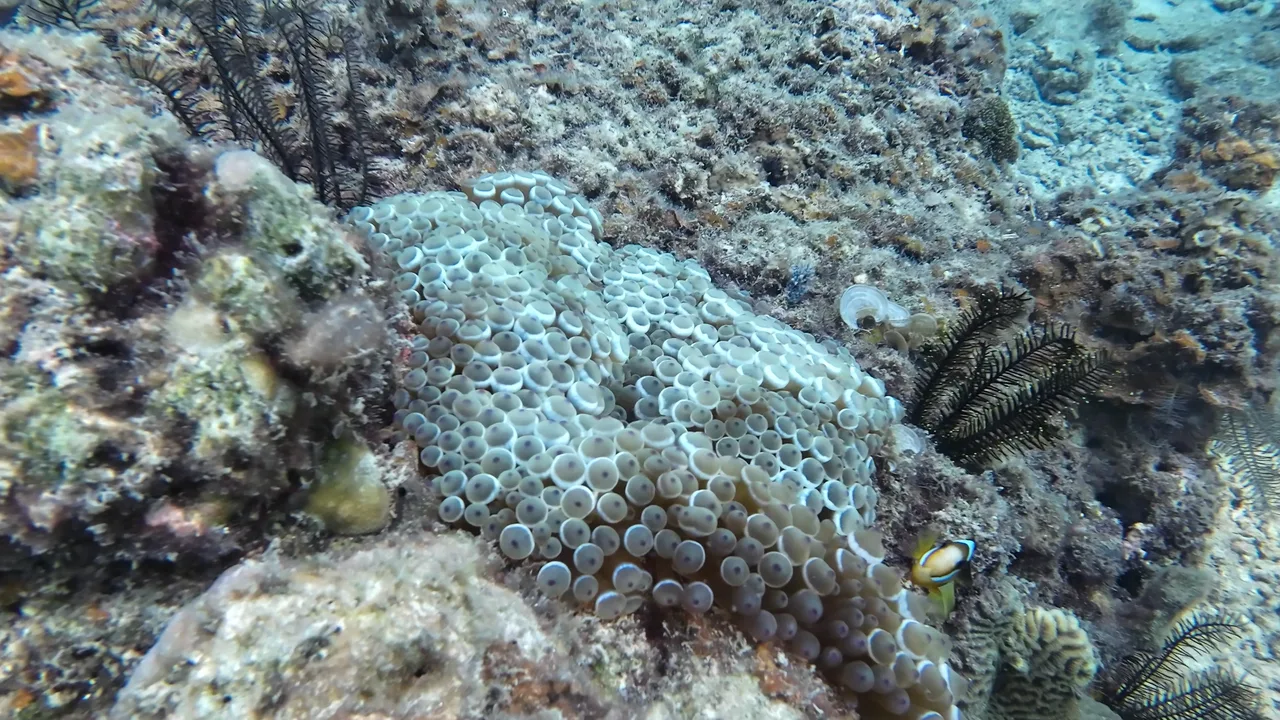
A little later, I looked where the guide was pointing. For the first time I saw something swaying among the hard corals, and naturally it made me think of Nemo. Finally, Nemo?!
They were not like the Nemo I keep at home, but there were Nemos!
Two fairly big ones were swimming around the coral in the photos. Maybe because I like Nemo so much, they stood out to me in a way the other fish did not. Nemos are just too cute.
What was disappointing was that I could not get that close while snorkeling. To see them up close, I would have had to dive, and I do not know how to dive. That was a real shame.
After snorkeling at the first spot for about 30 to 40 minutes, we went back to the boat.
We had more than enough time in the water, and the guide worked so hard to take photos and videos that, before I knew it, the whole thing at the meeting point had completely slipped my mind. The first spot was a hit with the whole family!