Tag: PO4

  • When Torch and Leather Corals Finally Opened Again in a Nutrient-Poor Tank

    One day, all of a sudden, my star polyps and acan coral looked fine, but…

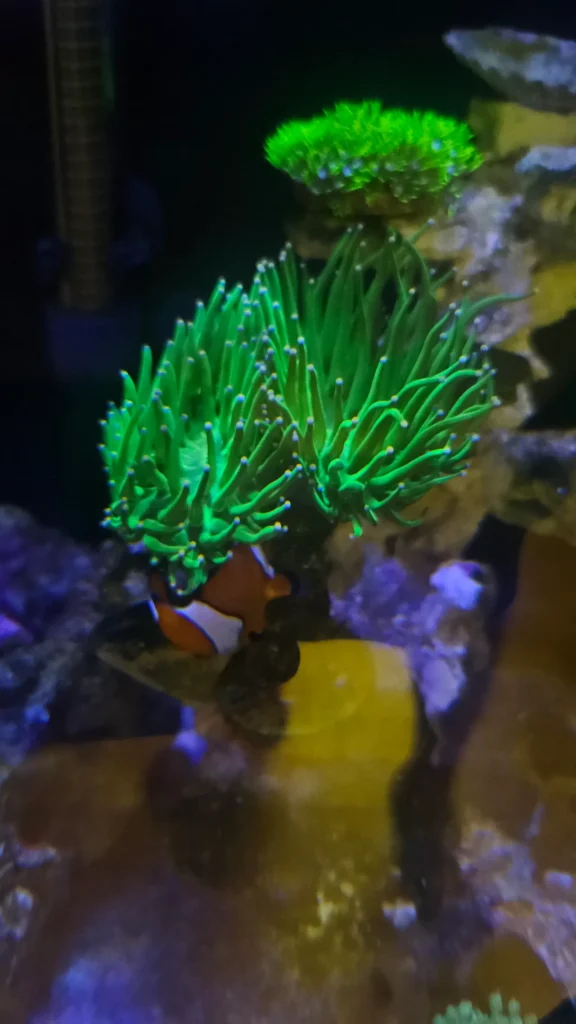
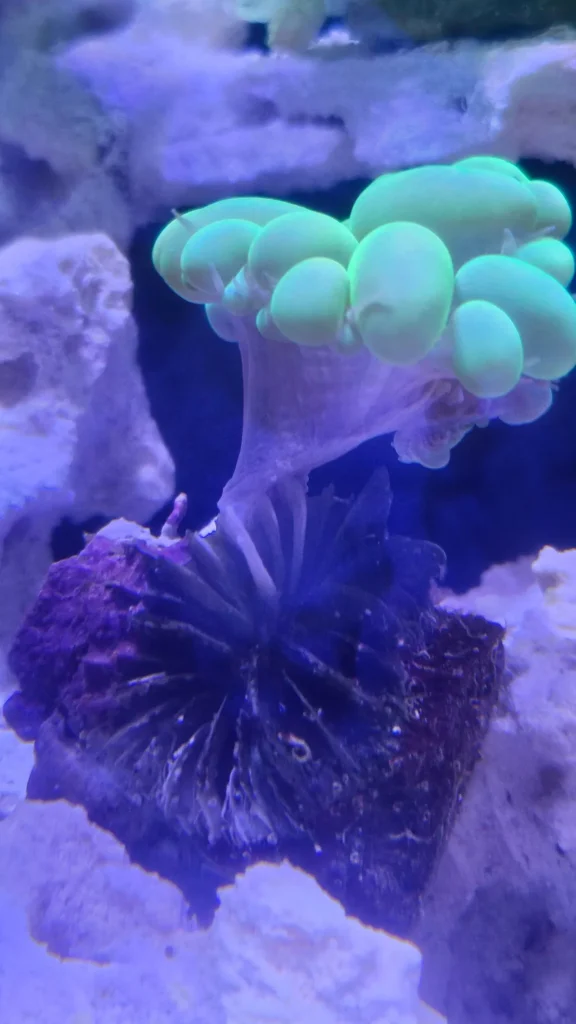
    The polyps on my torch coral gradually became smaller, the mouth in the center became visible, and the body of my leather coral grew thinner until its polyps stopped coming out altogether.

    I had already lost a bubble coral and a glove polyp before, even though the other corals were fine. They had slowly declined until they died, so seeing this happen again was really upsetting.

    There was no obvious tissue necrosis or serious problem like brown jelly, but these were corals that had never caused me trouble before. Their less-than-full appearance kept bothering me.

    What I suspected

    The clownfish

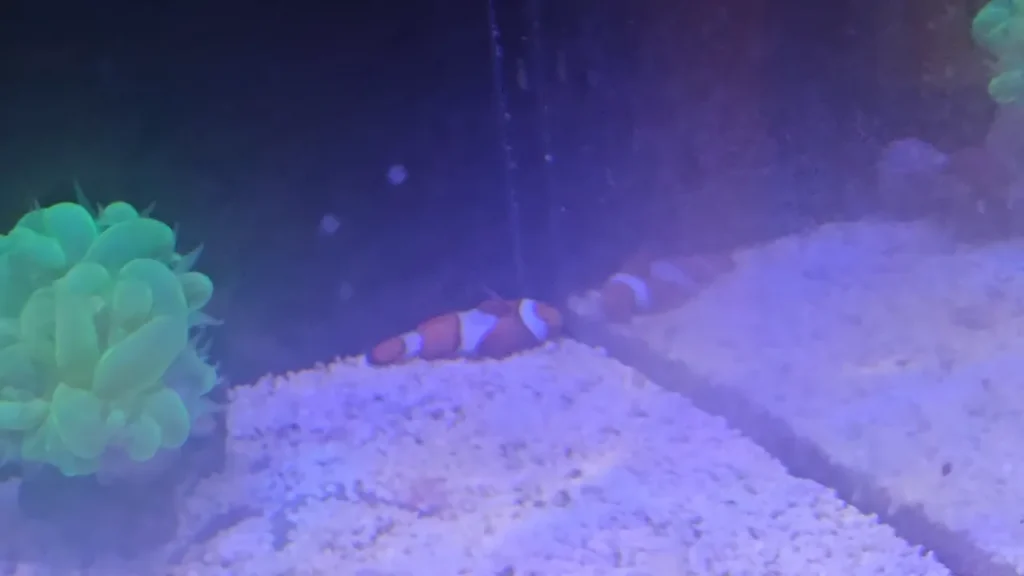
    The first thing I thought about was my clownfish. Nemo has rubbed his body against the torch every time I look at the tank for more than a year.

    Still, he had been doing the same thing for more than a year, while the coral had gotten worse rapidly over the past few weeks. It was hard to blame Nemo alone. The leather coral, after all, is a coral he never rubs against.

    Temperature swings

    Summer water temperature was another concern. When I measured the water after getting home from work, it had reached 27°C on hot days, so I added a cooling fan.

    With the cooling fan running, the temperature kept dropping. When the air conditioner, a fan, and the cooling fan were all running in the evening, it could fall as low as 22°C.

    In winter, the heater keeps the temperature stable by running whenever it falls below the set point. But I had no device that would turn the heater on when the temperature dropped, so the swings had recently become more severe.

    High KH/Alk and very low PO4

    I started by looking back at the readings I had taken with my Salifert test kits.

    Then I kept thinking about the high KH, the changes after water changes, the low PO4 readings, the MicroBacter7 I had been adding every day, the organic matter that may have built up in a tank without a skimmer, and the possibility of chemical irritation or disease between the corals.

    Water parameters

    Thinking about it based only on intuition felt like going around in circles, so I gathered the measurements I had taken so far.

    DateKHNO3PO4
    Apr 1712.8–13.1About 15About 0.06
    Apr 2610.9–11.210–150.4 in the record
    May 1010.1About 10About 0.015
    Jun 2810.910–250–0.03
    Jul 712.85–100–0.03
    Jul 912.1Not measured0–0.03
    Jul 1111.5Not measured0
    Jul 1211.5Not measured0
    Jul 1910.5
    (after a water change with Red Sea salt)
    Not measured0
    Units: KH is dKH, and NO3 and PO4 are ppm. Ca records were about 450–480 ppm on Apr 17, about 440 ppm on Apr 26, and about 400 ppm on May 10.

    Looking at the measurements, PO4 kept falling and eventually reached 0.
    NO3 did not change much, while KH showed the biggest variation.

    I had read that the recommended normal range for KH was 8–10, but mine had stayed much higher than that range.

    Until now, I had thought of NO3 and PO4 simply as numbers that create algae. I assumed lower was always better because higher levels meant more algae and a dirtier tank.

    But when I looked into it, I found that both are nutrients used by corals, their symbiotic algae, and microorganisms. Too much can be a problem, but starving the tank completely is not a good state either.

    In this tank, it looked less like NO3 had completely bottomed out and more like PO4 was relatively deficient.

    KH is related to the water’s buffering capacity against sudden changes in acidity and to the process by which corals build their skeletons. That does not mean high KH is always bad.

    In my tank, KH stayed high while PO4 was barely detectable, and there were also changes before and after water changes. I suspect this combination may have been one of several factors that put stress on the corals.

    What I changed

    Dosing PO4 with NeoPhos

    After setting up the tank, I had been adding a few drops of MicroBacter7 every day.

    When I first set up the tank, I was told to keep adding two or three drops a day, so I continued. It turned out that it can reduce nitrate and phosphate.

    Could the product have been continuously breaking down PO4? I wondered about that, so I bought NeoPhos to replenish only PO4 and added ten drops at a time.

    I added it for a week. Three or four days after I started, the leather coral, which had not extended a single polyp, began to extend them. After about a week, the leather had completely returned to its original condition!

    The torch coral seemed a little better, but the effect was not as clear as it was with the leather.

    Adding activated carbon

    I also added activated carbon around the time I began supplementing PO4.

    Whenever I searched, I found that leather corals can release chemicals that affect other corals, and that activated carbon can also help remove other substances that build up in a tank.

    Since I run my tank without a skimmer, I have treated activated carbon almost like a good-luck charm whenever a major problem appeared. This time, I added it too.

    I added PO4 and activated carbon around the same time, and as I mentioned above, the leather coral recovered well afterward.

    Still, I also applied the PO4 dosing, activated carbon, and temperature controller around the same period, so I do not yet know which measure had a direct effect.

    A cooling/heating temperature controller

    I mentioned the temperature swings earlier. After searching, I found that a cooling/heating temperature controller could improve the situation.

    When the temperature falls below the set point, it supplies power to the heater and cuts power to the cooling fan.

    When the temperature rises above the set point, it cuts power to the heater and supplies power to the cooling fan.

    I set it to keep the water at a steady 25°C. By the time I set up the controller, the leather had recovered to its previous condition, while the torch had not, so I will have to watch how the torch progresses.

    The leather recovered, but the torch is still not there

    After taking several measures, the leather completely recovered and returned to how it looked before.

    The torch is a little ambiguous. Some days it looks better, and on other days its polyps look smaller than usual. It is frustrating….

    I have taken a breath, and I think I need to keep the measures above consistent and watch the torch for a while longer.

    This time, I really felt how important it is to keep measuring the water parameters consistently.

    When my bubble coral, glove polyp, and fish died before, I was not measuring the water parameters, so I had no way to know what the problem was.

    This time, fortunately, I had water data, so I was able to take the measures I needed. I am really glad about that.

    Saltwater is really not easy.

  • The Torch Coral Is Shrinking

    A torch coral with shrunken polyps and its mouth clearly visible

    My once fluffy torch coral is starting to look bald.

    Maybe the clownfish has been rubbing against it too much?

    The clownfish I keep now, Jamo, really loves this torch coral.

    The other captive-bred clownfish I had before did not care about corals at all.

    When people talk about clownfish in reef tank communities or YouTube comments, I think most people picture them rubbing against an anemone. We did too.

    But the captive-bred clownfish I had did not show any interest in corals.

    So I had mostly given up on that idea. Then I saw the wild-caught clownfish rubbing against the torch coral for the first time, and I was honestly really happy.

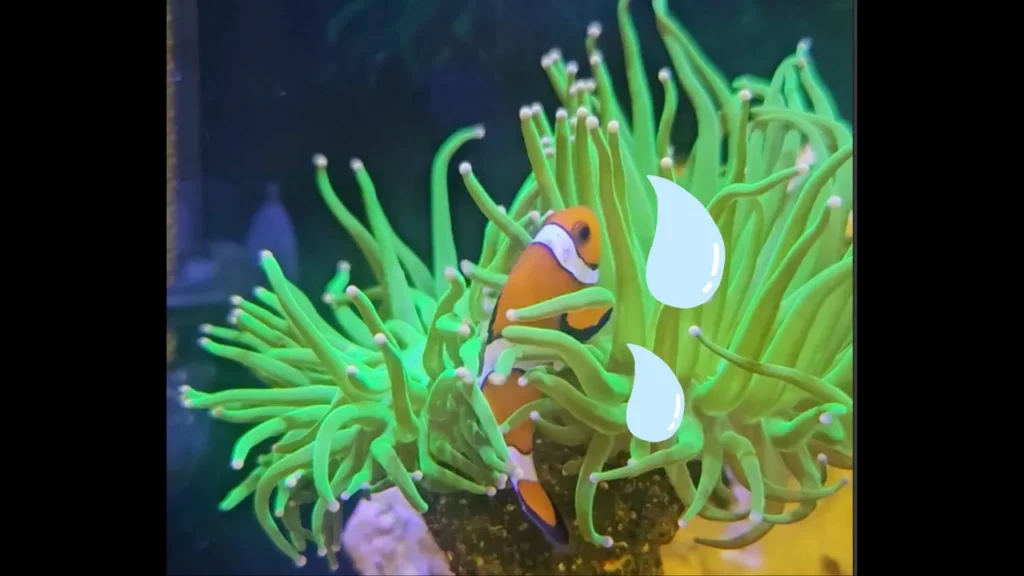
    Since the first time I noticed it, Jamo has been rubbing against the torch almost every time I look at the tank.

    Jamo the clownfish rubbing against the torch coral

    But about two weeks ago, the torch coral’s polyps started getting smaller like in the photo, and the mouth area became much easier to see.

    I wondered if the temperature had gone up because it is summer, but it was 26 degrees Celsius, which is the same as usual.

    Other corals like the acan, leather coral, and green star polyps are actually growing quickly, and they have looked even more active over the last two weeks.

    I am also still doing a water change once a week.

    The water parameters I checked today were:

    • Kh/alk: 10.9
    • Po4: 0
    • No3: 0.25

    Po4 is the phosphate reading. For corals, too much phosphate can lead to algae and water quality problems, but keeping it near zero for too long does not seem ideal either.

    LPS corals like torch corals still seem to need a small amount of nutrients in the water to stay fully inflated. When Po4 reads zero, the tissue can look pulled in, and the mouth in the center can stand out more. So this time I am not only looking at Jamo rubbing against the coral. I also think the low Po4 may be related to why the torch coral’s mouth is showing. Of course, I cannot blame Po4 alone. The relatively high Kh, low No3, MicroBacter7, and limited feeding probably need to be looked at together.

    After looking at those numbers and talking through the tank’s current condition with GPT, one suspicious point came up.

    That was the MicroBacter7 I had been adding steadily, five drops every day.

    Because this tank does not have a skimmer, I have been limiting feeding as much as possible and adding MicroBacter7 consistently.

    I had been thinking of it as a bacterial supplement that helps break down organics, but that process may also help keep the tank’s Po4 level low.

    Brightwell NeoPhos ordered to raise Po4 slowly in the reef tank

    I am going to use Brightwell NeoPhos to raise Po4 very slowly and watch how the torch coral responds.

    If Po4 gets too high, I will probably have to fight algae again. Saltwater tanks really are not easy.

  • Why I Started Measuring Water Parameters with a Salifert Test Kit


    The water looks clear, but why are there days when corals stay a little less open than usual, or livestock behave differently?

    While keeping a 45-cube reef tank, the most frustrating moments were probably when I couldn't figure out the cause of what was happening in the tank.

    Dealing with hitchhikers, deciding on a water change schedule, and dealing with algae growth are all difficult, but for me, the hardest part was the time when I had to guess at the reason corals or other livestock were doing poorly.

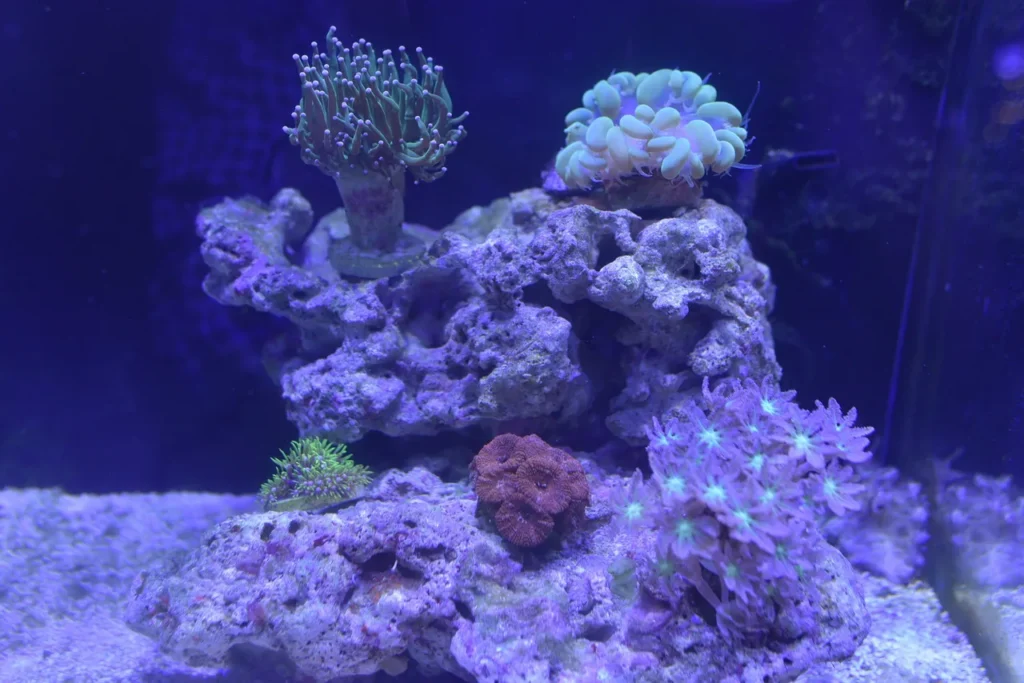
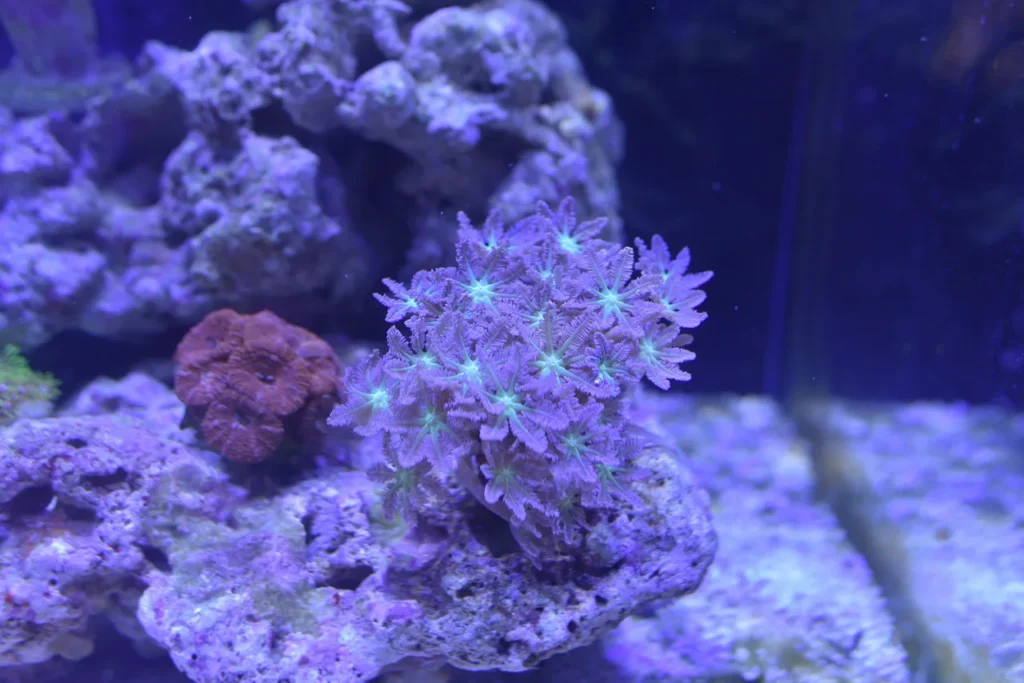
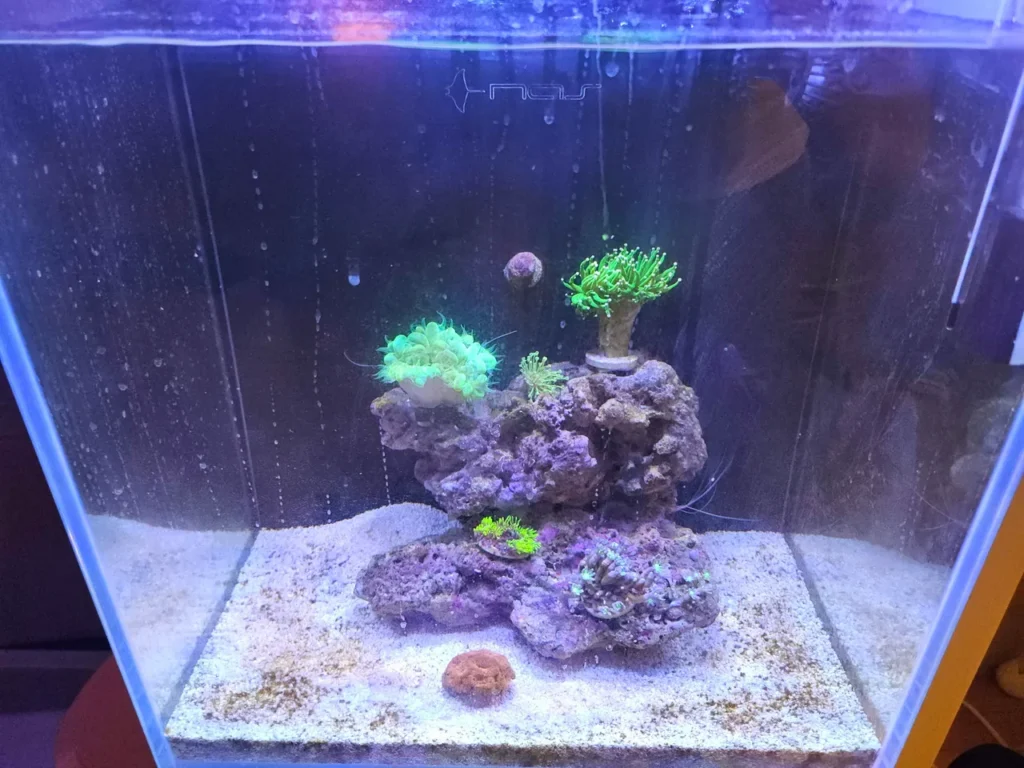
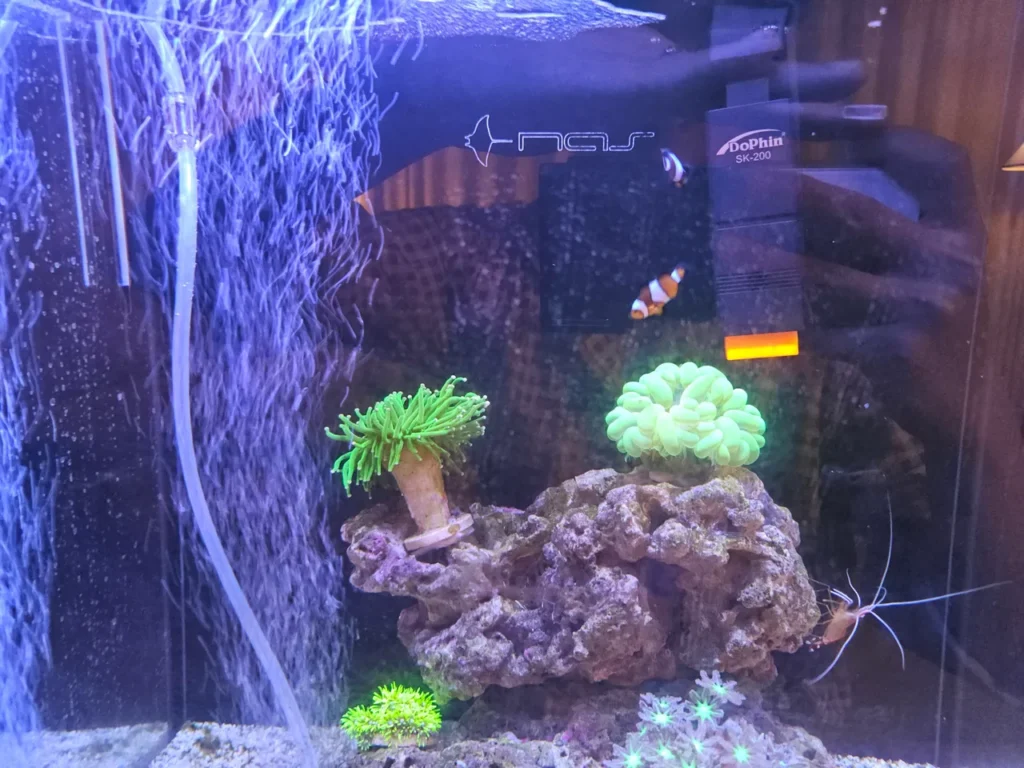
    A reef tank with torch coral, bubble coral, globe polyps, Acan coral, and star polyps.
    The tank back when the globe polyps and bubble coral were growing healthily.

    For about a year after starting the 45-cube tank, I was watching the tank's condition with my eyes and my gut. Temperature and salinity are relatively simple. They're easy to measure, and you can immediately understand why they matter without anyone explaining it to you.

    But I kept wondering whether the values people commonly call water parameters really needed to be measured at all. Each one needed its own test kit, and the testing methods looked more difficult than temperature or salinity, so I kept putting it off.

    Then something happened. I did a water change at the same time and in the same way as usual, but after the water change, white spots started appearing on the fish, the tips of the globe polyps that used to open fully no longer opened, and brown algae gradually started covering the globe polyps.

    I especially knew something was wrong when Nemo, who had been eating well and breathing normally, stopped eating and started breathing harder and harder.

    I searched online. Since I kept seeing people say to do a water change if something seemed wrong, I started doing a water change once a day, and thinking the corals might be lacking oxygen, I hurriedly bought an airstone and added bubbles too.

    A tank photo with the airstone running.

    With the airstone running and daily water changes, things seemed to improve a little. Then, when I looked at the tank after work with a nervous feeling, I saw a dead fish. Not long after that, the globe polyps died too.

    After that, the bubble coral, the yellow tang, and the coral I called the bouquet coral suddenly started doing poorly too, and then were gone.

    It was really painful. And I kept wondering what on earth was wrong. I had done the water change the way I usually did, so was the problem with the water change? Or was it something else?

    I remembered water testing, which I had felt wasn't really necessary. If I had tested the water, would I have been able to figure out what the problem was?

    I decided to start measuring the water. I wanted to figure out what absolutely needed to be checked in a tank where I keep corals and fish together, so from that point I looked a little more into individual parameters and decided to measure four high-priority ones.

    The four I decided to measure

    KH/Alk and Ca are closer to the side that helps corals build skeletons and stay stable. NO3 and PO4 are closer to the nutrient side connected to food, waste, filtration, and algae.

    Simply put, one is the flow corals use, and the other is the flow that stays in the tank and builds up there.

    • KH/Alk: alkalinity connected to pH buffering and coral skeleton formation
    • Ca: calcium that LPS and stony corals use to build calcium carbonate skeletons
    • NO3: nitrate left behind after food, waste, and biological filtration
    • PO4: phosphate connected to food, organic matter, and even the storage capacity of rock and sand

    I wrote up separate notes about actually running each test.

    • Salifert KH/Alk test instructions
    • Salifert Ca calcium test instructions
    • Salifert NO3 nitrate test instructions
    • Salifert PO4 phosphate test instructions

    KH/Alk: the buffering strength corals rely on

    The reason I looked at KH/Alk first was that I felt it was directly tied to coral response. KH is not pH itself, but alkalinity, which shows how well the water can resist shifts toward the acidic side.

    LPS like torch coral and Acan coral show water changes very clearly. When the polyps open less or the tissue looks shrunken, I can't say for sure that there's only one cause, but it is worth checking whether KH is swinging.

    When I first measured it, the value came out around 12.8 to 13.1 dKH, which was clearly higher than the commonly known 8 to 12 dKH range.

    Based on that value, I formed a hypothesis that the KH of the new water made for a 25% water change once a week was staying higher than what the corals were consuming, and that this repeated pattern was pushing the value up.

    After reducing the water change amount and testing for a month, the KH value actually moved into the normal range.

    Ca: the material corals use to build skeletons

    Ca is the main material in a coral skeleton. Even though LPS look fleshy and full, they still have a hard skeleton inside, and when they form new heads or thicken their skeleton, they use Ca and KH together.

    The most disappointing one was the bubble coral. The once-full bubble coral slowly separated between the skeleton and the polyp tissue over a very long period of time, until it finally separated completely. I think I might have made a better judgment if I had tracked that value.

    NO3: the residue left after processing food

    NO3 is nitrate left after food, waste, and dead organic matter go through bacterial processes.

    High NO3 doesn't immediately mean disaster, but if it stays high for a long time, it can be linked to increased algae growth or changes in coral color. On the other hand, it doesn't have to be zero either. Corals, symbiotic algae, and bacterial ecosystems also need some nitrogen source.

    PO4: a value that can affect both algae and coral growth

    PO4 is phosphate. People often associate it with algae, but phosphorus is also a nutrient needed for life.

    The problem is that the tank can become unstable whether it is too low or too high. If it's too low, the balance between corals and microbes can be disrupted, and if it's too high, it can be linked to glass algae, rock algae, and cyanobacteria.

    Moving from gut feeling to records

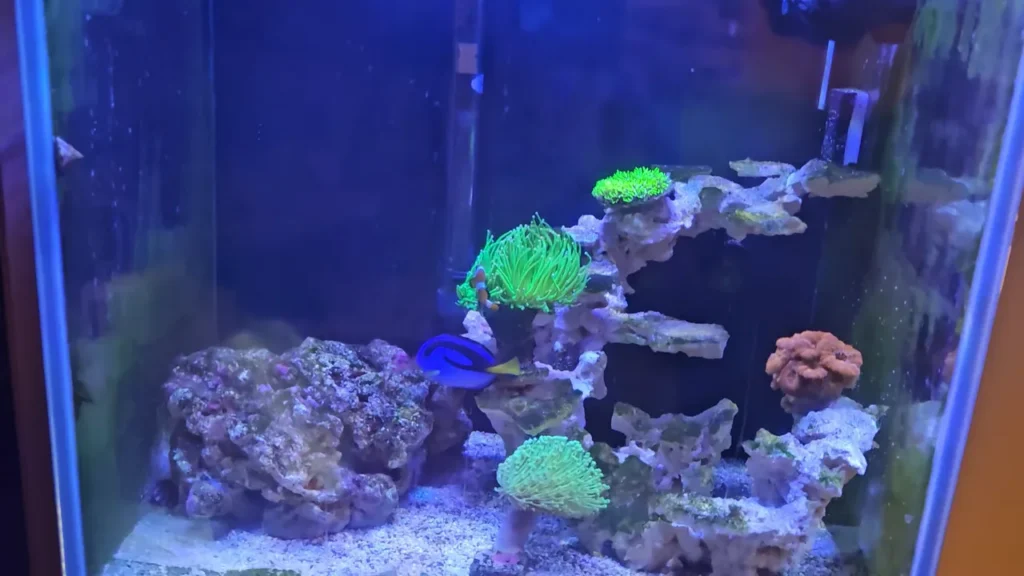
    A 45-cube tank with torch coral, star polyps, Acan coral, leather coral, Nemo, and a blue tang.

    Of course, not all symptoms that appeared in the livestock could have been found or prevented through testing.

    Still, it felt too frustrating to keep relying on gut feeling alone, and once I started measuring, at least I no longer looked at everything purely by instinct like before.

    I now had a reference point for seeing how the measured values were moving behind the visible changes, like whether the water looked clear, whether the corals were open, or whether algae was increasing.

    I hope the precious livestock grows better.