
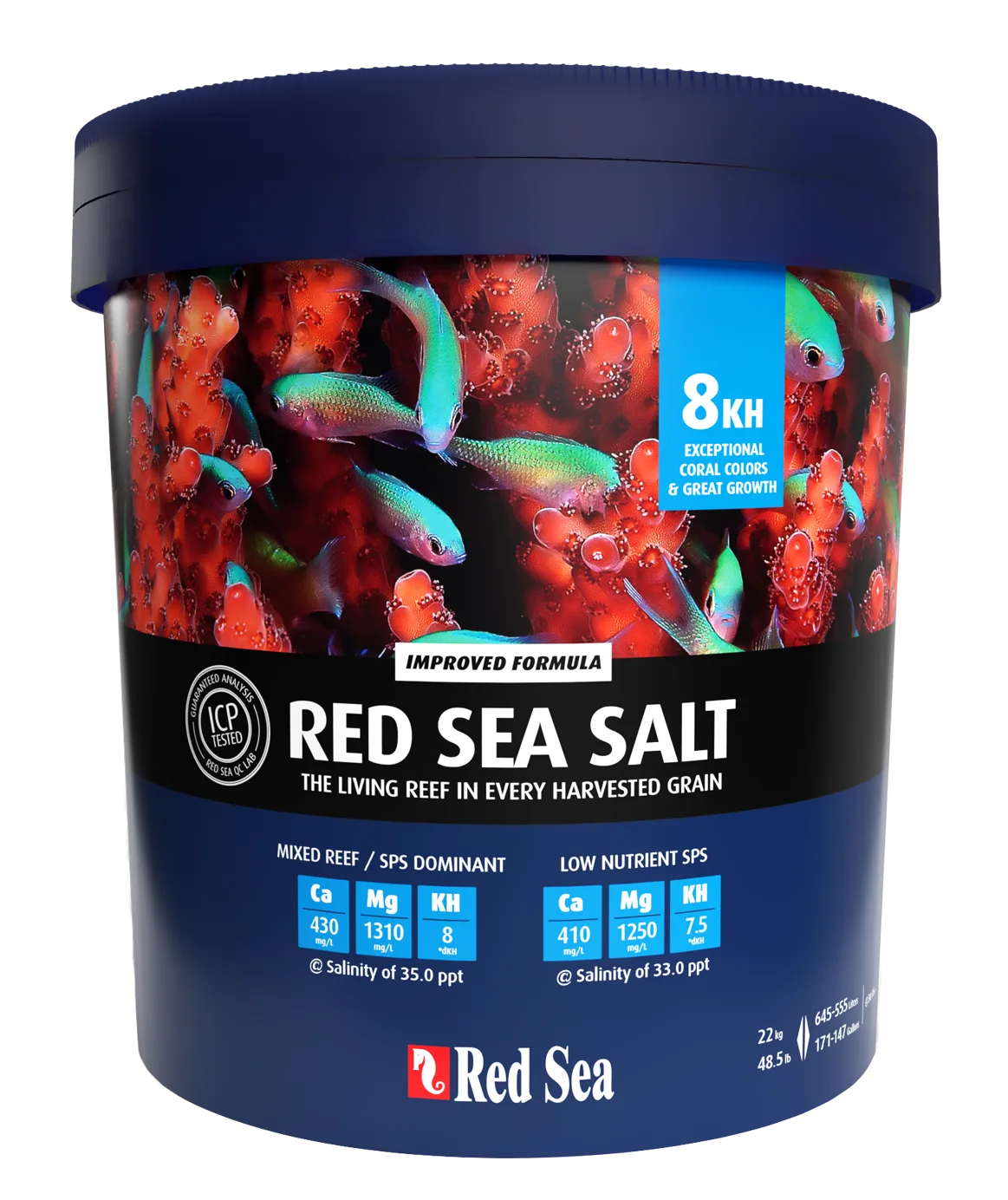
I have been running this 45 cm cube for about a year and nine months. For roughly the first year and seven months, I used Reef Crystals. For the last two months, I have been using Red Sea Salt.
I used to think a salt mix was mostly there to get the salinity right. I still think that is its main job. This summer, though, some of the corals in the tank were not looking their best, so I started checking the parameters with a Salifert test kit.
I now think the biggest part of that summer problem was water temperature getting too high. Before I fixed the temperature issue, though, I was also looking hard at an alkalinity reading of about 13 dKH.
The right KH range depends on the corals you keep and the kind of tank you want. For this tank, I felt that 8 to 9 dKH made more sense than 13. Since I had used the same salt from the start, I began to wonder how much the salt mix was helping hold that number up.
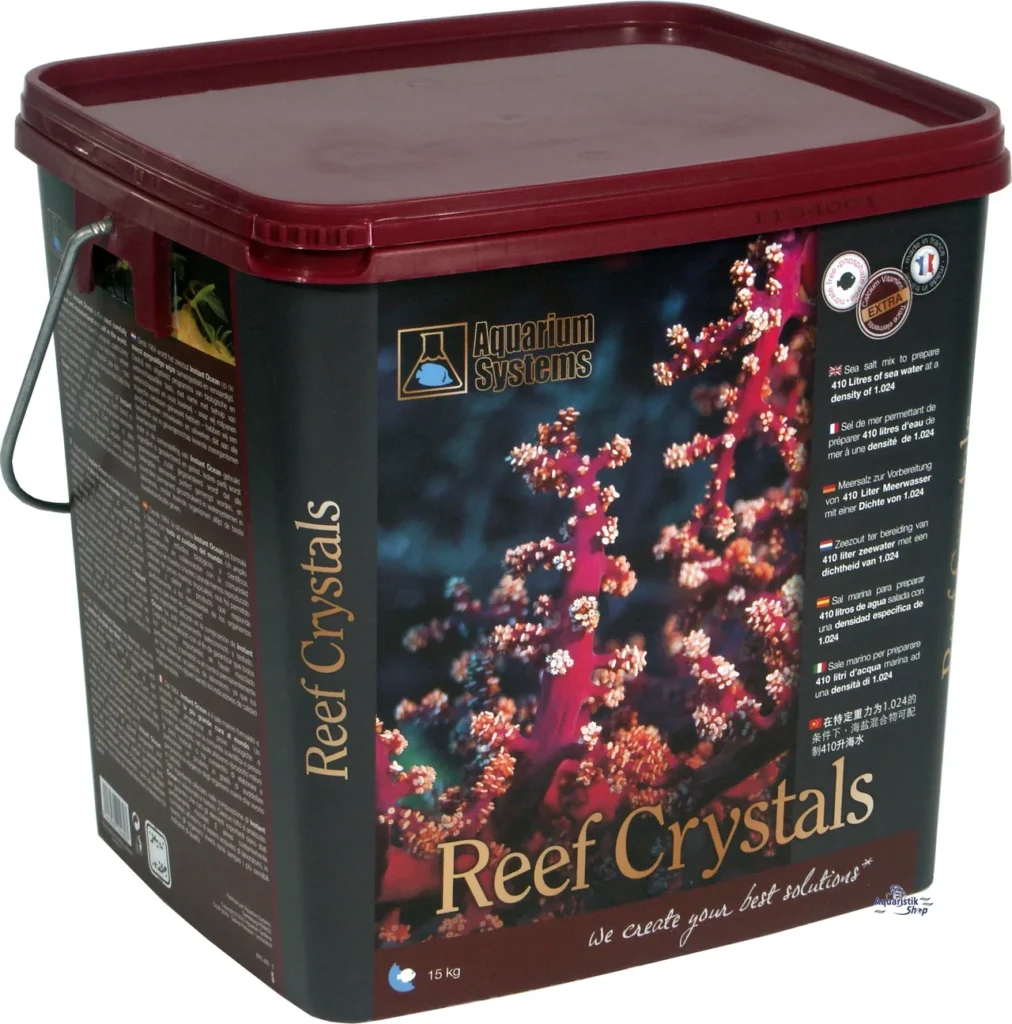
These are the Reef Crystals numbers. I kept the table in the specific gravity (SG) and temperature rows I use when mixing water instead of converting it into a ppt-only comparison.
| SG, temperature | Ca | Mg | KH |
|---|---|---|---|
| 1.022, 24℃ | 440 ppm | 1140 ppm | 9.1 dKH |
| 1.024, 24℃ | 450 ppm | 1275 ppm | 12 dKH |
Source: Aquarium Systems Reef Crystals product data
I usually make water for a water change at a specific gravity of about 1.024 to 1.025. That made it easy to see why the fresh mix was above the KH range I wanted. I looked for a mix aimed closer to 8 to 9 dKH and landed on Red Sea Salt.
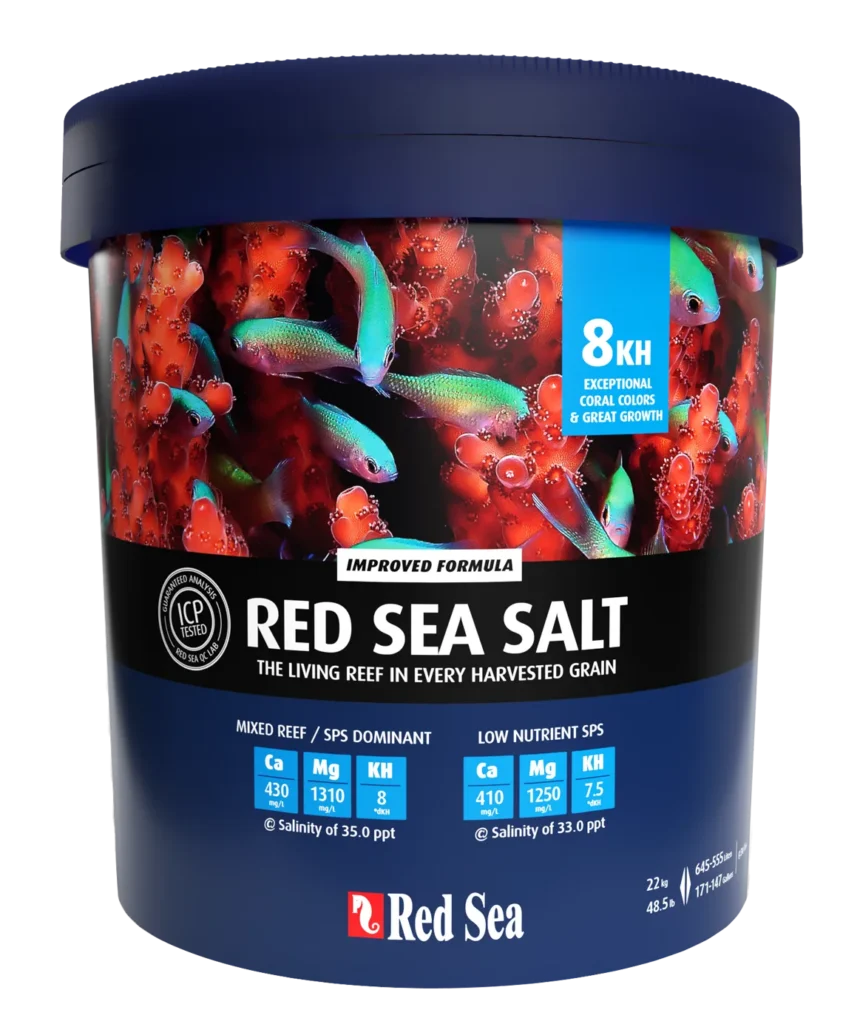
| SG, temperature | Ca | Mg | KH |
|---|---|---|---|
| 1.022, 25℃ | 371–391 ppm | 1110–1170 ppm | 6.9–7.3 dKH |
| 1.024, 25℃ | 398–418 ppm | 1190–1250 ppm | 7.4–7.8 dKH |
Source: Red Sea Salt product information
After two months with Red Sea Salt, I wrote down the test results below.
| Date | KH/Alk | Ca | NO3 | PO4 |
|---|---|---|---|---|
| 7/7 | 12.8 | – | 5–10 | 0–0.03 |
| 7/9 | 12.1 | – | – | 0–0.03 |
| 7/11 | 11.5 | – | 5–10 | 0–0.03 |
| 7/12 | 11.5 | – | – | 0 |
| 7/19 | 10.5 | – | – | 0 |
| 7/26 | 10.5 | – | – | 0 |
| 8/2 | 10.0 | – | – | 0 |
| 9/13 before water change | 9.3 | 415 | 25 | 0 |
| 9/13 after water change | 8.8 | 400 | 5–10 | 0 |
The alkalinity did come down. After using Red Sea Salt for about two months, it felt like the better fit for this tank, so I was ready to buy it again.
By then, I could no longer find the 7 kg size except for Red Sea Coral Pro, which is a different mix with higher targets.
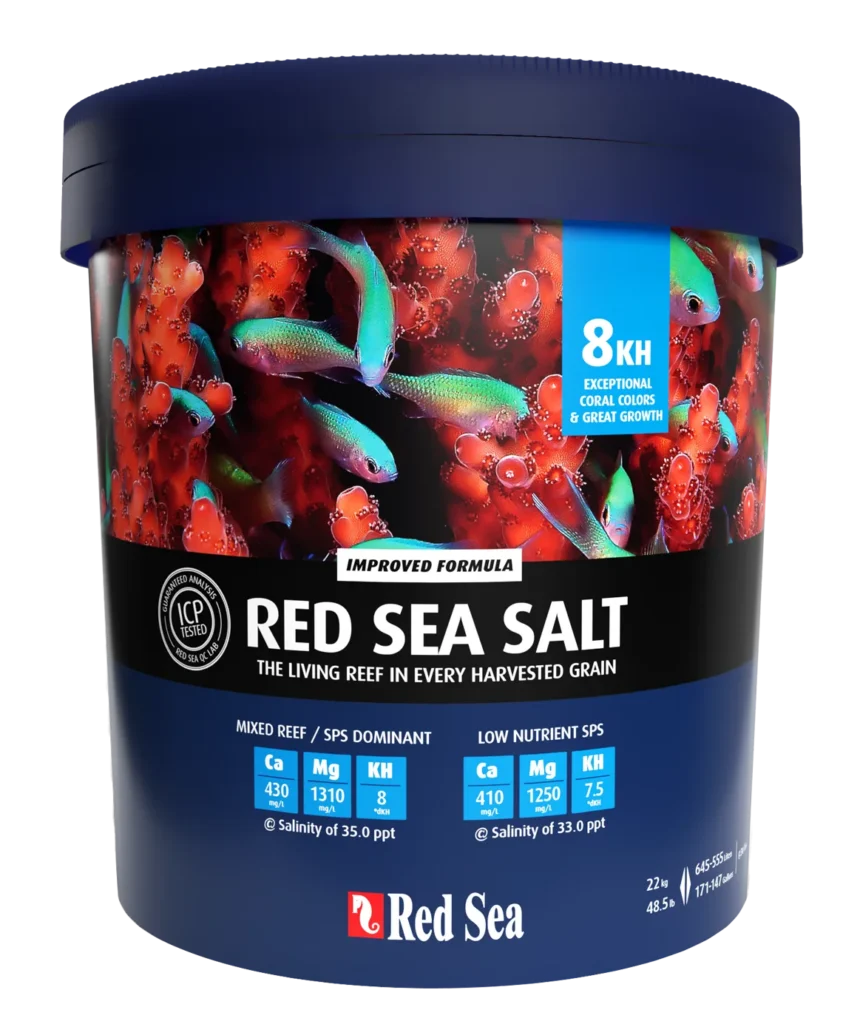
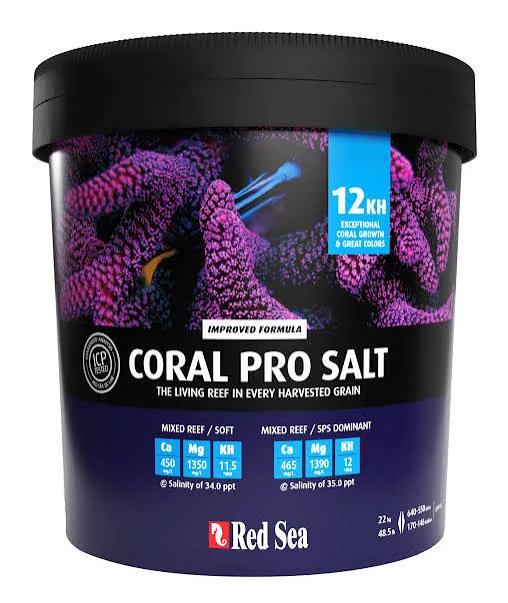
I cancelled a few orders after ordering by size and realizing they were the Pro version.
While looking for an alternative, I ordered Aquaforest Reef Salt because its target range looked similar.
| SG, temperature | Ca | Mg | KH |
|---|---|---|---|
| 1.022, 24℃ | about 350–380 ppm | about 1122–1192 ppm | about 6.6–7.1 dKH |
| 1.024, 24℃ | about 370–400 ppm | about 1194–1264 ppm | about 7.0–7.4 dKH |
Source: Aquaforest Reef Salt product data
Aquaforest also has Reef Salt Plus, a different version with higher targets. That is another label I need to check before ordering.
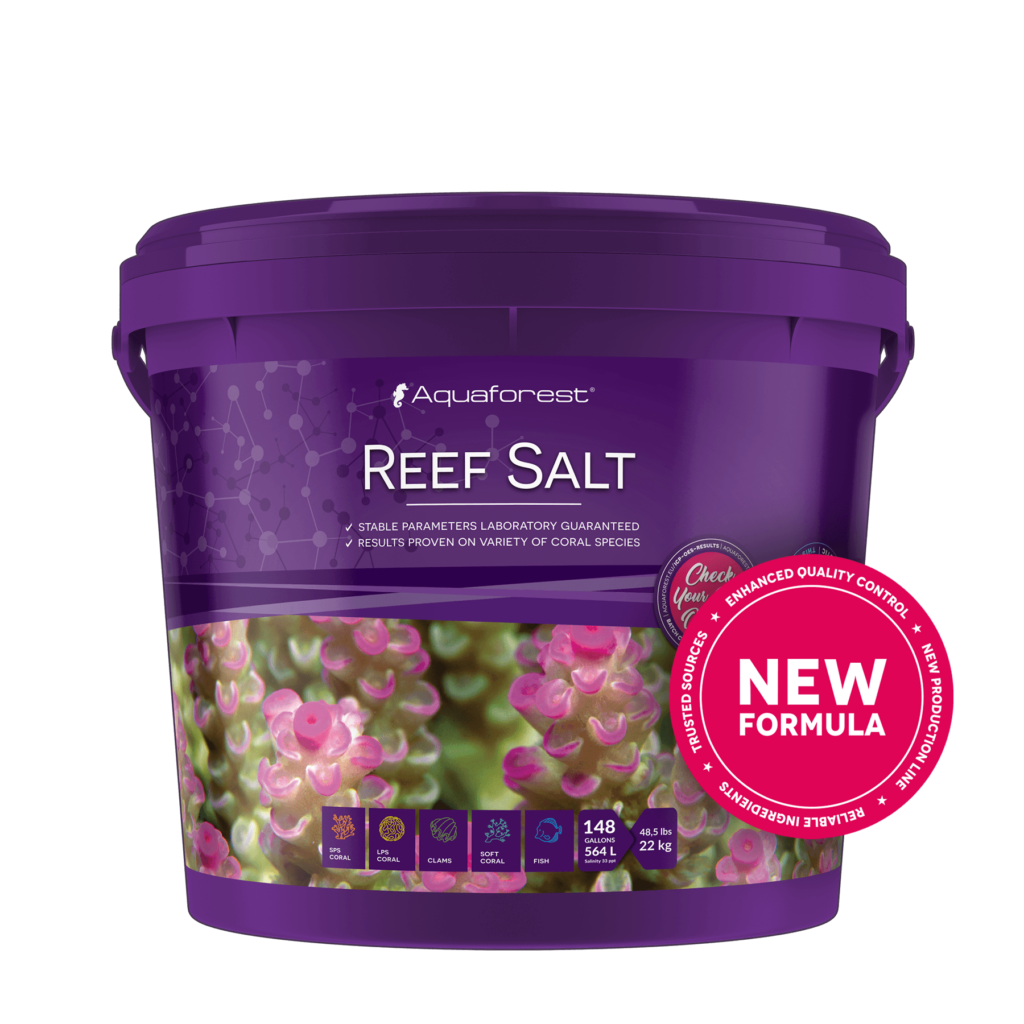
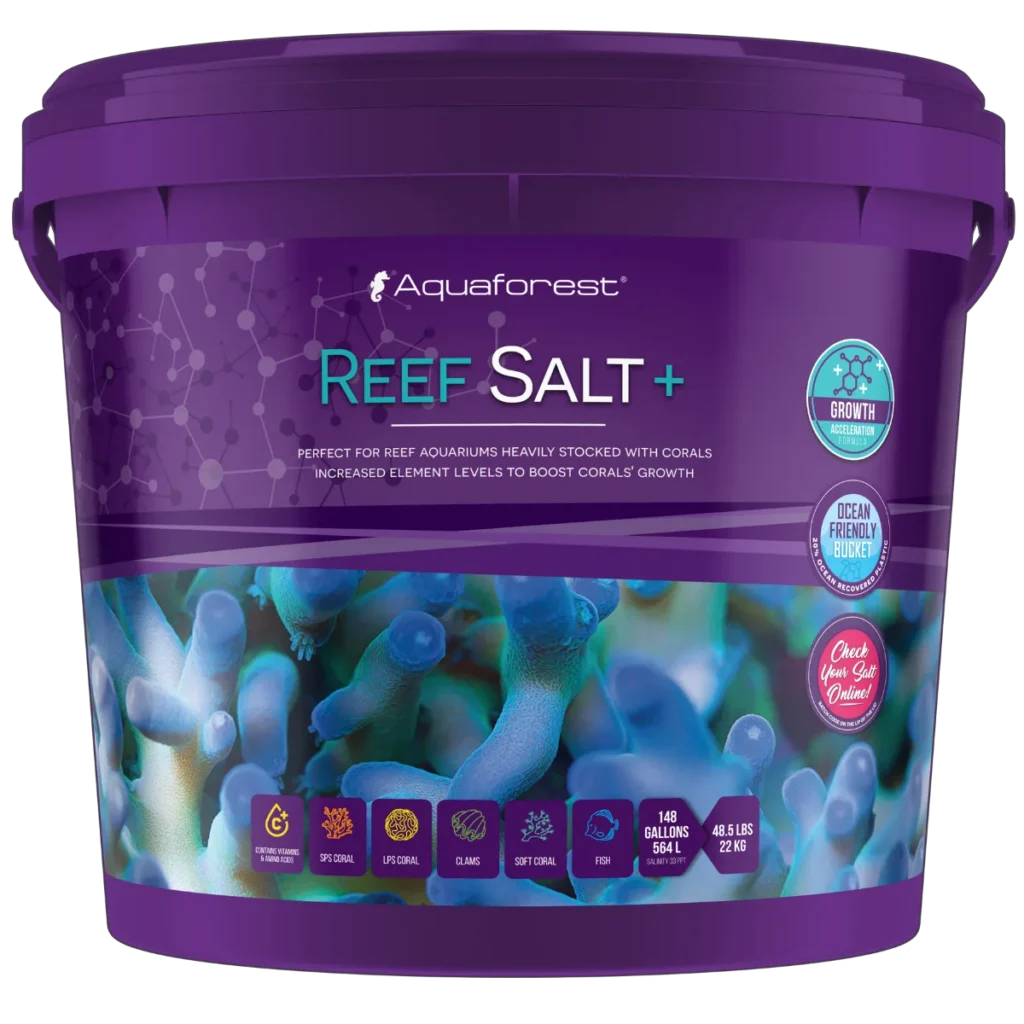
I nearly ordered the wrong one there too.
I have just finished a water change with Reef Salt, so I do not have test results for it yet. I will write about it once I have measured it.
The numbers in these tables are approximate values calculated from manufacturer data for each SG and temperature row.